

In today’s crypto market, it is common to see projects rise and fall purely on narratives, hype cycles, or short term price momentum. Many teams prioritize visibility over substance, often pushing aggressive marketing before their technology is truly ready. Against this backdrop, Walrus Protocol represents a very different philosophy. Walrus is not trying to lead with price action. Instead, it is quietly focusing on building utility first, trusting that long term value will naturally follow real adoption.
At a fundamental level, Walrus exists to solve one of Web3’s most persistent and underestimated problems: data storage. Blockchains were never designed to store large volumes of data. They excel at verification, ownership, and execution of logic, but when it comes to images, videos, AI datasets, game assets, or large application files, traditional blockchains quickly become inefficient and expensive. For years, this limitation has forced many decentralized applications to rely on centralized cloud providers, creating hidden points of failure and undermining the promise of decentralization.
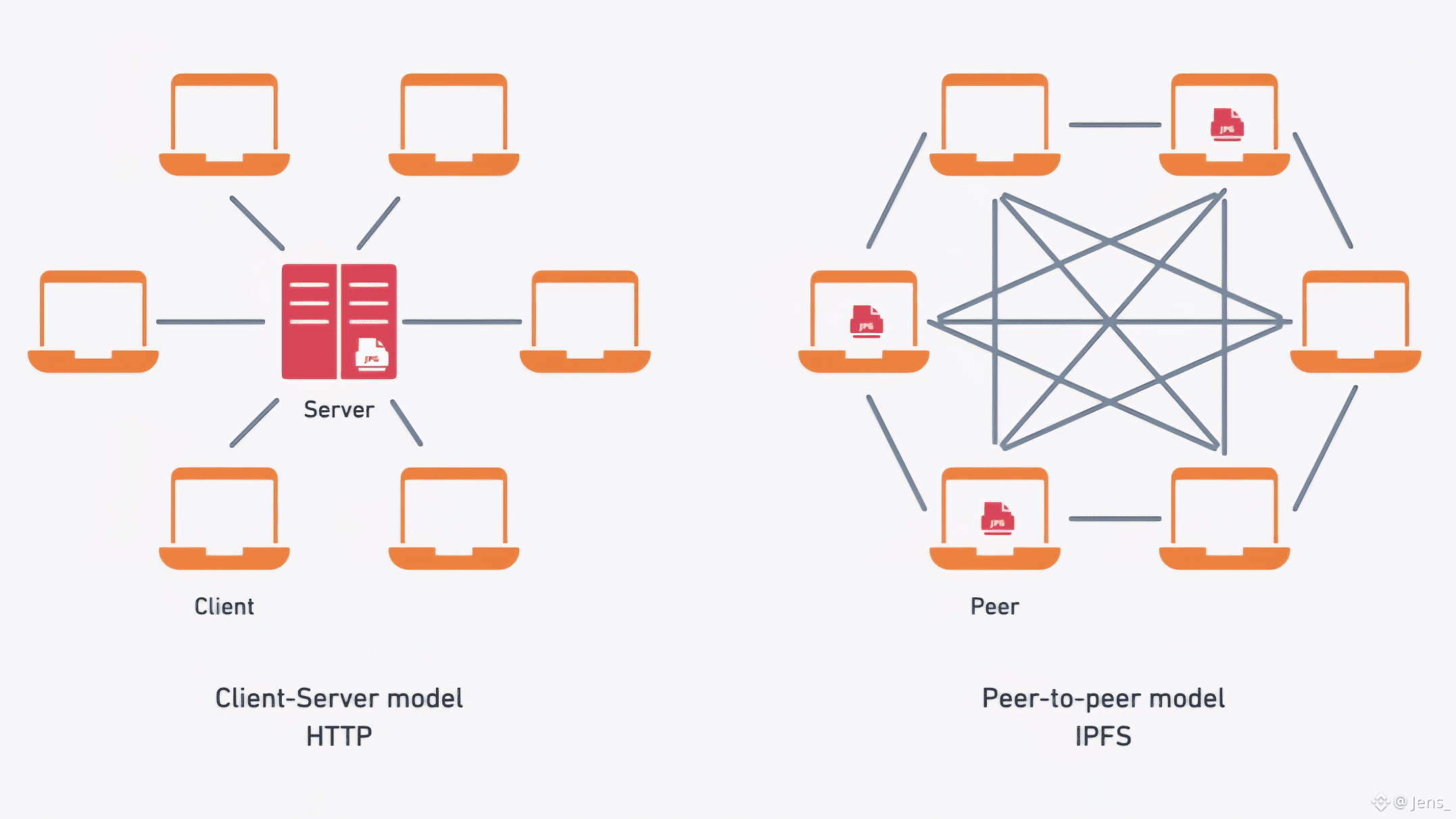
Walrus addresses this gap directly by providing decentralized blob storage that is optimized for scale, performance, and cost efficiency. Rather than forcing large data inside blocks, Walrus enables applications to store data offchain in a decentralized network while still maintaining cryptographic guarantees. This approach allows developers to build applications that feel modern and responsive without sacrificing decentralization or security.
One of the strongest aspects of Walrus is how naturally it fits into the Sui ecosystem. Sui is designed for high throughput, fast finality, and expressive onchain logic. Walrus complements this by handling the heavy data layer that Sui itself is not meant to manage. Together, they form a practical full stack for Web3 development: Sui for ownership and execution, Walrus for scalable data storage. This integration is not theoretical. It reflects a clear understanding of how real applications are built and what developers actually need.
The decision to prioritize utility over price becomes even more meaningful when you look at Walrus’s approach to growth. Instead of chasing short lived attention, the focus is on infrastructure maturity, tooling, and reliability. This includes improving storage efficiency, ensuring data availability, and making it easier for developers to integrate Walrus into their applications. These are not flashy updates, but they are the kind that matter most in the long run.
For developers, this approach sends a strong signal. Building on unstable or hype driven infrastructure is risky. Applications need guarantees that the underlying systems will continue to function regardless of market conditions. Walrus is positioning itself as dependable infrastructure rather than a speculative experiment. Over time, this kind of reputation becomes a powerful asset.
The importance of decentralized storage becomes even clearer when considering NFTs. An NFT is not just a token on a blockchain. Its true value often lies in the associated media and metadata. If that data is stored on centralized servers, the NFT becomes fragile. Links can break, content can disappear, and censorship becomes possible. Walrus provides a solution where NFT data can be stored in a decentralized and censorship resistant way, preserving the integrity of digital ownership over the long term.
AI is another area where Walrus’s utility focused design stands out. AI applications require large datasets, frequent access, and reliable storage. Centralized solutions dominate today because they are efficient and scalable, but they also concentrate control. Walrus offers an alternative path, enabling AI builders to store and manage data in a decentralized environment without unacceptable performance tradeoffs. As AI and Web3 continue to intersect, this capability becomes increasingly valuable.
Onchain applications also benefit directly from Walrus’s design. Many Web3 apps struggle to scale because data costs grow faster than user adoption. By offloading large data to Walrus, developers can keep onchain interactions lean while still delivering rich user experiences. This makes it possible to build games, social platforms, and complex dApps that feel closer to Web2 quality while remaining decentralized at their core.
What is particularly notable is that Walrus does not position itself as a competitor to everything else. It does not try to replace blockchains or overextend into unrelated areas. Its scope is clear and focused: become the best possible decentralized storage layer for data heavy Web3 applications. This clarity of purpose reduces execution risk and increases the likelihood of long term success.
From an investor perspective, projects like Walrus often require patience. Utility driven growth does not always translate into immediate price appreciation. Markets can ignore infrastructure for long periods, especially when speculative narratives dominate. However, when adoption begins to compound, infrastructure protocols tend to benefit disproportionately. Storage demand grows naturally as ecosystems expand, and protocols that are already integrated become increasingly difficult to replace.
Walrus’s strategy reflects this long term mindset. By building first and marketing later, it aligns itself with developers rather than speculators. Developers are the ones who create lasting demand. When applications rely on Walrus for core functionality, usage becomes sticky. This creates a feedback loop where more usage leads to more relevance, which in turn attracts more builders.
Another important aspect of Walrus’s approach is resilience. Markets go through cycles, but infrastructure that solves real problems remains useful regardless of sentiment. A protocol focused on utility is better positioned to survive downturns because it is not dependent on constant attention. Walrus appears to be building with this reality in mind, emphasizing durability over short term excitement.
Over time, narratives tend to shift. As Web3 matures, users and developers care less about promises and more about reliability. They want applications that work, data that persists, and systems they can trust. Storage becomes a foundational layer in this evolution, not an optional add on. Walrus is positioning itself exactly at this layer, quietly becoming more important as the ecosystem grows.
In many ways, Walrus Protocol represents a return to first principles in crypto. Instead of asking how to drive price, it asks how to deliver value. Instead of optimizing for attention, it optimizes for usefulness. This mindset does not always produce fast results, but it has consistently proven effective over longer time horizons.
Utility compounds. Every new application, dataset, NFT, or AI model stored on Walrus increases its relevance. As demand for decentralized data storage grows, protocols that are already battle tested and integrated stand to benefit the most. Walrus is not trying to predict short term market movements. It is building for a future where decentralized infrastructure is no longer optional, but essential.
In the end, price is a reflection, not a foundation. Walrus Protocol’s decision to focus on utility before price suggests a deep understanding of how lasting value is created in Web3. By prioritizing real use cases, real developers, and real infrastructure, Walrus is quietly laying the groundwork for long term relevance in an increasingly data driven decentralized world.


