
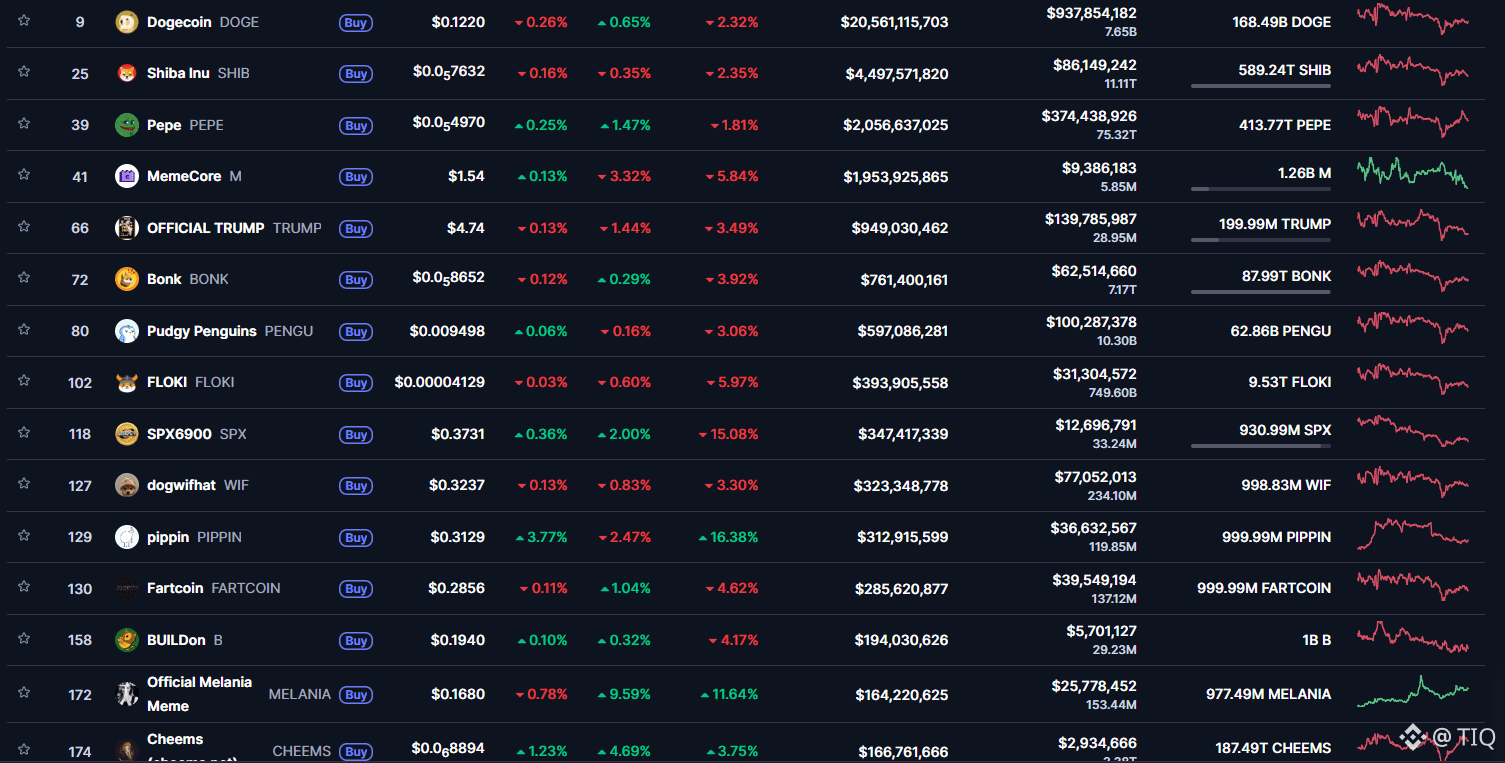
Memecoins are fun tokens that can rise quickly because people like them and share them everywhere. To pick ones with better chances, just pay attention to a few basic things.
First, check if the people who created the coin are open about who they are. If they show their real names, share personal info, or have a history of working on other projects, that’s much more trustworthy than a completely hidden team.
Next, look at how the coins are shared out. A reasonable total supply, no single person or small group holding too much (for example, not 30–40% in just a few wallets), a small portion for the creators (less than 10–15%), and trading money that stays locked for a while are all good signs. Avoid coins where a lot is controlled by one side or can be pulled out anytime.
The community matters a lot too. If people are chatting naturally, making funny content, and the group grows slowly and steadily, that’s positive. Be careful if the chat is full of repeated messages or suddenly gets huge then goes quiet.
Coins with an interesting story or small extra feature tend to attract more people. For example, something tied to a current trend, a funny event, or a simple plan like rewards or mini-games. Coins that only promise “buy now and get rich” usually don’t last long.
For the price, prefer ones that go up gradually with steady buying instead of jumping 300–500% in minutes and then crashing. A sudden huge rise without a clear reason is often a warning sign.
When you find a coin you like, only use a small amount of money you’re okay losing (1–5% of what you have). Spread it across a few different coins to lower risk. Don’t buy when everyone is going crazy—wait for the price to calm down a bit before joining. Also, join the group to see if they update regularly and talk like normal people.
In short, memecoins can be exciting and sometimes very profitable, but treat them more like a game than a serious way to make money. Always check carefully, don’t let excitement take over, and only use extra money you can afford to lose.
This is not investment advice. You make your own choices and take responsibility for them.