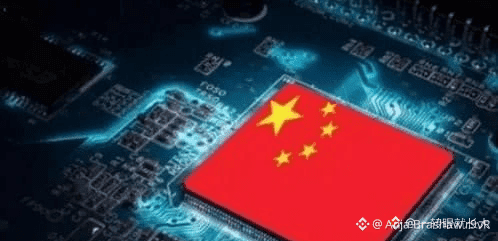
Before anyone realized it, the wind changed.
The U.S., Germany, France, Japan, Australia—one by one—have been forced to acknowledge a reality they never expected: China has entered a new wave of explosive growth.
The irony?$BTC
The U.S. tech blockade didn’t slow China down—it accelerated it.
Bill Gates warned about this years ago. He said China would find solutions faster than anyone imagined. At the time, Washington didn’t listen. Today, his words have aged perfectly.
Back in 2019, the pressure began.
Over 1,200 Chinese tech firms were added to the Entity List. High-end chips were cut off.
In 2022, the U.S. doubled down—$39B CHIPS Act, pulling TSMC and Samsung into the U.S., teaming up with Japan and the Netherlands to block EUV machines, aiming to freeze China above 14nm.
They thought this would suffocate China’s chip industry.
Instead, it woke it up.
Labs stayed lit through the night.
Dependence turned into determination.
SMIC held the line.
14nm stabilized.
7nm quietly entered mass production—without EUV—with yields above 90%, even taking orders for Huawei’s Ascend chips.
Memory chips shocked the global market:
• 18nm DRAM already mass-produced
• NAND stacked to 232 layers, matching global leaders
These aren’t headlines—they’re results.
Q1 2024: China’s chip import bill dropped by 350B RMB.
Orders that once flowed overseas came back home.
By 2024, SMIC revenue hit $8.03B, becoming the world’s third-largest foundry, behind only Samsung and TSMC.
2025 pushed it further:
• 28nm yield reached 95%, matching TSMC
• Domestic gaps in AMOLED driver chips filled
• A 12-inch wafer fab built in Germany, taking production straight to Europe
Meanwhile, the pain shifted west.
Qualcomm. Intel.
Cut off from China, customers vanished and earnings slid.
TSMC followed U.S. policy, built in Arizona—and got stuck.
Delays, rising costs, adaptation issues. Caught between two fires.
Even Elon Musk saw it early:
“This is just the beginning.”
Europe softened first.
German and French automakers rely on Chinese automotive chips—cooperation became unavoidable.
Japan admitted it.
YMTC is eroding their long-held memory advantage.
Australia moved fast.
Mining firms are racing to connect with China’s chip material demand.
Looking back, Gates’ warning is crystal clear:
Export controls don’t protect dominance—they destroy it.
By 2025, China’s chip ecosystem is complete:
• 3,901 chip design firms
• 835.73B RMB in industry sales
• +29.4% YoY growth
From design → manufacturing → packaging
From mature nodes → advanced processes
China didn’t chase only the peak.
It secured the foundation.
While the U.S. holds the top of the pyramid, China now controls nearly half of the global mature-process market—automotive, industrial, IoT—the real backbone of the industry.
This isn’t about winners and losers.
It’s about self-reliance forged under pressure.
Restrictions became resistance.
Blockades became blueprints.
The U.S. turned its biggest customer into a rival.
And Bill Gates’ words didn’t just come true—
They became the headline.$BTC