
Why Is Dogecoin Pumping Right Now? Can DOGE Hold Its Gains or Is This Just Hype?
Follow our account @DrZayed for the latest crypto news.
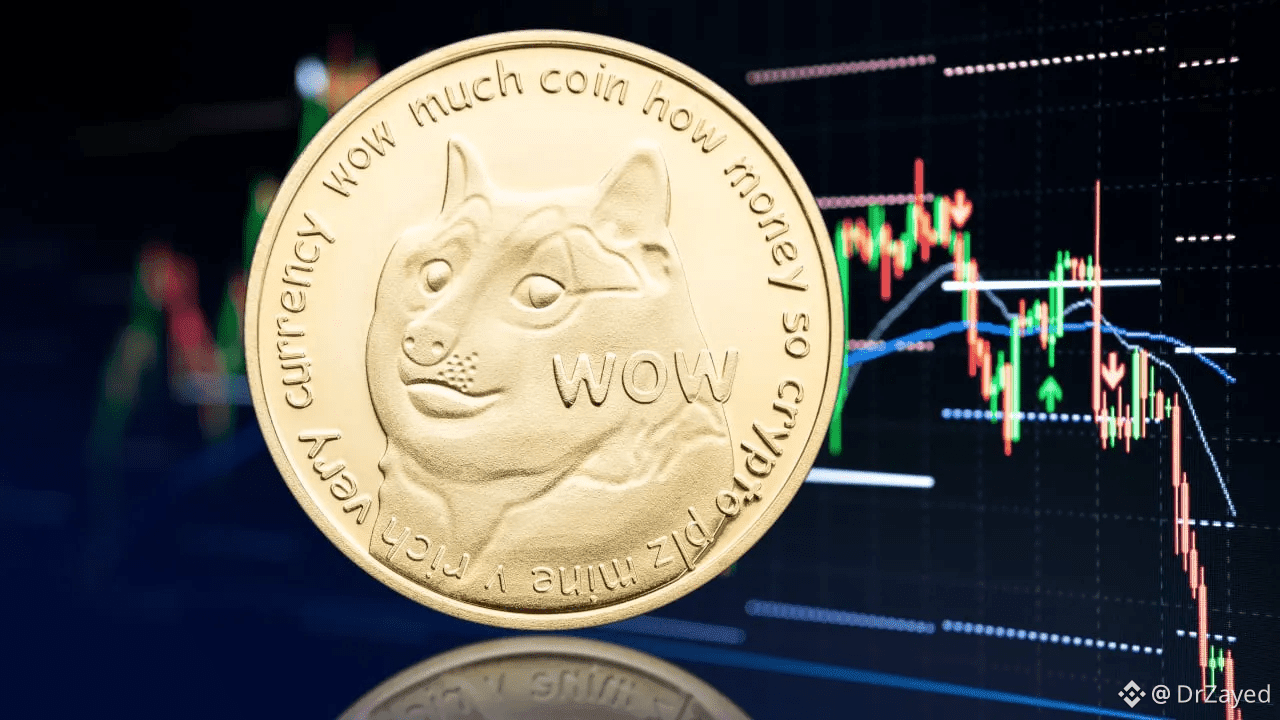
As we move through January 2026, the cryptocurrency market is exhibiting a classic "risk-on" signature, and Dogecoin (DOGE) has once again leaped to the forefront of the conversation. In the opening days of the year, the world’s original meme coin recorded a swift 25% surge, outperforming many of its "serious" utility-driven peers. While Bitcoin and Ethereum have provided a stable backdrop, DOGE’s explosive movement has left many asking: what is driving this pump, and more importantly, is it sustainable?
To understand the current Dogecoin rally, we must look at a combination of technical breakouts, seasonal capital rotation, and a unique institutional shift that has characterized the start of 2026.
The Mechanics of the January Pump:
The primary driver behind Dogecoin’s recent performance is a phenomenon known as "high-beta rotation." In early 2026, Bitcoin consolidated its gains near the $93,000–$95,000 range. When the market leader stabilizes, traders often look for "high-beta" assets—those that historically move with greater intensity than Bitcoin to maximize their short-term returns.
Dogecoin remains the king of this category. Its deep liquidity on exchanges like Binance and its massive retail recognition make it the "path of least resistance" for speculative capital. When risk appetite improves, as it has in early January following positive macro data and interest rate stability, capital flows from Bitcoin into memes. This rotation was further accelerated by a technical breakout above the $0.15 resistance level, which triggered a wave of short-liquidations and forced momentum traders to enter the fray.
A New Catalyst: Dogecoin ETFs and Institutional "Dabbling":
Perhaps the most unexpected factor in early 2026 is the emergence of Dogecoin-related institutional products. While Bitcoin and Ethereum ETFs dominate the headlines, niche products like the 2x Dogecoin ETF and modest inflows into regulated DOGE funds (notably from providers like Bitwise and Grayscale) have given the asset a thin layer of institutional legitimacy it lacked in previous cycles.
In the first week of January, these ETFs recorded several million dollars in net inflows. While small compared to Bitcoin’s billions, these flows represent a structural shift. Institutional desks no longer ignore meme coins; they are using them as sentiment gauges and high-volatility "satellite" positions. This "institutional dabbling" provides a level of buy-side support that prevents the price from cratering as easily as it did in the 2021 era.
Fundamental Improvements: On-Chain Activity and Whale Behavior:
While often criticized for its lack of utility, Dogecoin’s underlying network metrics have shown surprising resilience in January 2026. Data indicates that active addresses have stabilized, and the "Total Value Locked" (TVL) in the Dogecoin ecosystem driven by minor DeFi experiments on the chain surpassed $15 million this month.
More importantly, blockchain analytics show that "whales" (large holders with millions of dollars in DOGE) have returned to accumulation mode. When large wallets stop selling and start buying, it often signals a "floor" in the market. Retail investors, seeing these whale movements, typically follow suit, creating a self-reinforcing loop of upward pressure.
The Difference Between Hype and Sustainability:
The central question for any DOGE investor is whether this gain is "real" or just another "hype cycle." To answer this, we must distinguish between short-term momentum and a sustained trend.
• Short-Term Hype: This is driven by social media buzz, celebrity mentions (such as the persistent "Elon Musk effect"), and retail FOMO. Hype-driven moves are characterized by vertical price candles and a lack of significant support levels. If the pump is purely hype, the price usually retraces 80% of its gains as soon as the social media volume drops.
• Sustained Trends: These are built on increasing order book depth, consistent institutional inflows, and a favorable macro environment (like falling interest rates). In 2026, Dogecoin is showing more signs of a sustained trend than it has in years. The presence of regulated ETFs and the stabilization of its whale population suggest that the market is treating DOGE more like a "top 10 asset" and less like a joke.
Risks to Watch: The Fragility of the Meme Narrative:
Despite the current strength, the risks associated with Dogecoin remain higher than those of Bitcoin or Ethereum.
1. Unlimited Supply: Dogecoin has no hard cap on its total supply. With 5 billion new tokens entering circulation every year (roughly 10,000 every minute), the asset requires constant and increasing buy-side demand just to maintain its current price. This inflationary pressure makes long-term, multi-year price appreciation structurally more difficult than it is for Bitcoin.
2. Sensitivity to Bitcoin: If Bitcoin experiences a sharp pullback below $90,000 in Q1 2026, meme coins will likely be the first to sell off. Because they are the "risk-on" play, they are also the first to be "de-risked" when fear enters the market.
3. Lack of DeFi Utility: Unlike Solana or Ethereum, Dogecoin’s developer community is small, and its applications in decentralized finance (DeFi) are niche. Without a robust ecosystem of apps and revenue-generating protocols, DOGE’s value remains largely tied to social sentiment.
Can DOGE Hold Its Gains?
As of January 11, 2026, Dogecoin is trading in a consolidation range after its initial pump. For DOGE to hold these gains throughout the rest of the quarter, it must defend the $0.15 support level. If it can close in January above $0.18, analysts suggest a path toward $0.25 is possible.
However, if trading volume continues to decline as it has in the last 48 hours the rally may lose its "fuel." Without a fresh catalyst, such as a major partnership or a significant legislative breakthrough in the US crypto market structure bill, DOGE might settle back into its "floor" range of $0.12–$0.14.
Conclusion: Education Over Speculation:
Dogecoin’s pump in early 2026 is a testament to the enduring power of community and the market’s appetite for volatility. While the institutionalization of the asset via ETFs provides a new layer of support, the core of the DOGE narrative remains speculative.
For investors, the key is to recognize that volatility is a normal part of the crypto cycle. High-volume pumps can be lucrative, but they require a disciplined exit strategy. Instead of chasing the hype, focus on the data: watch the ETF inflow numbers, monitor whale activity, and keep a close eye on Bitcoin’s dominance. In the 2026 market, the most successful participants are those who treat even the most "fun" assets with a serious, data-driven approach.
Dogecoin has proven it is not going away, but whether it can reach its previous all-time highs depends on its ability to evolve from an internet meme into a permanent fixture of the digital finance landscape.


