

Most technology stories focus on what users can see, but the most important parts are usually hidden. In Web3, people talk about chains, tokens, and apps, but almost nobody talks about what keeps information stable in the background. Data is expected to always be there, always load, and never fail. When it does fail, everything else breaks with it. Walrus exists in this quiet space, not to impress, but to make sure things do not fall apart.
A lot of systems today still treat storage as something external. The app lives here, the data lives somewhere else, and everyone hopes the connection keeps working. This works until it doesn’t. Walrus changes this by making data part of the system itself. Instead of trusting one place, information is broken into pieces and spread out so it can survive problems without drama.This also changes how developers think. When data is fragile, you design around fear. When data is stable, you design around purpose. Walrus uses simple ideas like blob storage and erasure coding to make this possible, not as features, but as foundations. It is not exciting work, but it is the kind that makes everything else possible.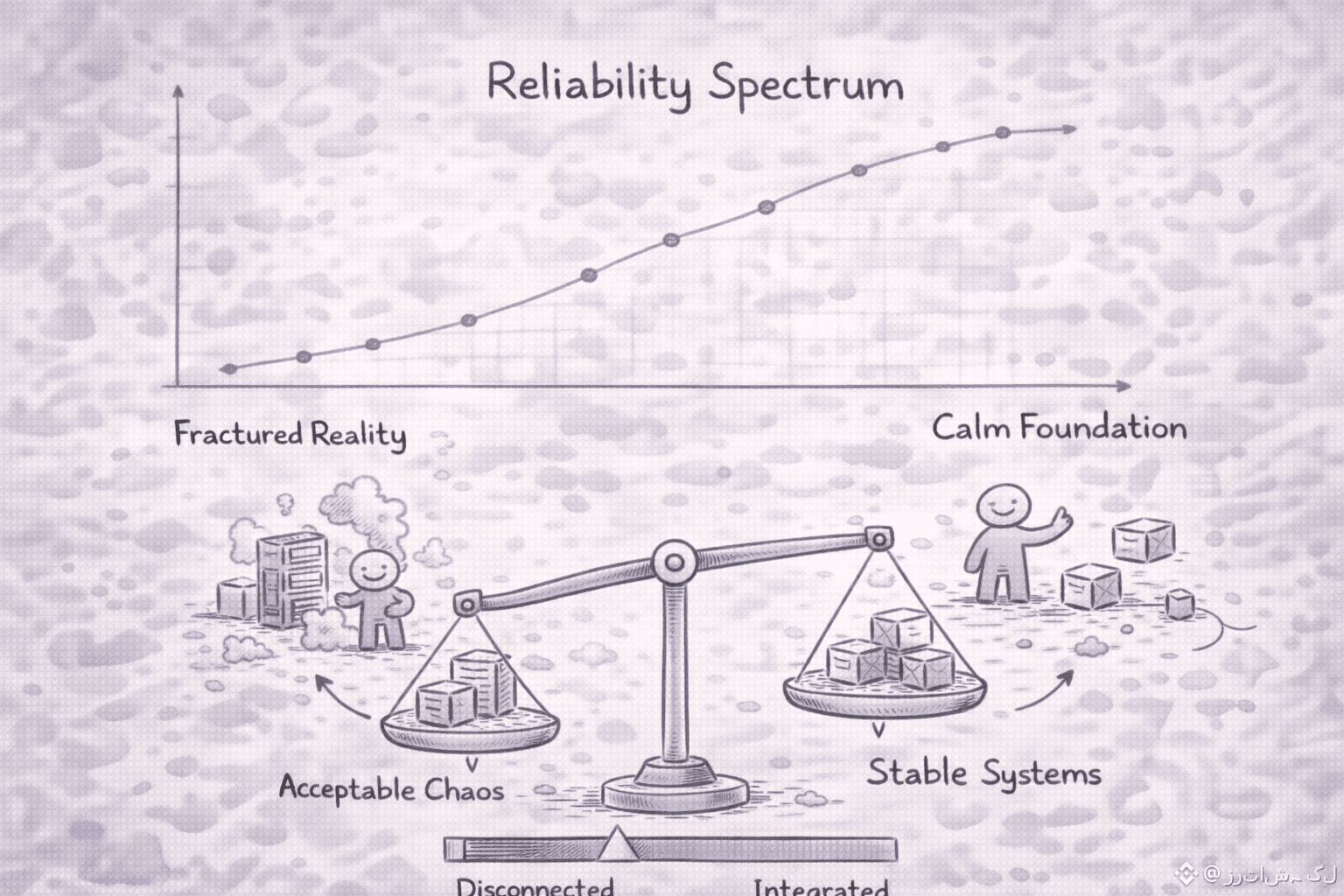
Built on Sui, this approach fits into a faster and more flexible environment where assets, logic, and storage do not feel like strangers to each other. Things start to feel connected instead of stitched together. This does not make apps magical, but it makes them calmer, and calmer systems tend to last longer.
The WAL token is there to keep this machine running, not to be the story. If Walrus works, most people will never talk about it. They will just notice that things keep working tomorrow, and the day after that too.@Walrus 🦭/acc #Walrus


