
Growth hides its own damage. When a platform is young every decision feels temporary teams assume they will revisit things later permissions are opened data is kept just in case and shortcuts feel harmless because the system is small and understandable. The real problem starts years later when those temporary choices are no longer visible but still active. The system has moved on but the old logic never left.
Over time platforms stop behaving like something that was designed and start behaving like something that remembers too much. Old signals still flow into new paths. Data created for one situation quietly shapes decisions in another. Teams sense friction but cannot trace it back because the cause lives far in the past. Nothing is technically broken yet outcomes feel increasingly unpredictable.
This is why mature systems often feel heavy. Every change triggers side effects. Every improvement requires meetings reviews and fallback plans because nobody is fully sure what depends on what anymore. The system works but only because people are constantly managing uncertainty instead of the system doing it itself.
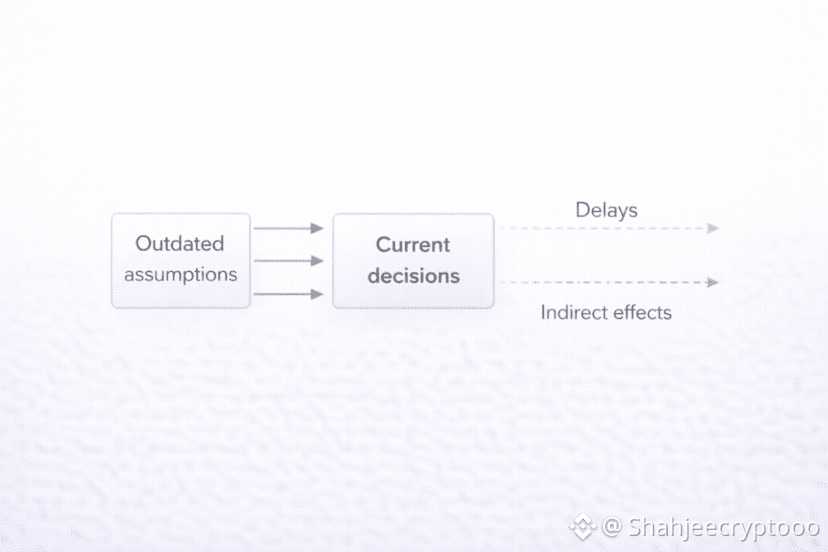
Most platforms try to fix this with more visibility. They add dashboards logs alerts and documentation. These tools help teams see what is happening but they do not answer why it is happening. Visibility exposes symptoms not roots. The deeper issue is that systems rarely know when something should stop influencing behavior.
When data is created without a clear boundary it becomes immortal by accident. When rules are added without an expiry they slowly turn into law. What was once a reasonable allowance becomes an expectation. Under new load and new users these hidden dependencies surface as latency spikes strange edge cases or inconsistent behavior. Engineers call it complexity but it is really memory without discipline.
Walrus approaches this problem differently. It treats storage and rules as active participants in system behavior not passive containers. Every piece of data is expected to carry context. Why it exists. Who owns it. And critically how long it is allowed to matter. Existence alone is not enough. Influence must be justified continuously.
This separation between data existing and data influencing is subtle but powerful. A record can remain for audit or reference while being excluded from live decision logic. The system no longer guesses relevance. It enforces it. Old inputs fade naturally instead of waiting for someone to clean them up under pressure.
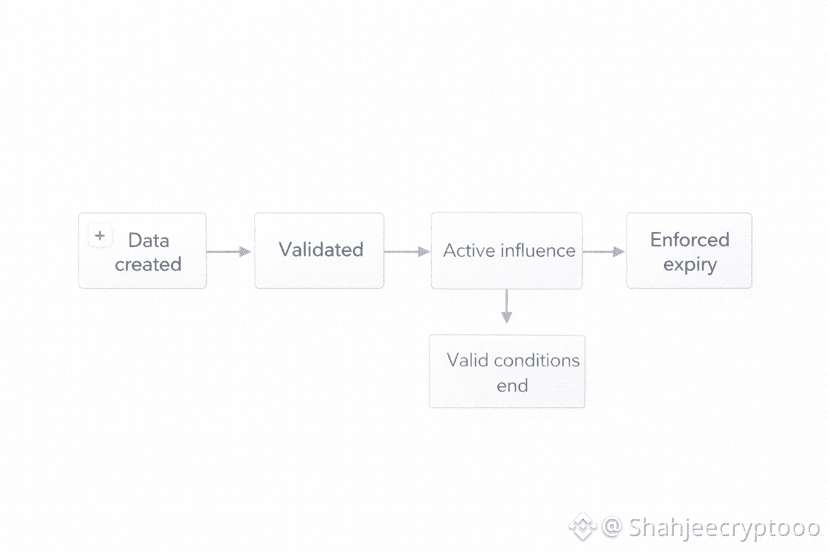
When expiry and intent are built into the foundation systems become calmer. Developers stop writing defensive code to protect against unknown states. Operations teams stop acting as human glue holding fragile assumptions together. Changes become safer because invalid paths are blocked automatically instead of discovered accidentally.
Over long periods this creates platforms that age gracefully. New contributors can understand behavior by reading structure instead of asking for history lessons. Failures become clearer because causes are not buried years deep. Most importantly trust grows not through promises or branding but through consistent outcomes.
Walrus focuses on problems that appear late when hype is gone and attention has moved elsewhere. It is designed for the phase where systems must survive their own success. By limiting how long the past is allowed to shape the present Walrus helps platforms move forward without carrying invisible weight.
Systems do not fail because they change. They fail because they never forget.