
When I look at all the progress happening in blockchain right now, I always notice the same strange imbalance. Transactions keep getting faster. Smart contracts keep getting more powerful. Fees keep going down. But whenever it comes to the actual data that apps rely on, everything still feels stuck in the past. Most projects still push their storage work to regular servers, and they simply hope nothing goes wrong. I have seen this pattern many times, and it makes the whole idea of decentralization feel incomplete.
Walrus tries to address that gap from the ground up. Instead of treating storage as something optional, it treats it as the real backbone of digital systems. The project starts from a simple but important idea. If you do not control your data, then you do not control much of anything. So Walrus uses a method that breaks files into pieces, encrypts them, and spreads them around. No one can rebuild the original file without the protocol itself. I really like this approach because it moves responsibility away from trusting a single provider.
The project is built on the $SUI network, which has an unusual way of handling information through digital objects. That means each piece of data is treated as its own unit rather than part of one massive shared state. I did not fully understand the benefits until I thought about how it allows updates without forcing the whole network to coordinate every time. By connecting to Sui, Walrus reduces the stress on the base chain and lets apps store a lot of data without slowing everything down.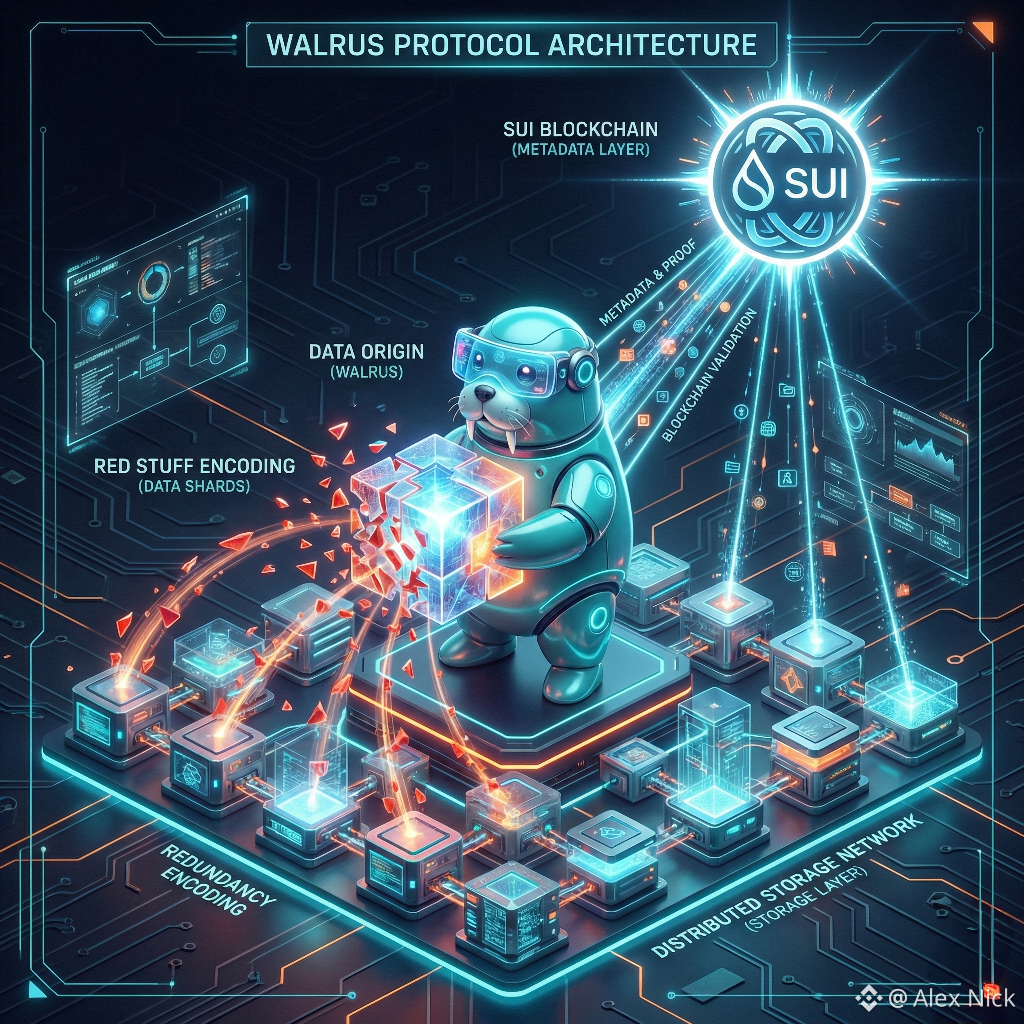
The way Walrus stores information relies on splitting files into fragments. These fragments are encrypted and then distributed across independent nodes. The idea is simple but very effective. It keeps the network resilient even if some nodes disappear. It also lowers cost because you do not need to keep full copies everywhere. The only challenge I see is making sure the pieces are always available when someone needs to rebuild the file. This requires coordination among the nodes, and that adds some complexity.
Privacy is one of the things that really stands out to me in Walrus. Most storage networks I have looked at make it way too easy for nodes to see what you are storing. Walrus takes a stricter route. Nodes only hold encrypted fragments and cannot figure out what they belong to. They cannot link the data to any person either. This gives stronger protection, but it also limits built in indexing, so apps that want search or analytics need to build those features on their own. That is the tradeoff when privacy becomes the priority.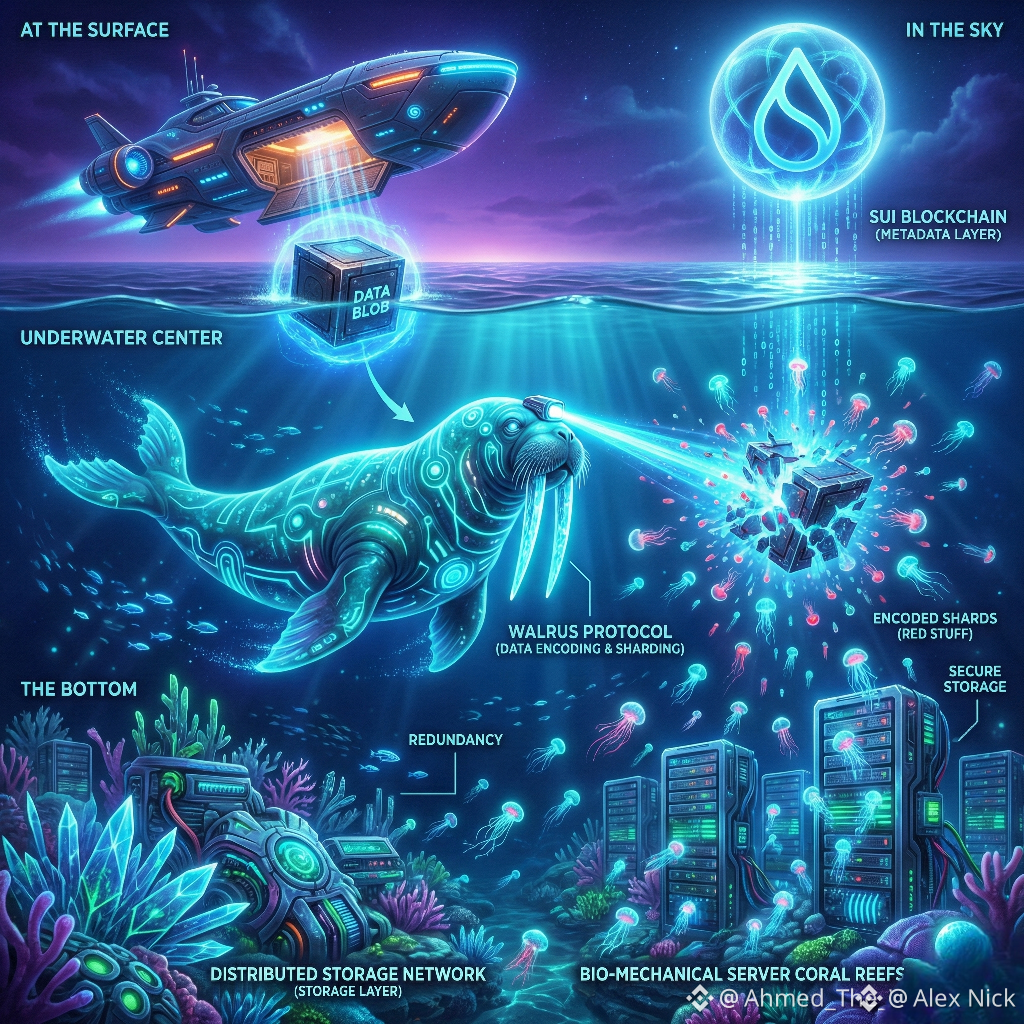
The WAL token ties everything together. It is used to pay for storage, reward node operators, and maintain the rules of the protocol. I see it as a coordination tool rather than simply a payment token. It creates incentives that keep the network running without depending on a central authority. Still, the effectiveness of this depends on real usage. If there is no demand for storage, the incentives will not hold up. The token economy depends on constant participation.
What makes Walrus important is that it tackles a very real problem that many projects avoid. Web3 is expanding into areas like finance, identity, media, and enterprise tools. All of these need strong and reliable data systems. Without a proper storage layer, everything is built on unstable ground. Walrus does not pretend to solve every possible scenario, but it builds a clear structure that others can use to create more advanced systems over time.
To me, Walrus feels like an experiment with serious long term intentions. It tries to take apart one of the hardest pieces of digital infrastructure and rebuild it in a way that fits decentralization. Its strength comes from its design and its strong alignment with privacy principles. Its challenges come from complexity and the need for actual adoption. If developers embrace it and tools become easier to use, Walrus could end up being a core building block of the next generation of Web3 applications.

