

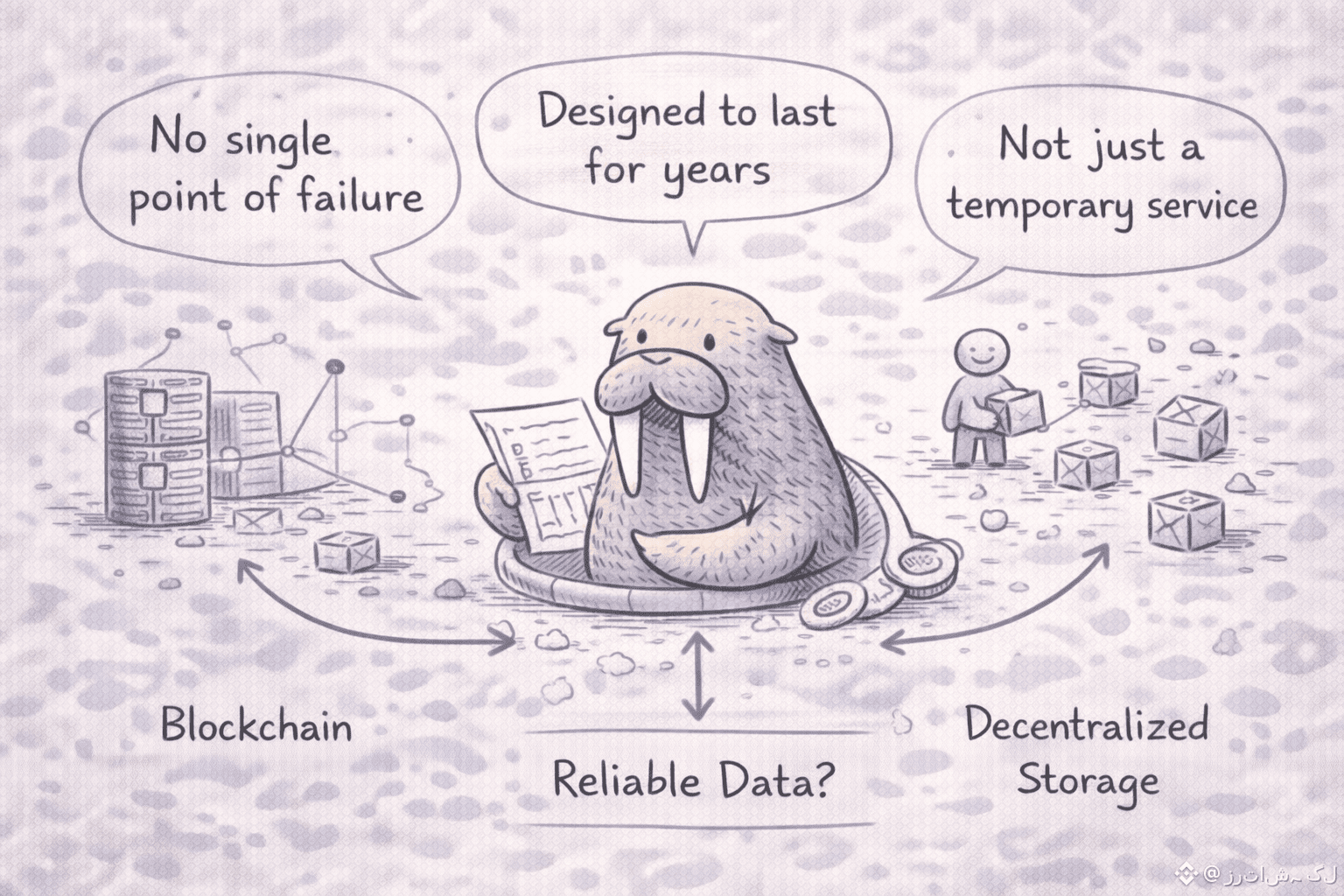
Most people think of blockchains as places where value moves. Very few think about where information actually lives, how it survives, or what happens to it after a few years. This is one of those things nobody cares about until it breaks. In the real world, cities are not built only from roads. They need water systems, power lines, and boring infrastructure that quietly works in the background. The digital world is the same. For years, Web3 has focused on transactions and smart contracts, while data was treated like something you could store “somewhere else” and forget about. That shortcut shows up later. Applications can be decentralized in logic and still depend on fragile data layers. Walrus shows up here not as a product trying to replace everything, but as something much more basic. It asks a simple question: what if data was designed to be as reliable as the chain itself. This is not a flashy problem. But it matters.
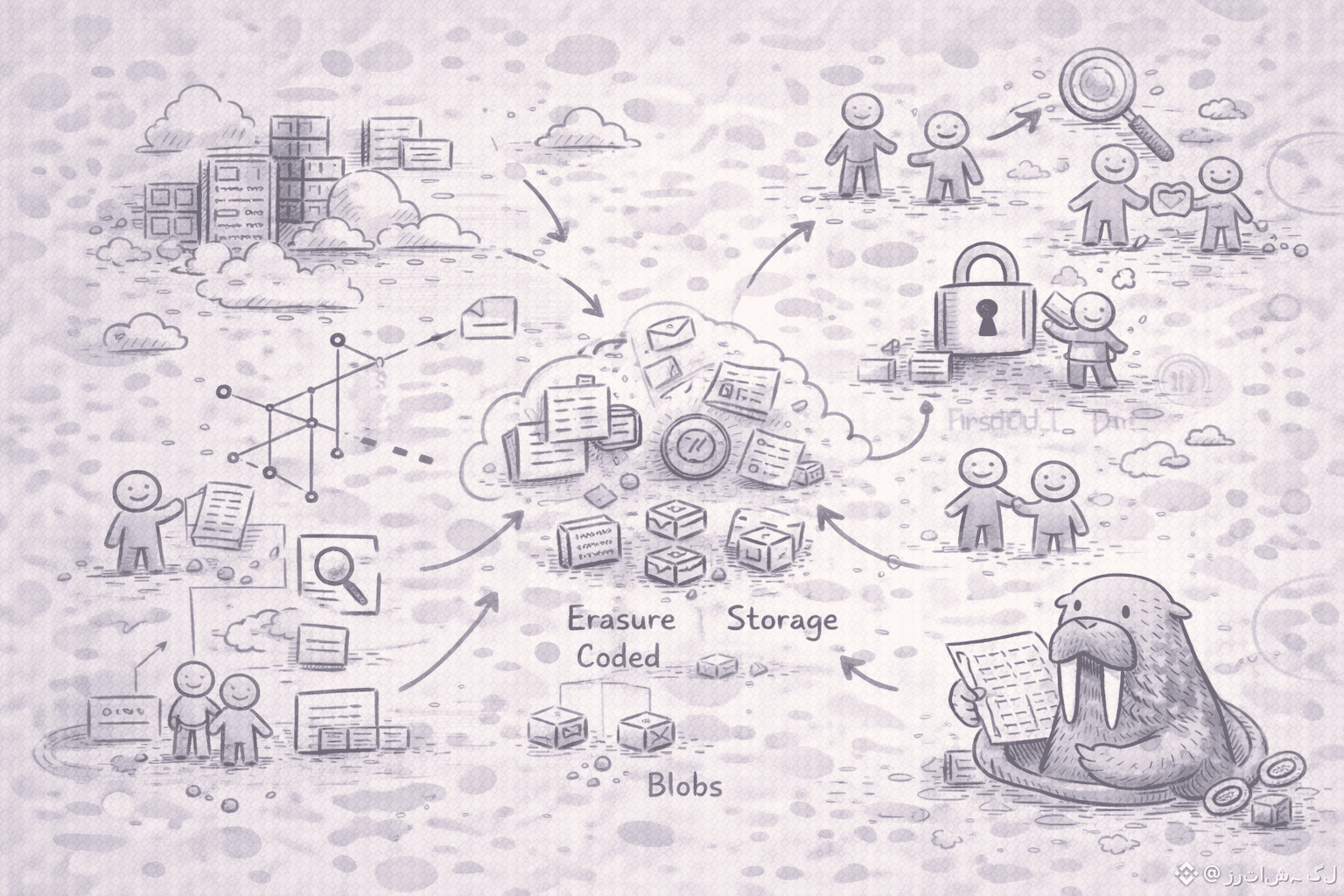

Data systems today, both in Web3 and outside of it, are mostly built around silos. Someone runs a server. Someone controls the storage. Even when things are copied, they are not designed to survive real failure. Walrus takes a different path. It uses erasure coding and blob storage, which sounds technical, but the idea is simple. Break data into pieces. Spread it out. Make it recoverable even when parts of the system disappear. This is not just about security. It is about continuity. If an application is meant to exist for years, its data cannot depend on one company or one machine. Most people don’t think about this at all. Until the day something important vanishes.
There’s also something else here. In most systems, data is passive. You store it. You fetch it. It does not really participate in how the system behaves. Walrus treats data more like a working part of the application. Something that can be verified. Something that can be referenced. Something that can be trusted without guessing. This changes how you design things. It is especially important for systems that deal with records, coordination, or long-lived state. Governance, finance, content, history. When storage stops being fragile, you stop designing around fear. You can finally design around what you actually want to build.
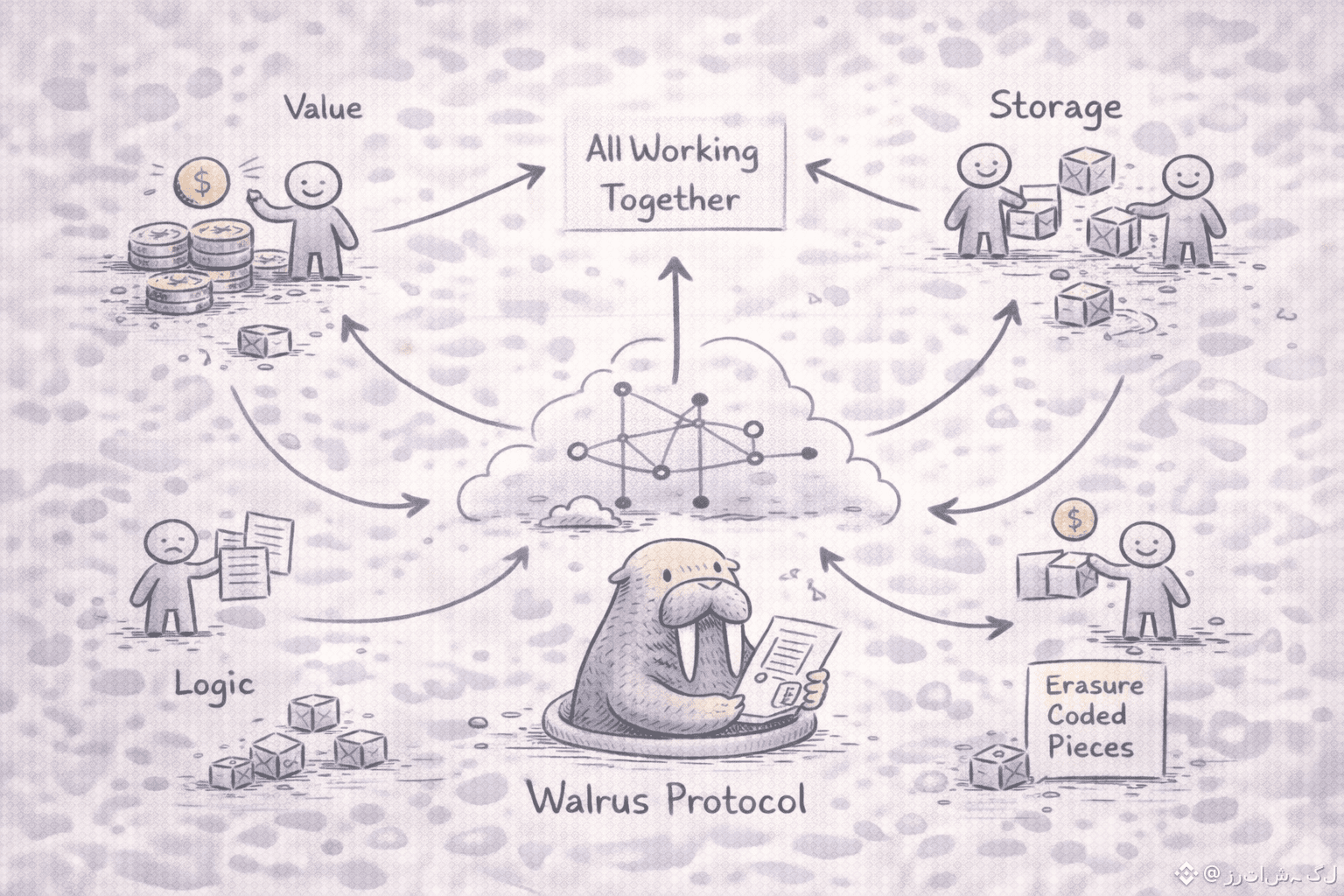
The more interesting part is how this fits with Sui. Instead of value living in one place, logic in another, and data somewhere off to the side, things start to feel like one environment. Storage, computation, and assets begin to work together instead of being glued together. This does not magically make everything simple. But it does make systems easier to reason about. Easier to maintain. Easier to trust. And yes, it makes fewer weird things break in production, which is usually what people care about in the end.
The WAL token sits inside this system mostly to keep things running. It coordinates the network. It helps pay for work. It keeps the whole thing open. It is not really the point. The point is whether the system is useful. If Walrus works, most users will never talk about it. They will just notice that things do not disappear as often. That things feel more solid. That they don’t have to think about storage at all. And honestly, that’s probably the right outcome.

