Vanar Chain is designed with a clear assumption. Future on chain activity will be driven by autonomous systems rather than manual user interaction. From that starting point the network architecture focuses on what AI agents actually require to function reliably.
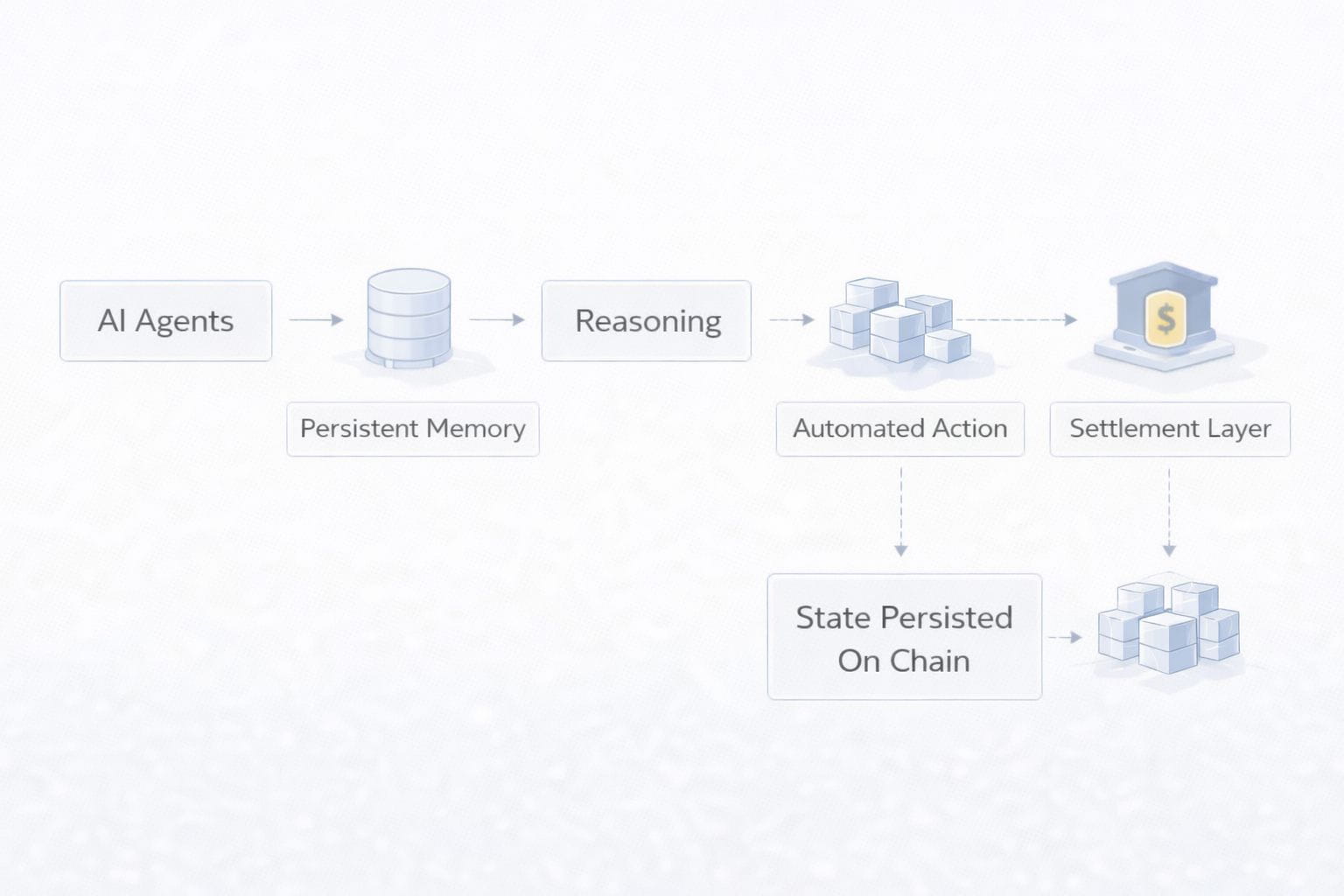
AI agents operate through continuous context. They observe data maintain memory reason over changing conditions and execute actions without human input. Infrastructure that is built around manual transactions struggles to support this behavior at scale. Vanar approaches this problem at the protocol level rather than through surface features.
AI first infrastructure requires native memory native reasoning native automation and stable settlement. These are not optional enhancements. They are structural requirements. Vanar integrates these capabilities directly into its stack so intelligence is not dependent on off chain services or temporary state.
This design choice shifts the focus away from raw throughput metrics. Speed alone does not enable autonomous systems. What matters is whether an AI agent can persist state make verifiable decisions and complete economic actions safely. Vanar prioritizes these conditions because they define real world usability.
This is also why new layer one launches face increasing difficulty. The base layer problem is already solved. The missing layer is readiness for intelligent agents. Vanar positions itself in that gap by aligning infrastructure with how AI systems actually behave.
VANRY reflects this alignment. Its role is tied to participation settlement and usage across an intelligence driven stack rather than short term narratives. If AI agents become default actors in Web3 infrastructure designed around them will define the next phase of value creation.