
I noticed it the moment I uploaded my first file, a routine action, barely worth thinking about. The progress bar moved steadily, fragments dispersing across nodes, each carrying a silent responsibility. Somewhere in the network, a decision had already been made: missing pieces would be repaired, disruptions absorbed, continuity maintained. I didn’t see it, yet I felt it a quiet pressure in the system, a rhythm that demanded participation.
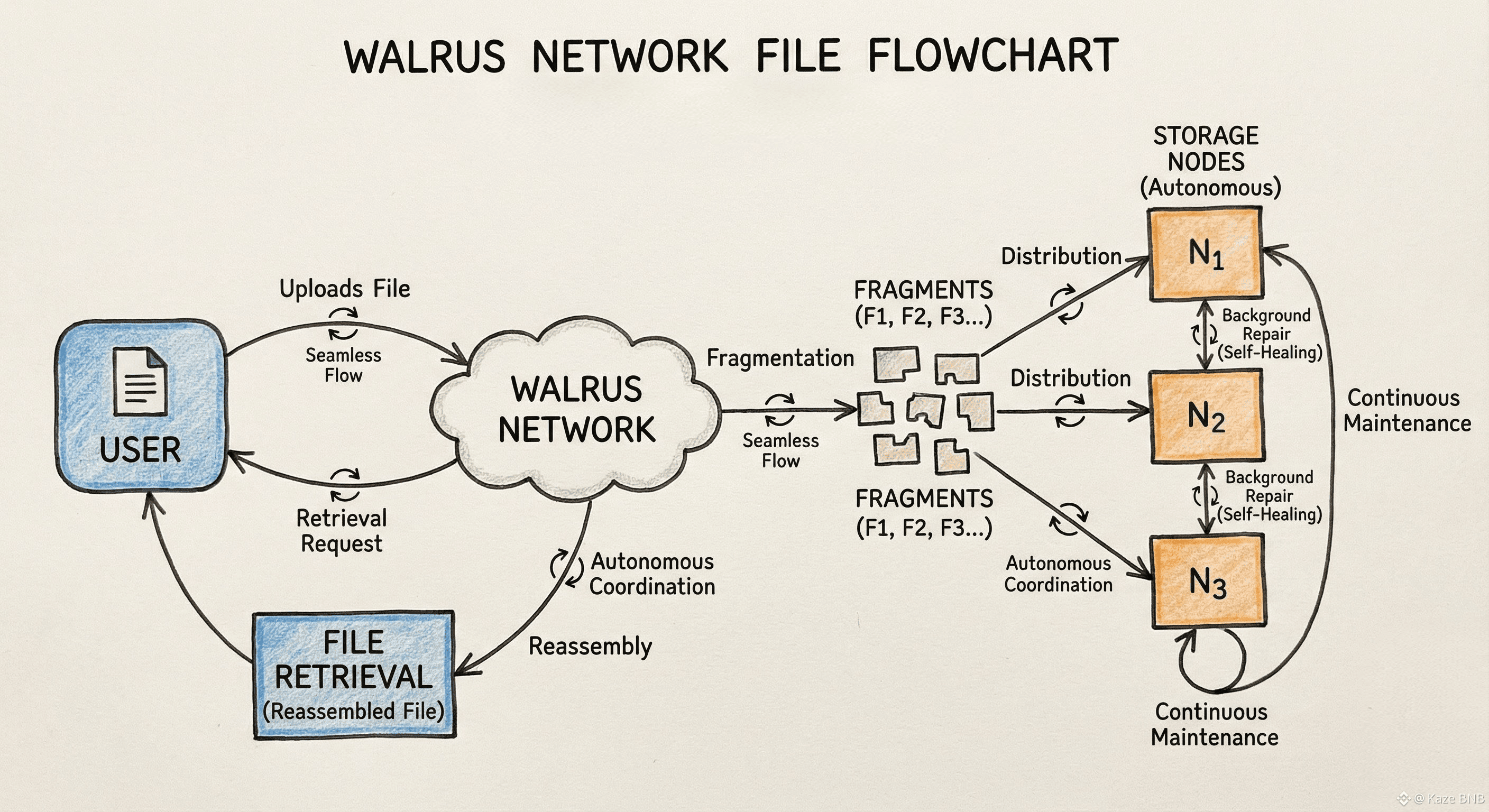
When a fragment didn’t appear immediately, another node stepped in, unseen, without alerts or warnings. The system treated absence as normal, not an exception. That’s when Walrus ($WAL ) became perceptible, not as a balance, not as a reward, but as an invisible force shaping behavior. Nodes acted because inaction carried a subtle cost. Responsibility wasn’t enforced; it was expected, and Walrus (WAL) made that expectation unavoidable.
Later, when multiple requests collided on the same data, the network didn’t stumble. Fragments moved, repaired, and served in perfect coordination. I realized the stakes were constant: reliability depended on every participant quietly doing its part. #Walrus (WAL) didn’t push; it held the network together, enforcing accountability even when no one was watching. The tension was invisible, yet the consequence of inaction was felt.
As I continued exploring the system, I noticed subtle variations in timing, some fragments took longer paths, some nodes appeared briefly offline, yet repairs and redistribution always happened seamlessly. Nothing broke. Nothing froze. Everything was happening under the radar, yet the network’s heartbeat was unmistakable. Walrus (WAL) was the invisible hand keeping all parts aligned, ensuring that even under high load or node churn, no single failure would cascade into visible disruption.
The more I observed, the more I saw Walrus as gravity, binding the network together. Consistency mattered more than convenience; continuity more than speed. Repairs, fragment verification, and governance happened without ceremony, yet nothing was neglected. Every action mattered, even when unseen; every omission carried weight. The system didn’t ask for attention, it earned trust by surviving chaos silently.
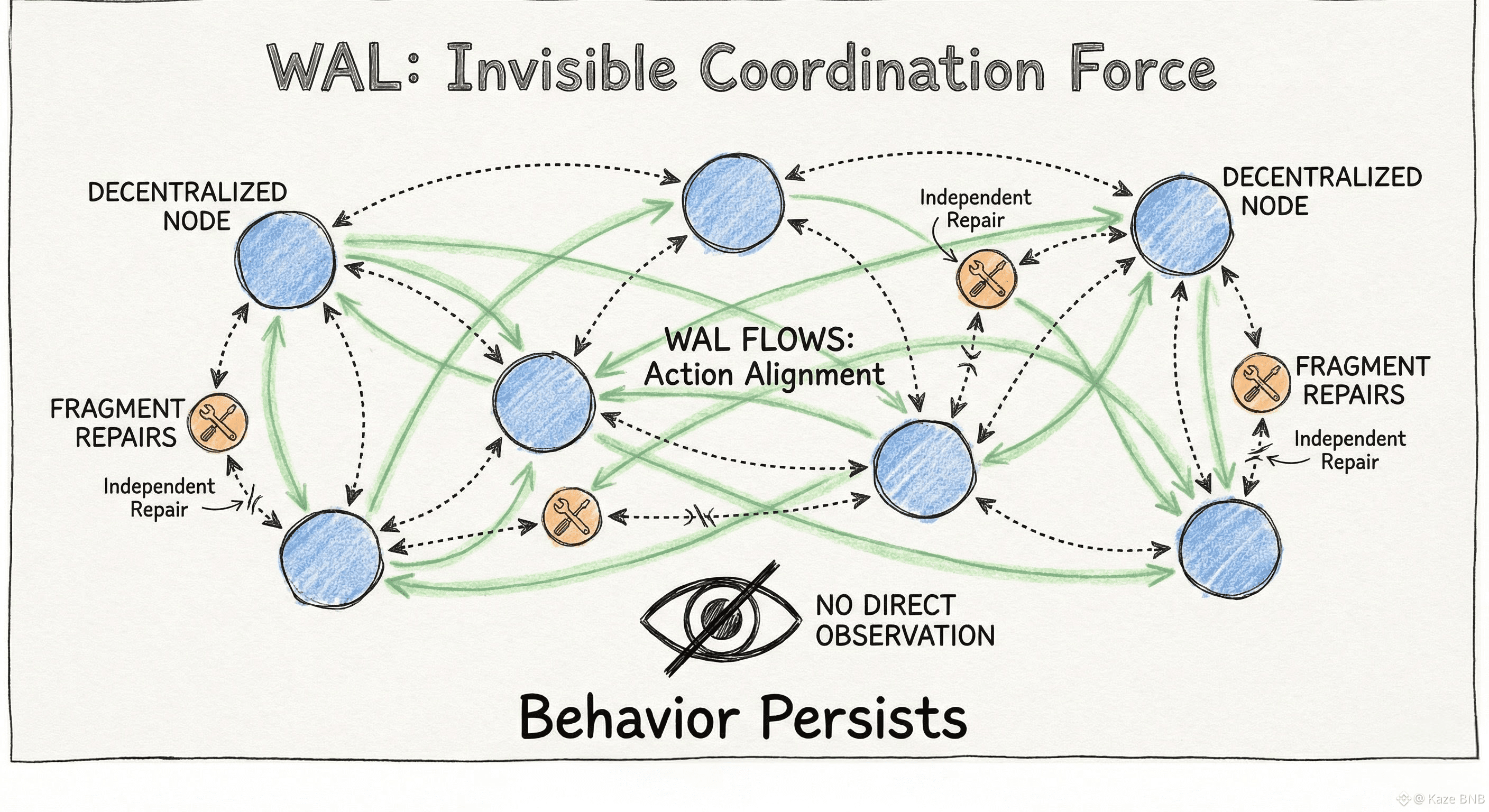
One evening, I tested concurrent uploads across multiple applications. The network’s behavior was mesmerizing: fragments interleaved, repairs prioritized, and requests served with uncanny precision. I could feel the stakes rising, not in chaos or error messages, but in the subtle orchestration beneath the surface. WAL was everywhere, nudging nodes to act, nudging responsibility forward, making sure no part of the system could ignore its duty.
By the time my file completed its journey, I understood: Walrus wasn’t just a storage network. It was a living environment, where nodes, fragments, and tokens acted as a single organism. WAL wasn’t a tool, a ledger, or a reward, it was the pulse keeping everything accountable under pressure, ensuring that every node, every fragment, every action mattered.
The system had taught me something subtle but profound: reliability is quiet, composure is intentional, and pressure shapes behavior even when no one is watching. WAL transforms storage from a simple service into a networked ecosystem where trust is earned continuously, responsibility is shared inherently, and the invisible orchestration of nodes keeps everything aligned, resilient, and alive.

