
Walrus is more than a decentralized storage — it’s a programmable data platform redefining how Web3 applications manage, verify, and use data at scale without any compromising. The official site (wal.app) and docs show a protocol designed to bridge blockchains, real-world apps, AI systems, and multimedia platforms with decentralized, high-availability data that developers can control and build around.
What Walrus Actually Is
At its core, Walrus is a decentralized storage and data availability network designed for large blobs — files like images, video, AI datasets, web content, and other heavy data — with high performance, cost efficiency, and resilience.
Walrus tightly integrates with the Sui blockchain, using Sui for just giving names :
Coordination and payments
Tracking storage ownership
Proofs of availability
Smart contract interactions for storage logic
This allows Walrus to treat data as on-chain resources, meaning developers can reference, own, and manage stored data directly from smart contracts without risking about their identity — a major step beyond traditional systems that simply “store and forget.”
Key Features That work and solved the problem
Programmability
Walrus makes each stored blob a programmable object. Smart contracts can attach metadata, manage access, automate renewals, or even delete content under specified conditions — transforming passive data into dynamic assets that can interact with on-chain logic.
Cost Efficiency & Scalability
It's not give priority of storing full copies everywhere, Walrus uses Red Stuff erasure-coding to break data into encoded parts spread across nodes. This reduces cost and improves resilience compared with full replication approaches. 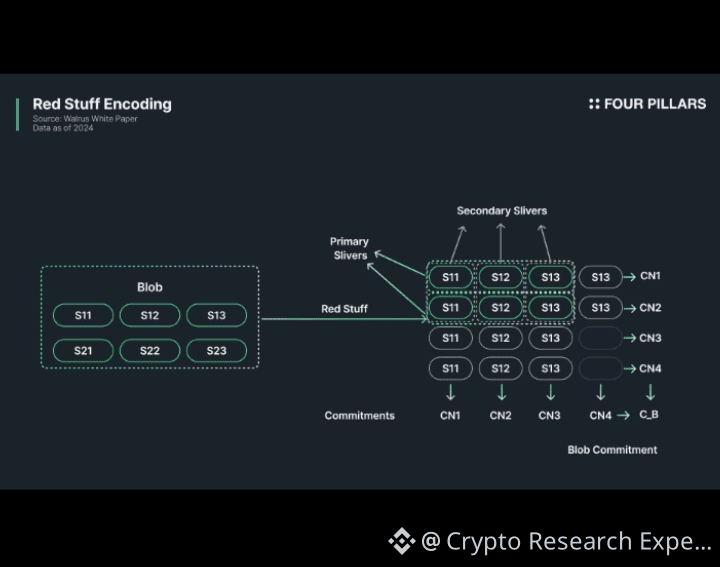
Flexible Access
Developers can access Walrus through a variety of interfaces — CLI tools, SDKs, HTTP APIs, and web frameworks you can also check in website — making it friendly for both Web3 builders and Web2 developers migrating to decentralized data.
Integration with Traditional Tech
Walrus doesn’t replace existing content delivery systems; it complements them.
It is compatible with CDNs and caching solutions while still providing a decentralized storage foundation without having any trouble. 
Why Programmability Changes Everything
Traditional decentralized storage is treated as a static repository. You upload data and hope it remains there.
Walrus flips that model by making data interactive and more efficient cost less than — meaning is explained previously at many time so I just giving name of them:
Smart contracts can control storage lifecycle
DApps can dynamically update metadata
Access rights can be governed programmatically
Storage capacity becomes a tokenized, tradable resource
This opens doors to applications that were previously impractical on decentralized storage — automated storage rental markets, on-chain storage governance, and dynamic multimedia experiences.
A Foundation for Web3 Growth
Walrus is designed not just for one chain. While Sui is its control plane, the protocol is chain-agnostic for data storage, meaning other ecosystems can leverage it as part of their decentralized data stack.
In an era where AI, on-chain gaming, NFT experiences, and interactive dApps demand reliable, verifiable, and programmable data, Walrus is emerging as a foundational infrastructure layer — moving decentralized storage from passive utility to active blockchain asset. #Walrus $WAL @Walrus 🦭/acc


