

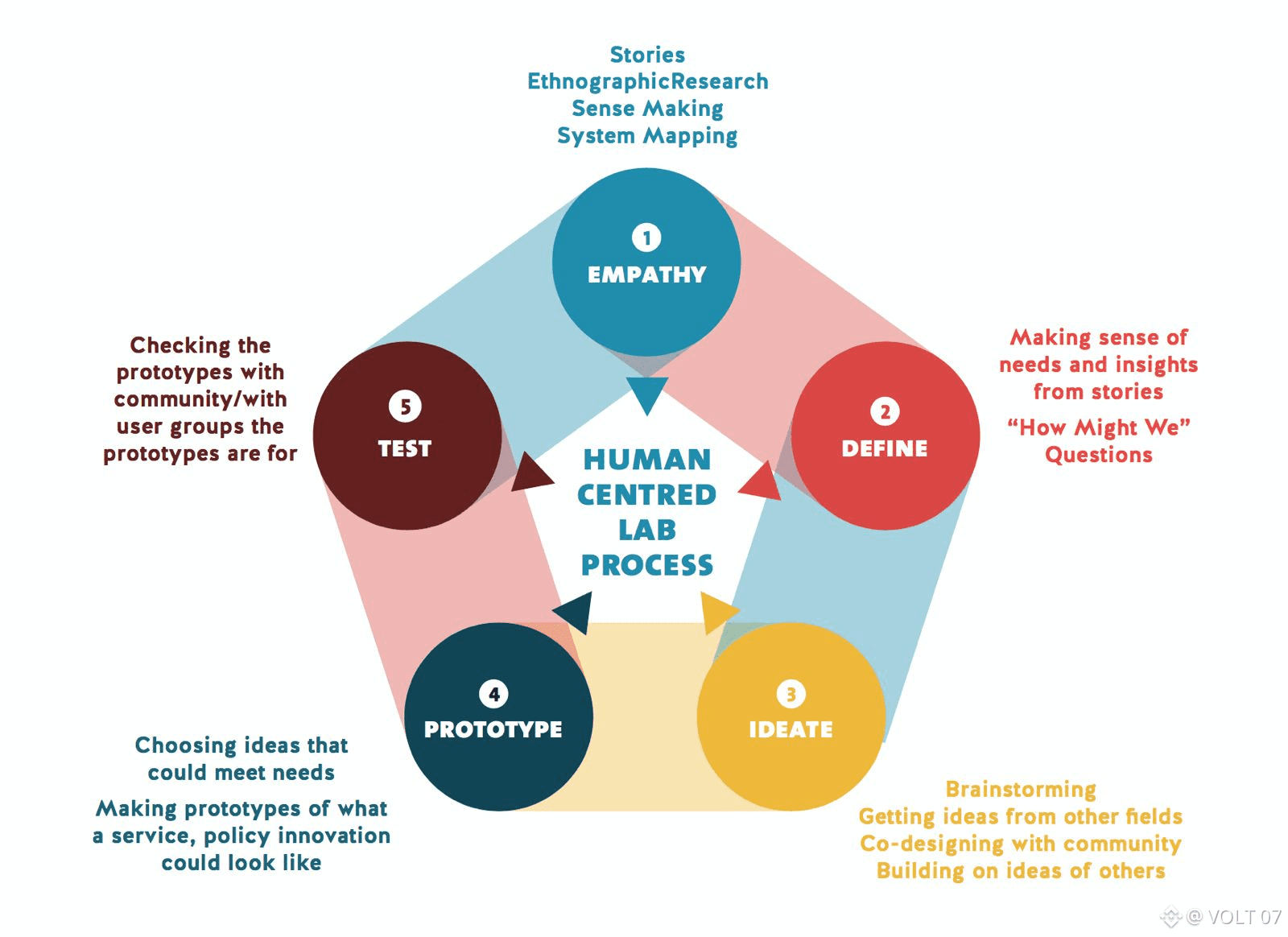
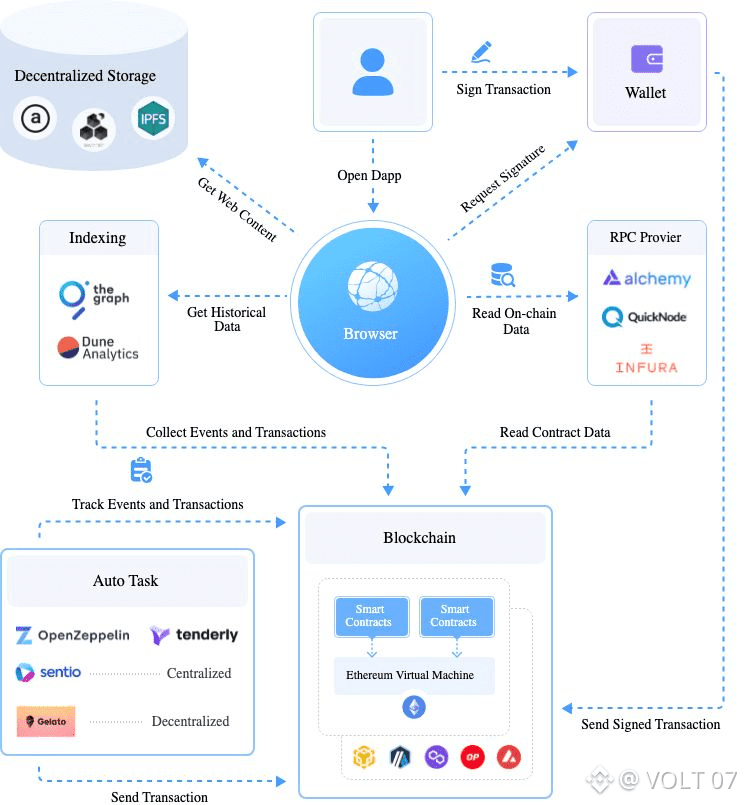
 Protocol diagrams are clean. Human behavior isn’t.
Most decentralized storage systems look flawless on paper. Boxes align. Arrows flow. Incentives close neatly. But diagrams don’t panic. Humans do. Diagrams don’t forget. Humans do. Diagrams don’t discover failure too late. Humans do all the time.
The moment storage leaves whitepapers and enters real use, the real design question appears:
Was this system built for diagrams — or for people?
That question fundamentally reframes how Walrus (WAL) should be evaluated.
Humans don’t experience storage as architecture. They experience it as outcomes.
Users never ask:
how many replicas exist,
how shards are distributed,
how incentives are mathematically balanced.
They ask:
Can I get my data back when I need it?
Will I find out something is wrong too late?
Who is responsible if this fails?
Will this cause regret?
Most storage designs optimize for internal coherence, not external consequence.
Protocol diagrams assume rational attention. Humans don’t behave that way.
In diagrams:
nodes behave predictably,
incentives are continuously evaluated,
degradation is instantly detected,
recovery is triggered on time.
In reality:
attention fades,
incentives are misunderstood or ignored,
warning signs are missed,
recovery starts only when urgency hits.
Systems that rely on idealized behavior don’t fail because they’re wrong they fail because they assume people act like diagrams.
Human-centered storage starts with regret, not throughput.
The most painful storage failures are not technical. They are emotional:
“I thought this was safe.”
“I didn’t know this could happen.”
“If I had known earlier, I would have acted.”
These moments don’t show up in benchmarks. They show up in post-mortems and exits.
Walrus designs for these human moments by asking:
When does failure become visible to people?
Is neglect uncomfortable early or only catastrophic later?
Does the system protect users from late discovery?
Why diagram-first storage silently shifts risk onto humans.
When storage is designed around protocol elegance:
degradation is hidden behind abstraction,
responsibility diffuses across components,
failure feels “unexpected” to users,
humans become the final shock absorbers.
From the protocol’s perspective, nothing broke.
From the human’s perspective, trust did.
Walrus rejects this mismatch by designing incentives and visibility around human timelines, not protocol cycles.
Humans need early discomfort, not late explanations.
A system that works “until it doesn’t” is hostile to human decision-making. People need:
early signals,
clear consequences,
time to react,
bounded risk.
Walrus emphasizes:
surfacing degradation before urgency,
making neglect costly upstream,
enforcing responsibility before users are exposed,
ensuring recovery is possible while choices still exist.
This is not just good engineering. It is humane design.
As Web3 matures, human tolerance shrinks.
When storage underwrites:
financial records,
governance legitimacy,
application state,
AI datasets and provenance,
users don’t tolerate surprises. They don’t care that a protocol behaved “as designed.” They care that the design didn’t account for how people discover failure.
Walrus aligns with this maturity by treating humans as first-class constraints, not externalities.
Designing for humans means accepting uncomfortable tradeoffs.
Human-centric systems:
surface problems earlier (and look “worse” short-term),
penalize neglect instead of hiding it,
prioritize recovery over peak efficiency,
trade elegance for resilience.
These choices don’t win diagram beauty contests.
They win trust.
Walrus chooses trust.
I stopped being impressed by clean architectures.
Because clean diagrams don’t explain:
who notices first,
who pays early,
who is protected from late regret.
The systems that endure are the ones that feel boringly reliable to humans because they never let problems grow quietly in the background.
Walrus earns relevance by designing for the way people actually experience failure, not the way protocols describe success.
Designing storage for humans is not softer it’s stricter.
It demands:
earlier accountability,
harsher incentives,
clearer responsibility,
less tolerance for silent decay.
But that strictness is what prevents the moments users never forget the moment they realize too late that a system was never designed with them in mind.

