


WAL token staking is the economic backbone that makes Walrus’ data security guarantees credible instead of purely theoretical.
By forcing storage nodes and delegators to put real value at risk the protocol can strongly incentivize honest storage and punish data unavailability or malicious behavior.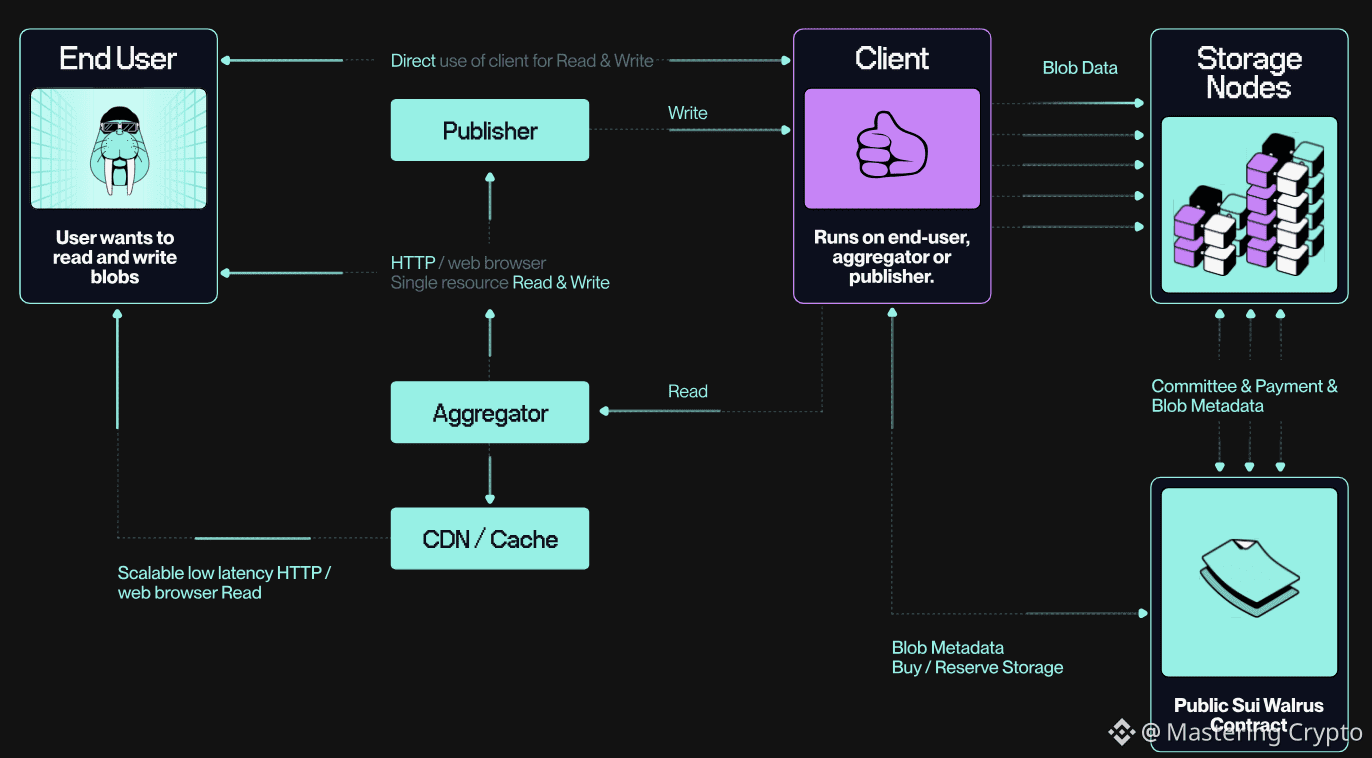
Staking first determines who is trusted with data.
Only nodes that stake $WAL and attract delegated stake can join the active storage committee and the amount of stake they control influences how much data is assigned to them.
This makes large scale Sybil attacks expensive because running many nodes without meaningful stake does not result in significant data placement.
Staked WAL is then tied directly to storage performance.
Nodes earn rewards for consistently passing Proof of Availability challenges where they must show they still hold the required slivers of user data.
Once slashing is fully enabled nodes that go offline serve data unreliably or cheat during proofs can lose a portion of their bonded and delegated WAL creating a clear financial cost for harming data availability.
Delegated staking extends this security model to regular token holders.
Users who do not run hardware can delegate WAL to storage nodes share in their rewards and indirectly strengthen honest operators by increasing their stake weight and data allocation.
Because delegators also share slashing risk they are incentivized to choose reliable well run nodes which further concentrates data on operators with a strong uptime and proof track record.
Finally staking data and proof outcomes are coordinated on Sui via smart contracts giving Walrus a transparent onchain audit trail of who staked what who stored which blobs and how nodes performed over time.
This combination of bonded stake slashing and reward distribution turns data availability into a programmable economically secured resource rather than a best effort promise from anonymous storage nodes.

