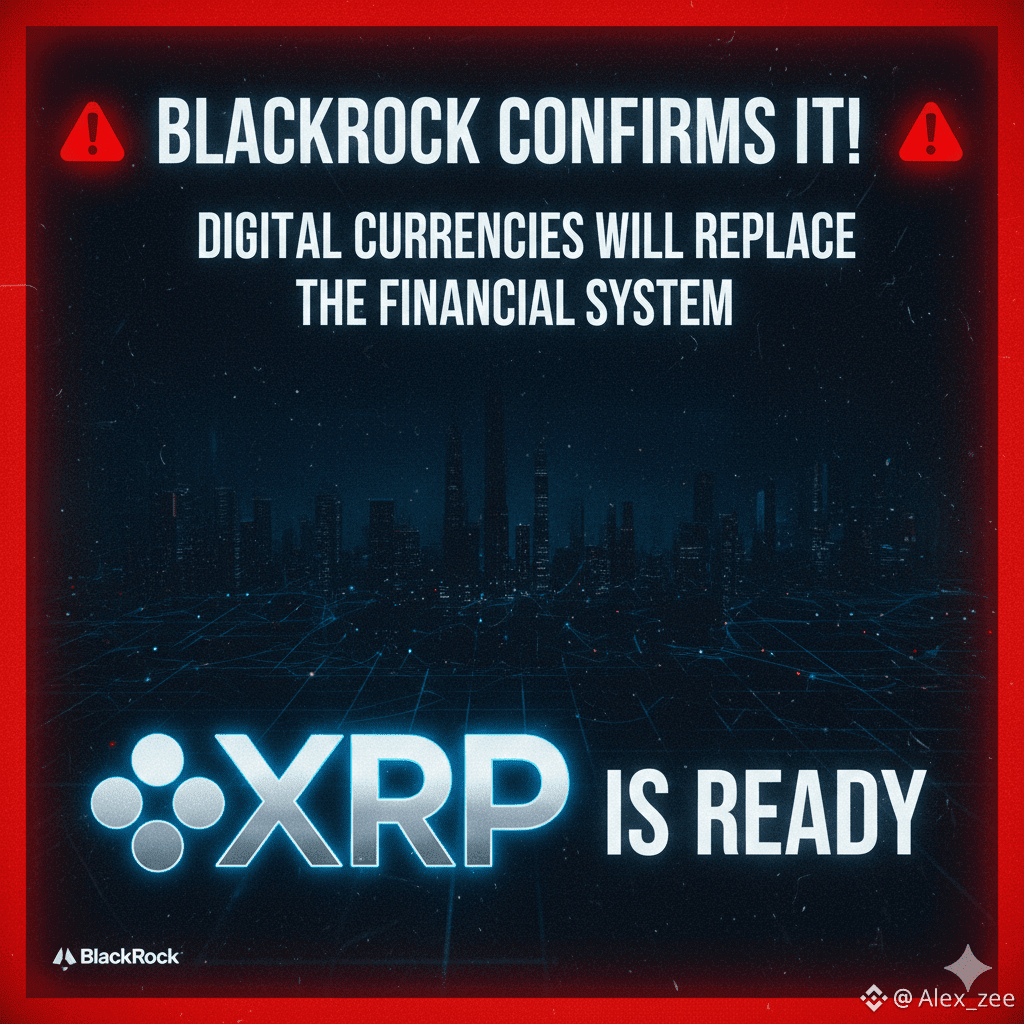
Recent comments from BlackRock, one of the world's largest asset managers, have sparked considerable discussion within the cryptocurrency community. While BlackRock's official stance typically reflects a cautious but increasingly open view towards digital assets, any indication from such a financial behemoth regarding the future of the financial system inevitably carries weight. The sentiment that "digital currencies will replace the financial system" captures a forward-looking vision that many in the crypto space have long championed.

The Inevitable Shift Towards Digital Currencies
The move towards a more digitized financial infrastructure is not a new concept, but it has accelerated dramatically with the advent of blockchain technology. Central Banks worldwide are actively exploring and developing Central Bank Digital Currencies (CBDCs), while stablecoins and other digital assets are gaining traction in various payment and settlement use cases.

BlackRock's interest in the digital asset space has been growing, demonstrated by its initiatives in tokenization and its expressed views on the efficiency and transparency that blockchain technology can bring to financial markets. While "replacing" the entire traditional financial system might be a strong interpretation, the firm's acknowledgment of digital currencies as a transformative force is clear. They see a future where traditional assets are tokenized, trading is streamlined, and settlement is near-instantaneous. This vision aligns with a future where digital assets play a central, rather than peripheral, role.
XRP and its Role in the Digital Transformation
Amidst this evolving landscape, XRP has often been highlighted by its proponents as a digital asset uniquely positioned for institutional adoption, particularly in cross-border payments and remittances. Developed by Ripple, XRP Ledger is designed for speed, low cost, and scalability, aiming to facilitate efficient global value exchange.

The argument for XRP's readiness often centers on several key points
Speed and Efficiency: XRP transactions settle in seconds, a significant improvement over traditional banking systems that can take days. This speed is crucial for high-volume international transactions.
Low Cost: Transaction fees on the XRP Ledger are extremely low, making it an attractive option for both retail and wholesale payments, especially when compared to traditional SWIFT fees.
Scalability: The XRP Ledger is built to handle a high volume of transactions per second, making it suitable for institutional use cases.
Bridge Currency Potential: XRP is often viewed as a "bridge currency" that can facilitate the exchange of different fiat currencies or other digital assets without requiring pre-funded nostro/vostro accounts, thereby reducing liquidity costs for financial institutions.
Challenges and the Path Forward
Despite its technical advantages and strategic positioning, XRP has faced regulatory challenges, particularly in the United States. The ongoing legal clarity sought by Ripple is a critical factor for wider institutional adoption. However, beyond the US, Ripple has continued to expand its partnerships and use cases globally, reinforcing its vision for a more efficient financial system powered by digital assets.
BlackRock's increasing engagement with digital assets underscores a broader industry trend. While the exact timeline and nature of the "replacement" or integration of digital currencies into the existing financial system remain to be fully seen, the direction is clear. For assets like XRP, which are built with institutional use cases in mind, this evolving landscape presents both significant opportunities and the continued need to navigate regulatory complexities to fully realize their potential in the future of finance.