


—by Mysten Labs for Scalable On-Chain Applications
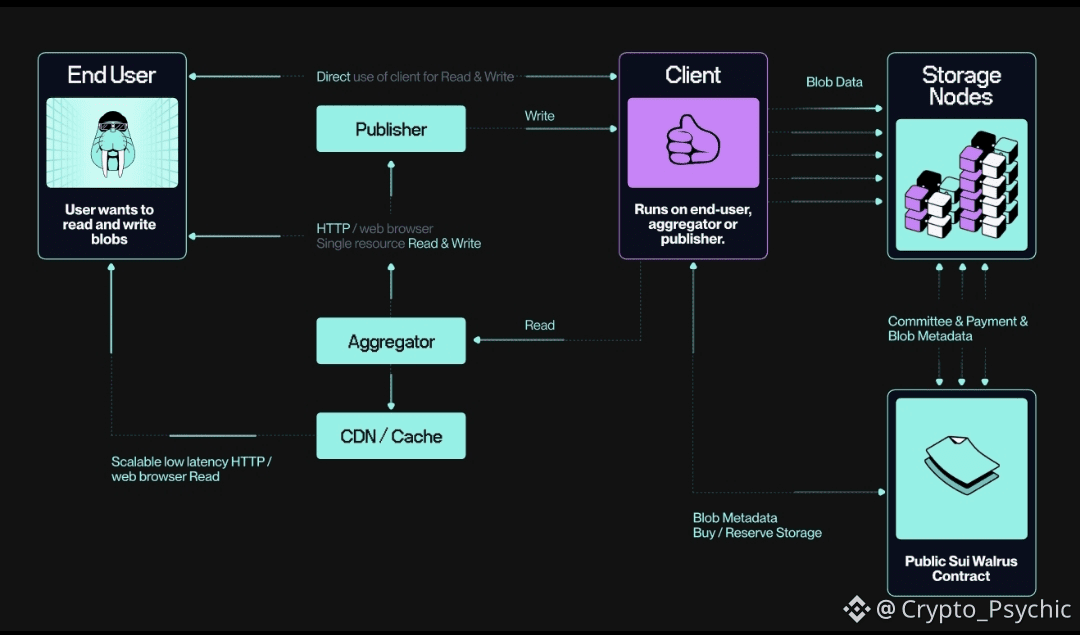
Walrus is a decentralized storage and data availability protocol developed as part of the Sui ecosystem.
It is designed to solve a specific and practical problem: how Sui applications can handle large amounts of data without overloading the blockchain, while still maintaining strong correctness and availability guarantees.
Unlike many storage networks that aim to be chain-agnostic, Walrus is deeply Sui-native.
Its architecture, design assumptions, and roadmap are tightly aligned with Sui’s object-centric model, Move language, and high-throughput execution environment.
The WAL token is used to coordinate storage providers, secure availability guarantees, and support the long-term operation of the network.

1. Origins and Team
Walrus is developed by Mysten Labs, the core team behind the Sui blockchain.
About Mysten Labs
Mysten Labs was founded by former Meta (Facebook) engineers who previously worked on:
Diem (Libra)
Move programming language
High-performance distributed systems
Cryptography and consensus research
The same team that designed Sui’s core architecture is responsible for Walrus.
This matters because Walrus is not an external add-on — it is designed as a first-class data layer for Sui.
Walrus is positioned as part of Sui’s long-term infrastructure stack, alongside:
the Sui base layer
Move smart contracts
object-based execution
parallel transaction processing
2. Why Walrus Exists
Sui applications are fast and scalable, but like all blockchains, Sui is not designed to store large files or high-volume data.
Examples of data Sui apps commonly need:
NFT images and metadata
game assets (maps, models, textures)
social content (posts, images, videos)
off-chain application state
historical records
AI-related datasets
Storing this data directly on-chain is:
expensive
inefficient
harmful to chain performance
Walrus was created to handle data that should not live on the base layer, while still allowing smart contracts to verify and rely on that data.
3. What Walrus Actually Does
Walrus provides two closely related functions:
A. Decentralized Storage
persistent storage for large data objects
redundancy and fault tolerance
long-term data retention
B. Data Availability
guarantees that data exists and can be retrieved
cryptographic proofs that data is being stored
suitability for applications that depend on off-chain data
The key distinction is that Walrus is not just a file store.
It is built so that Sui smart contracts can safely reference off-chain data without trusting a centralized server.
4. How Walrus Integrates With Sui
Walrus is designed around Sui’s object model.
Instead of embedding raw data on-chain, Sui contracts store:
content identifiers
cryptographic commitments
metadata
access and ownership rules
Walrus nodes store the actual data and periodically prove:
that the data exists
that it has not been tampered with
that it remains available
This allows Sui applications to:
scale without bloating on-chain state
maintain strong correctness guarantees
build data-heavy features without sacrificing performance
5. The WAL Token: Purpose and Design
WAL is not a generic utility token.
It exists to coordinate real operational roles in the Walrus network.
Primary functions of WAL
1. Storage Provider Staking
Storage providers stake WAL to participate.
Staked WAL acts as a security bond.
honest behavior → rewards
downtime or missing data → penalties or slashing
2. Data Availability Incentives
Providers earn WAL for:
serving data
participating in availability proofs
maintaining uptime over time
This ensures data is not only uploaded, but remains accessible.
3. Storage Pricing
WAL is used to price:
storage capacity
duration of data retention
availability guarantees
This creates a market where capacity scales with real demand.
4. Governance
WAL holders participate in decisions such as:
protocol upgrades
economic parameter tuning
provider requirements
availability proof rules
Because Walrus is infrastructure, governance decisions directly affect network safety.
6. Current Focus and Roadmap Direction
Walrus is being developed in phases, aligned with Sui’s ecosystem growth.
Near-Term Focus
core storage and availability functionality
integration with Sui smart contracts
onboarding early storage providers
supporting NFT, gaming, and social applications
performance testing under real application load
Mid-Term Initiatives
stronger availability proof mechanisms
improved storage efficiency
better developer tooling and SDKs
tighter integration with Sui app frameworks
scaling provider participation
Long-Term Vision
become the default data layer for Sui
support increasingly data-intensive applications
enable new categories of apps (games, AI, social)
long-term data persistence guarantees
sustainable economics for storage providers
Walrus is not trying to expand to every chain — its roadmap is centered on deepening its role inside Sui.
7. Who Walrus Is Built For
Walrus is designed primarily for:
Developers
building data-heavy Sui applications
avoiding on-chain storage costs
relying on verifiable off-chain data
Application Teams
NFT projects
games
social protocols
AI-integrated apps
Infrastructure Providers
storage node operators
long-term data hosts
participants in availability markets
Walrus is not aimed at retail users directly — it is backend infrastructure.
8. Strengths of the Walrus Approach
built by the Sui core team
native integration with Sui’s object model
clear separation of execution vs data
verifiable availability guarantees
avoids blockchain state bloat
designed for real application needs
infrastructure-first, not speculative
9. Risks and Open Questions
adoption depends on Sui ecosystem growth
storage provider decentralization must scale
economic parameters need careful calibration
competition from other data availability solutions
long-term demand must justify storage incentives
These are standard risks for early-stage infrastructure.
10. Summary
Walrus is a Sui-native decentralized storage and data availability protocol developed by Mysten Labs to support scalable, data-heavy applications.
It allows Sui smart contracts to reference off-chain data safely, without sacrificing performance or correctness.
The WAL token coordinates storage providers, enforces availability guarantees, and supports long-term network operation.
Rather than trying to be a universal storage layer, Walrus focuses on doing one thing well:
providing reliable, verifiable data infrastructure for the Sui ecosystem.


