


(Uncle Ai summarizes the data first, so that it is easy to interpret later. Paying attention and liking are the motivation for sharing. Thank you, my friend)
This week is non-agricultural week, and the ADP data was released last night at 8:15 pm on the 3rd.
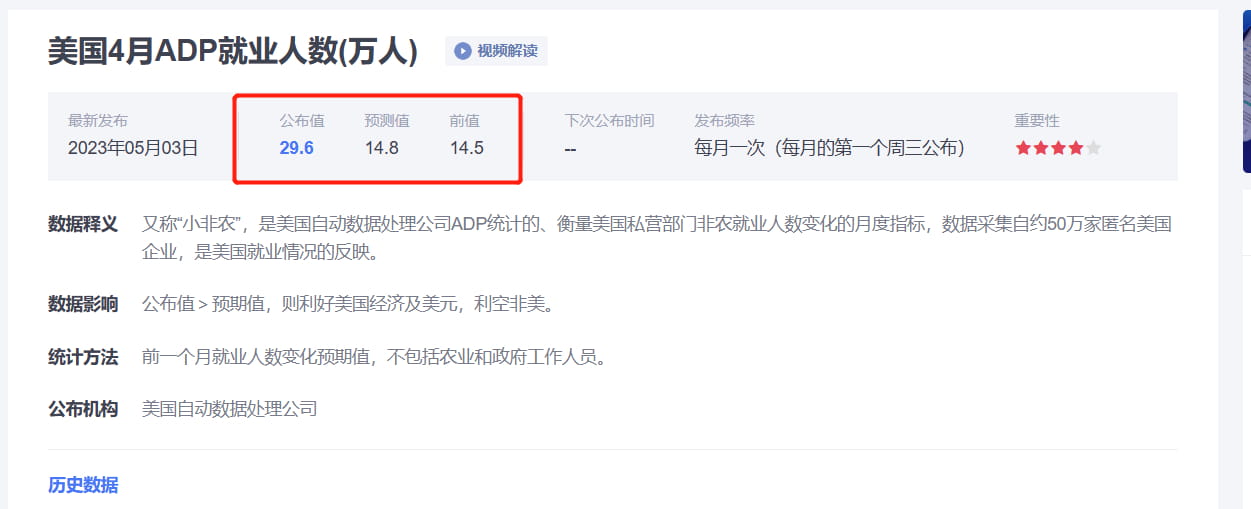
The US Federal Reserve's interest rate decision (upper limit) until May 3 will be announced at 2 a.m. Beijing time

Initial jobless claims in the United States for the week ending April 29 (10,000 people) 8:30 p.m. on the 4th, apparently not that important in the face of these big data
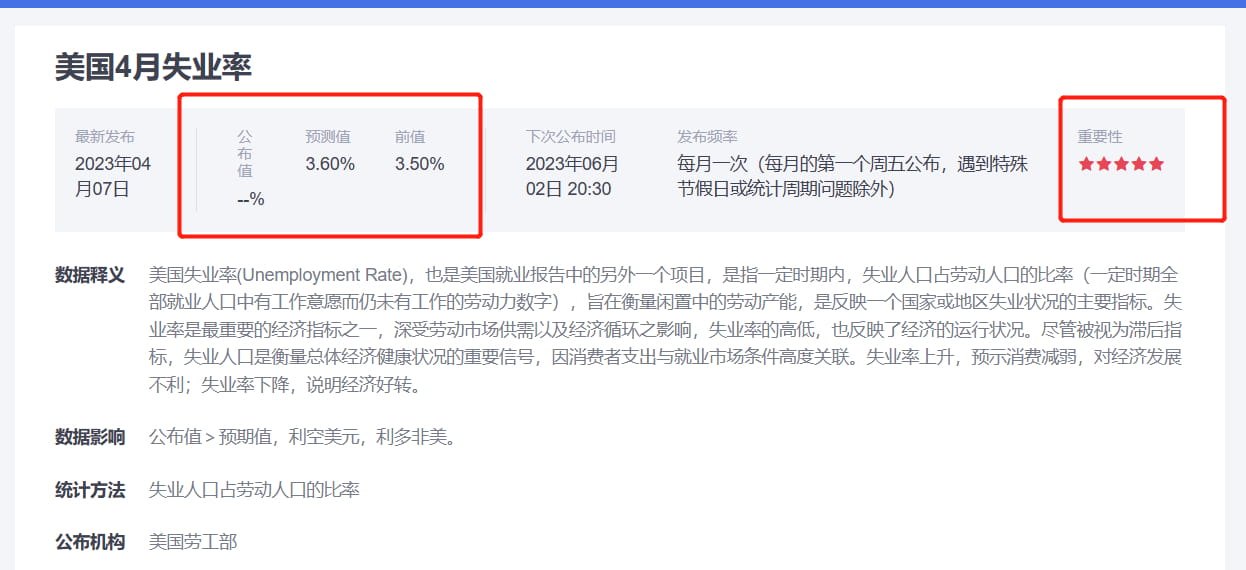
U.S. non-farm payrolls in April (10,000 people)
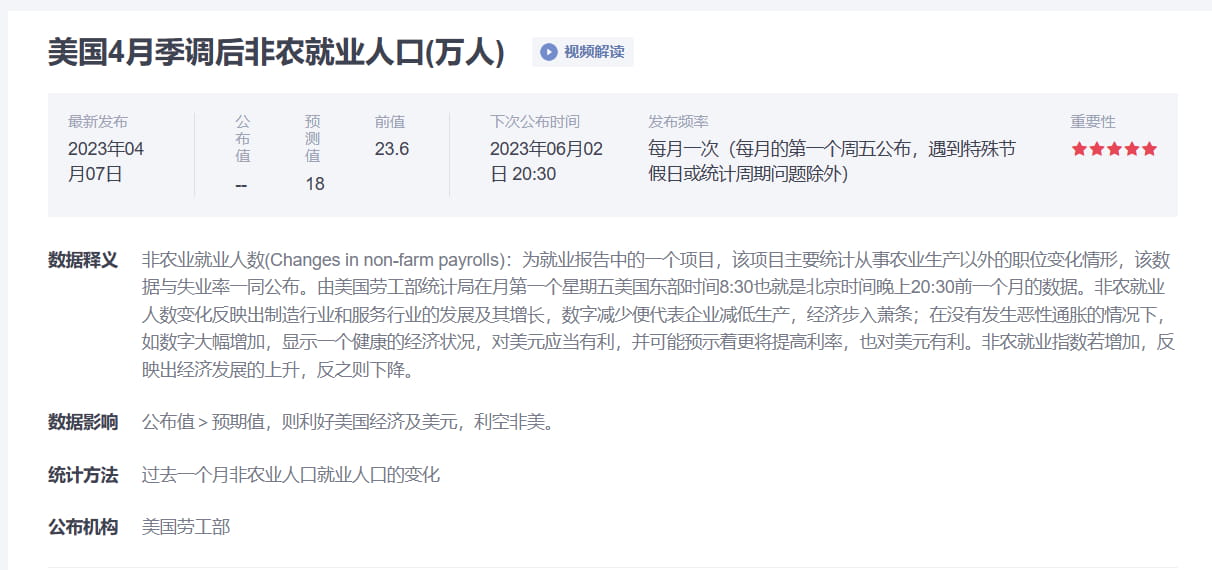
The most important thing is the interest rate hike last night and the non-farm data on Friday. When it comes to non-farm, we have to talk about ADP. The US ADP employment number refers to the change in private sector employment announced in the first week of each month. ADP employment data is often used as an important indicator of the health of the job market because it reflects the employment situation in the private sector.
If the ADP employment data is higher than expected, it may mean that the job market is relatively strong, which may have an impact on the non-agricultural data. After the ADP data is released, the market's expectations for the non-agricultural data may be adjusted accordingly. If the ADP data is higher than expected, the market's expectations for the non-agricultural data may increase accordingly, resulting in a better-than-expected non-agricultural data.
On the contrary, if the ADP employment data is lower than expected, it may mean that the job market is relatively weak, which may have a negative impact on the non-agricultural sector. Because after the ADP data is released, the market's expectations for the non-agricultural sector may be reduced accordingly, resulting in the non-agricultural data being worse than expected.
The employment population is expected to be lower than the previous
If the expected value of non-farm employment is lower than the previous value, it usually means that the market has poor expectations for non-farm data.
This is because the non-farm report includes non-farm employment data, which is one of the important indicators reflecting the state of the U.S. job market. If the market has poor expectations for non-farm data, it may be because the global economic or political environment is unstable, or because some factors have affected the recruitment plans of enterprises, leading to pessimistic expectations for non-farm data in the market.
On the contrary, if the expected value of non-agricultural employment is higher than the previous value, it usually means that the market has a better expectation for non-agricultural data. This is because the market may have taken into account some positive economic factors, such as economic growth and tightening of the job market, which may promote companies to increase recruitment.
In general, when the expected value of non-agricultural employment is lower than the previous value, it usually means that the market has poor expectations for non-agricultural data, and when the expected value is higher than the previous value, it may mean that the market has good expectations for non-agricultural data.
Combining this week's ADP, although the current expected value of this week's non-farm is lower than the previous value, the ADP data is more than twice better than expected, so the non-farm data will perform well.