

Key takeaways
Not all competitions are fair; Fake crypto sweepstakes scams typically promise fabulous prizes in exchange for low “processing fees” or your personal information.
Watch for fake profiles on social media and legitimate-looking websites: scammers may also try to contact you directly on channels like WhatsApp, Telegram, or Discord.
Think you've been scammed? Report the situation immediately to the relevant local authorities and the Binance customer service team.
Don't let your guard down and learn how to spot fake crypto contests with Binance's new guide, How to Survive Scams. Learn the warning signs to be aware of and protect your crypto-assets.
No social media advertising campaign is complete without a competition, with prizes ranging from a simple voucher to the local food store to life-changing gifts for the winners, like a brand new Lamborghini or several million dollars in cryptos.
But be careful: not all competitions are fair.
“Like” a post, subscribe to a few pages, and pay a low “processing fee” to win the prize! This all seems pretty simple, right?
It could be a fake competition, a popular scam that promises a huge prize in exchange for a small payment or sensitive personal information. This article shows you how fake crypto contests work and gives you some tips for spotting and avoiding them.
How Do Fake Crypto Contests Work?
1. Create a Fake Social Media Account and Website
Fake contests are often run through fake social media profiles, and those behind the most sophisticated scams will create a website that looks like a real crypto business or appears to be endorsed by a well-known personality.
The description, username and photo used on the fake social media profile may be the same as the real profile. Websites are often more difficult to identify: the URL or user interface may differ slightly from the official website, or other elements are not quite the same.
2. Announce the fake competition
Once their facade is in place, the scammers announce their fake competition through a publication on social networks or a message directly sent to the victims.
The “competition” usually promises a large sum of crypto to all Internet users who follow the indicated steps, for example sending a small amount of money. Scammers can also take advantage of the popularity of legitimate crypto projects by pretending to organize the pre-sale of their new tokens.
3. Request crypto or personal information
To enter the “contest,” victims must provide information such as their email address, phone number, and crypto wallet address, all of which will be used by scammers in future scams or resold to their colleagues on the Dark Web.
Once the victim's personal information is collected, the scammers will charge them a "processing fee" to supposedly verify their identity. It is these fees, most of the time paid in cryptocurrencies, which constitute the “jackpot” of this scam for the criminals.
Remember that in the case of real competitions, the organizers will never ask you to pay money to collect your prize.
4. The fallout
Once victims follow all the steps and send their payment, the scammers disappear, delete their social media accounts and websites, and the promised crypto rewards never arrive. At this stage of the scam, the chances of the victim getting their money back are almost zero.
Concrete examples
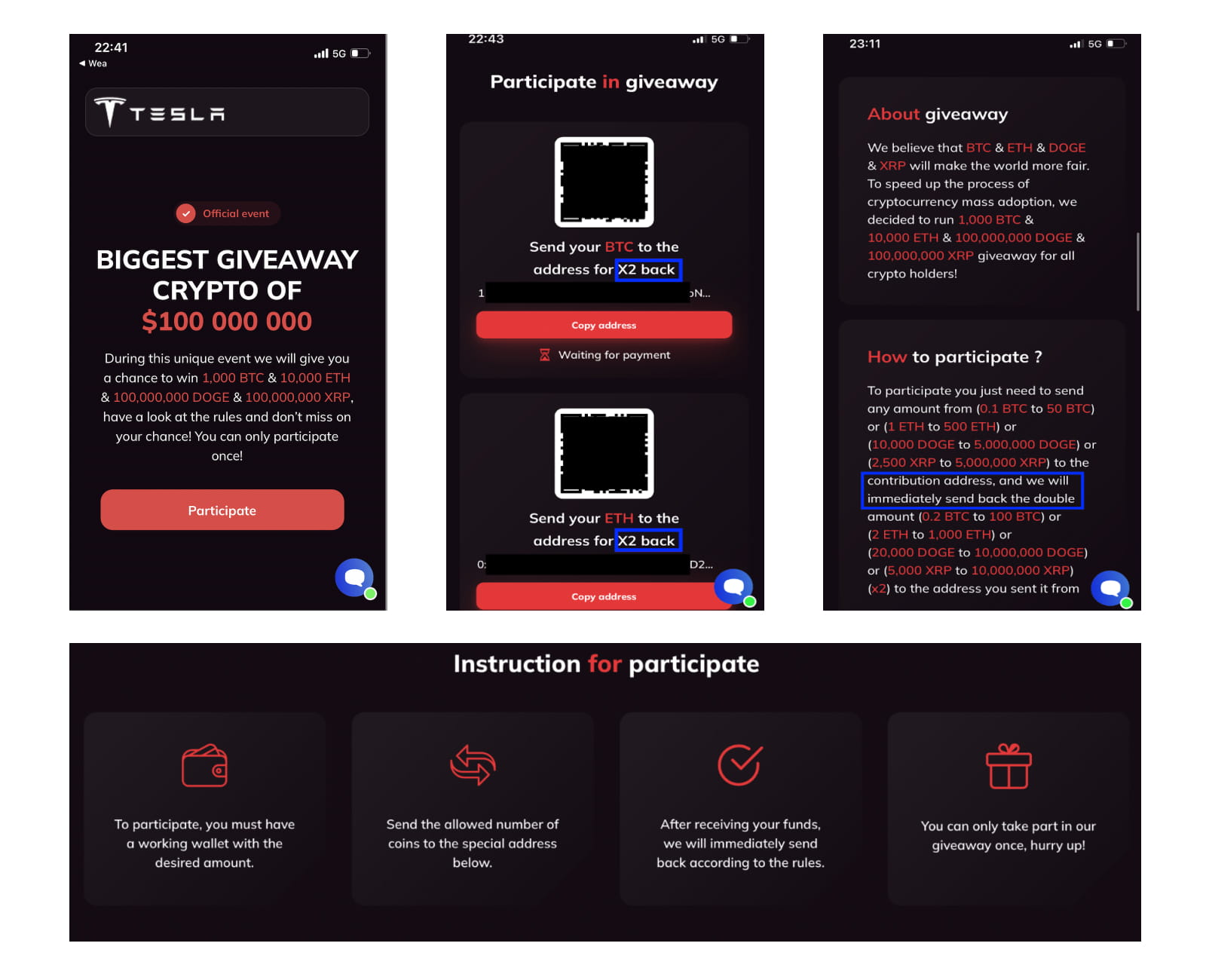
Example #1: “Mega crypto competition organized by TESLA: $100,000,000 to be won! »
The user, whom we will call Jack, finds a video on YouTube promoting a “contest” organized by “Tesla”. The video links to a website promising double returns to people who transfer their cryptocurrencies to a specific wallet address.
Jack follows the website's instructions and sends 1 BTC to the address in question, expecting to receive 2 BTC in return: but he never gets the promised cryptocurrencies and realizes that he has been tricked.
This example illustrates the most common characteristics of a fake contest: a fake website that mimics that of a famous company (here Tesla), the announcement of a grandiose prize, incorrect grammar, and the requirement for payment. to participate.
Example #2: “BINANCE” Gift Box
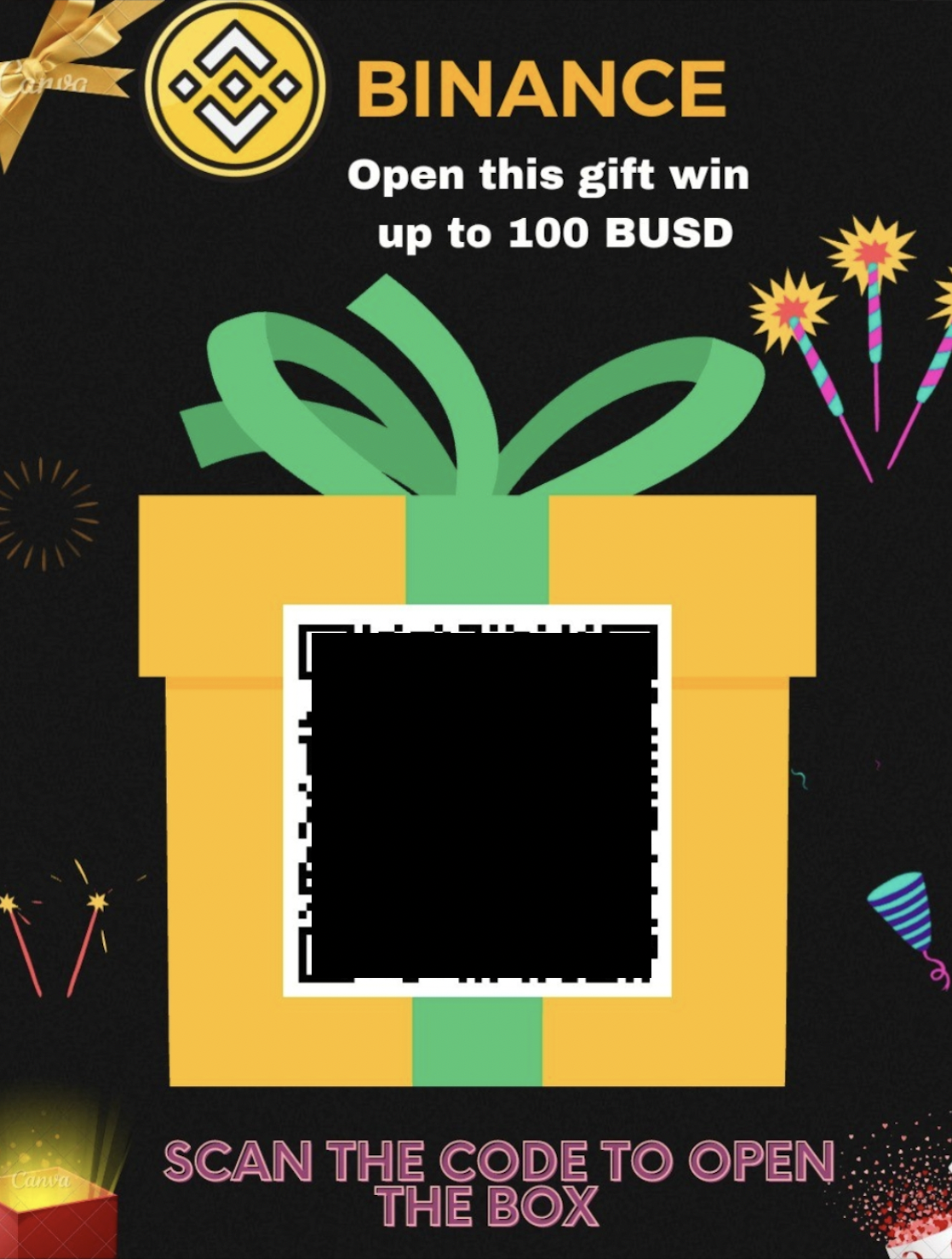
The user, who we'll call Mark, receives a message on Telegram from someone pretending to be a representative of "Binance". This “Binance employee” sends him a photo of a gift box, which allegedly contains a guaranteed reward of up to 100 USDT.
To receive the reward, the “Binance employee” explains to Mark that he needs to scan a QR code and send 2 BNB to a specific wallet address. Mark ends up losing his BNB and receives no gift box crypto.
How to avoid falling into the trap of a fake competition?
Check the websites and social media accounts associated with the contest
Always check the legitimacy of social media accounts or websites before entering a contest or competition. Look for verified accounts or be alert for any anomalies such as spelling mistakes, unprofessional appearance, or suspicious URLs.
Beware of unrealistic offers
If it sounds too good to be true, it probably is: this is especially true for crypto contests. Most so-called crypto contests that ask you to send crypto to pay “processing” or “verification” fees and receive a much better reward are scams.
Although the proposition is extremely attractive, take a moment to think before sending your cryptos to a “competition address”.
Protect your confidential information
We advise you to use an email address or telephone number other than your usual address or number to enter contests or competitions, to avoid disclosure of your contact details.
If you have been scammed
If you have transmitted sensitive information, change your passwords and block your bank accounts or any other affected financial accounts immediately.
Inform the police, even if the chances of them recovering your money are very slim.
Report the situation to the moderators of the website, app or social media platform where you encountered the scammer. Send them the name of the scammer's profile and any other details likely to prevent other Internet users from falling into the trap.
Report the scam immediately by following the steps in the How to Report a Scam on Binance Customer Service guide?
We also recommend that all users, regardless of their seniority on the platform, read the other articles in our How to Survive Scams series to best protect themselves from the most common crypto scams.
For more information
(Blog) How to Survive Scams: The Complete Guide to the Most Common Crypto Scams
(Blog) How to Survive Scams: Fake Crypto Investments to Be Wary of
(Blog) How to Survive Scams: The Red Flags of an Impostor Scam
(Blog) How to Survive Scams: Fake Job Offers to Be Wary of
Disclaimer and Risk Warning: This content is presented to you “as is” for general information and educational purposes only, without representation or warranty of any kind. It should not be construed as financial advice, nor as a recommendation to purchase a specific product or service. Prices of digital assets can be volatile. The value of your investment may go down as well as up and you may not get back the amount you invested. You are solely responsible for your investment decisions and Binance is not responsible for any losses you may incur. This does not constitute financial advice. Please see our Terms of Use and Risk Disclaimer for more information.