Warm reminder: The full text is about 1200 words, suggested reading time is 3 minutes
In the Web3 world, "making money" seems to always come with high risks: investing in meme coins may go to zero, playing blockchain games may lead to losses, and liquidity mining may encounter impermanent loss. Is there a way to share in industry growth dividends relatively steadily, like holding quality company stocks, or even earn "sleep income"?
Today, we will break down a case known as the "Web3 Cash Flow Protocol" - KGeN. Let's see how it has designed a model that allows ordinary participants to capture real commercial profits.
1. Core Logic: Tokens are 'income rights', not 'tickets'
To understand KGeN, you must first overturn a concept: the primary function of its tokens is not for voting governance nor for paying gas fees, but rather to represent the entitlement to future income from the protocol.
It's like you bought Tencent's stock, not to vote for new features in WeChat with this stock, but because you believe that Tencent's social and gaming businesses can continue to make money and are willing to share that with you through rising stock prices.
The KGeN protocol already has two powerful 'money-making machines':
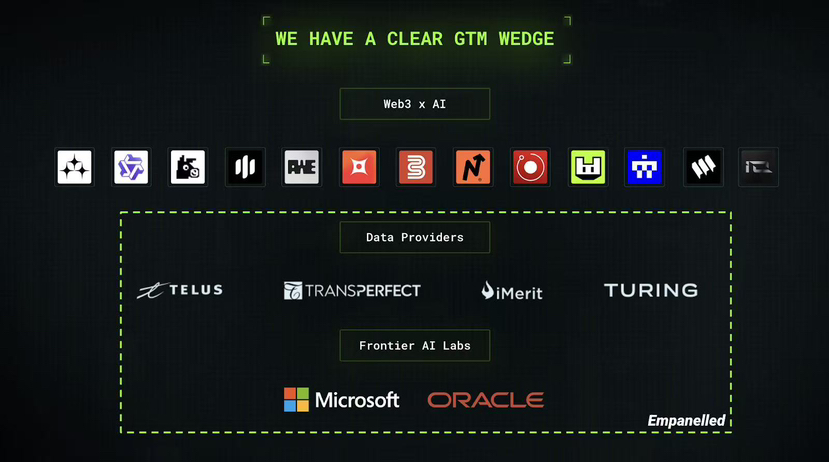
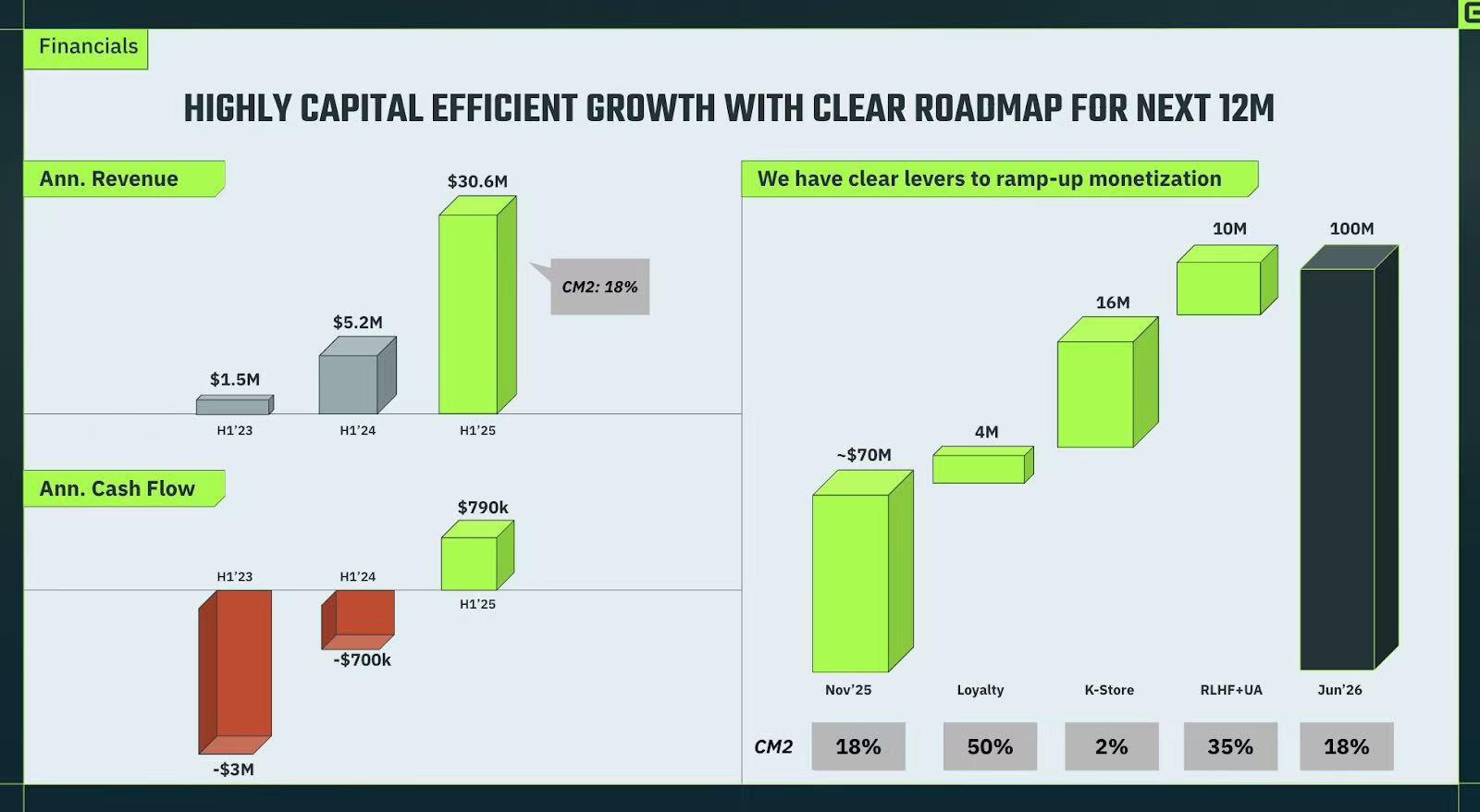
1. User acquisition (UA) business for games: Delivering real users to global game developers, with annual revenue in the tens of millions of dollars.
2. AI data sales (KAI engine) business: Providing AI training data to tech giants, experiencing rapid growth.
The protocol promises to continuously inject the real dollar profits generated from these two parts into its token economy.
2. The dual engines of value capture: Deflation and dividends
So, how does the profit specifically 'inject' and benefit token holders? Mainly through two core mechanisms:
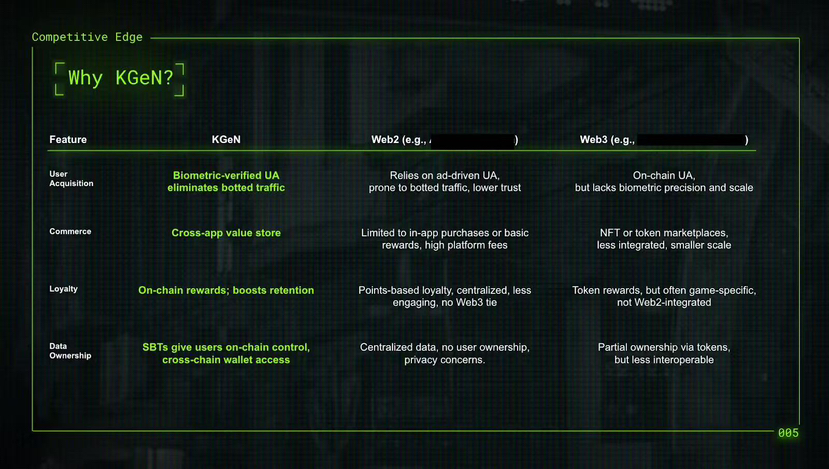
Mechanism 1: The protocol's revenue flows back, and the total supply continuously decreases. In the case of unchanged or even increased demand, the rights and potential price represented by each token will rise. This is equivalent to all token holders' tokens passively 'appreciating'.
Mechanism 2: The project captures value by repurchasing, destroying, or staking to obtain more tokens. What effect does this produce? It provides token holders with predictable and stable cash flow. Regardless of short-term fluctuations in the token market price, you can still obtain income from the underlying business. This gives the token a solid value bottom line and holding confidence.
3. Participation Method: Three roles, three types of income
In the KGeN ecosystem, you can participate and benefit in three ways:
1. As a verification user (contributing labor): If you are one of the 48.9 million+ individuals in the verification network, you can directly earn token rewards by completing game promotion tasks or AI data tasks. This is 'labor income'.
2. As a token holder (sharing profits): You can directly purchase and hold tokens in the secondary market. Your income comes from two parts: one is the potential appreciation (capital gains) brought about by token buybacks and destruction, and the other is the periodic profit dividends from the protocol (cash flow income). This is 'capital income'.
3. As an ecosystem builder (expanding the network): You can recommend new users to join the verification network or expand enterprise clients for the protocol (game developers, AI companies), thereby earning additional token incentives. This is 'promotion/ecosystem income'.
4. To facilitate everyone's understanding, let's take a look at a practical example: a vivid value cycle
Suppose you are a fan of games similar to (Genshin Impact):
· You completed the verification and trial tasks for a newly launched anime game through the KGeN network and received 100 $KGeN tokens as a reward (Role 1: Earning through labor).
· You think the project model is good, and instead of selling these 100 tokens, you bought 900 more from the exchange to hold a total of 1000 long-term. In the next quarter, you received a dividend worth $10 in USDT in your wallet (Role 2: Receiving dividends).
· At the same time, due to the significant increase in protocol profits for the season, a decision was made to strengthen buyback efforts, resulting in a decrease in the circulating supply of tokens in the market. The token price rose from $1 to $1.2, and your holding value also appreciated (Role 2: Enjoying appreciation).
· You also shared links to fun game tasks with several like-minded groups. They registered and completed tasks through your link, and you received a referral reward (Role 3: Earning through promotion).
Look, in this cycle, you have transformed from a simple 'player' or 'speculator' into a participant, contributor, and profit sharer in the ecosystem.
Summary: The value proposition of KGeN is clear and powerful: not doing anything fake, but rather engaging in two lucrative businesses that are trending (gaming + AI). Moreover, we are willing to share the money we earn with those who believe in and support us in the most direct way.
For players who are tired of zero-sum games and eager to find real value anchors and cash flow in Web3, KGeN provides a brand new participation paradigm that is closer to traditional value investing. It may not be exciting, but it might be healthier and more sustainable. In this noisy market, being able to share certain growth while 'lying down' is itself a rare charm.