Hey fam, I’ve been diving deep into the evolution of one of the most talked about protocols in the Web Three landscape right now Walrus, often referred to simply by its ticker WAL. In this piece I’m unpacking everything from its latest real world developments, new tech features, infrastructure growth, ecosystem traction, and why it is fast becoming a cornerstone for decentralized data storage and AI infrastructures built on blockchain. I’m talking to you like we’re sitting around over coffee or in our community channel discussing something truly foundational not just hype. So let’s go.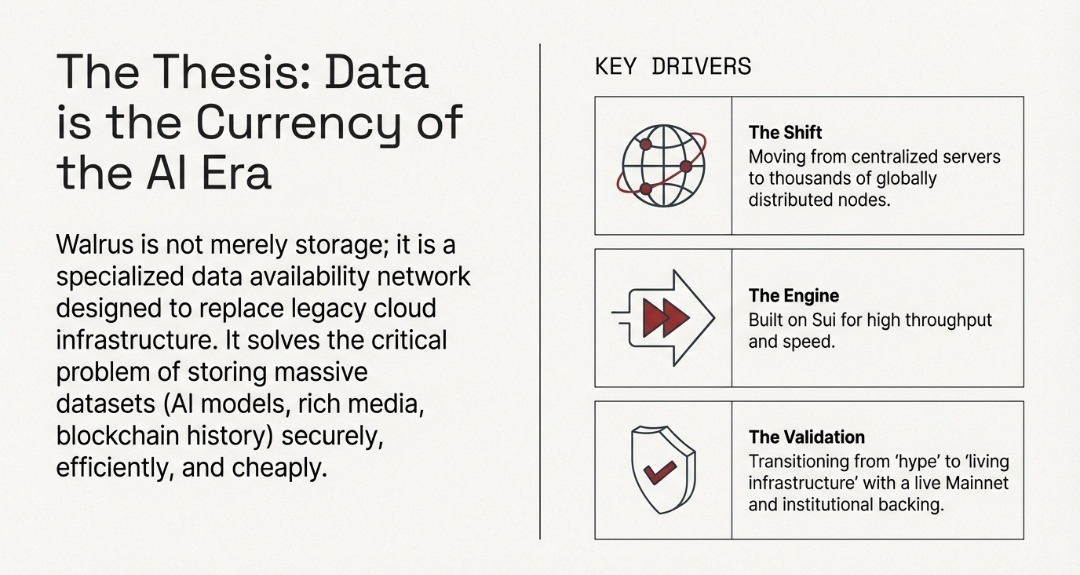
Back to Basics — What Walrus Really Is
Most people get lost in charts and price moves and forget the essence of what Walrus is about. At its heart, Walrus is a decentralized data storage and data availability network built on the Sui blockchain. It is designed for the future specifically for big data, AI, Web Three, and applications that demand secure, efficient, inexpensive and verifiable storage of massive files, datasets and information that traditional centralized cloud providers handle today. Think of it as trying to replace or augment legacy cloud infrastructure not with one server somewhere, but with thousands of globally distributed nodes that work securely together. The WAL token plays a central role in making this all function from securing the network to making payments for storage and participating in governance decisions.
Now, that description alone doesn’t reveal how fresh and dynamic this ecosystem has become in recent months, so let’s break down the latest developments and why this feels bigger than just another token.
Mainnet Is Running and Growing
One of the most crucial milestones for any blockchain infrastructure project is the launch of its main network. Walrus achieved that, and in doing so it moved beyond theory into real world application territory. With mainnet live, you’re not just watching functionality being built in test environments instead nodes are running, transactions are settling, data is being stored and retrieved, and developers are actively exploring how to integrate decentralized storage into their builds.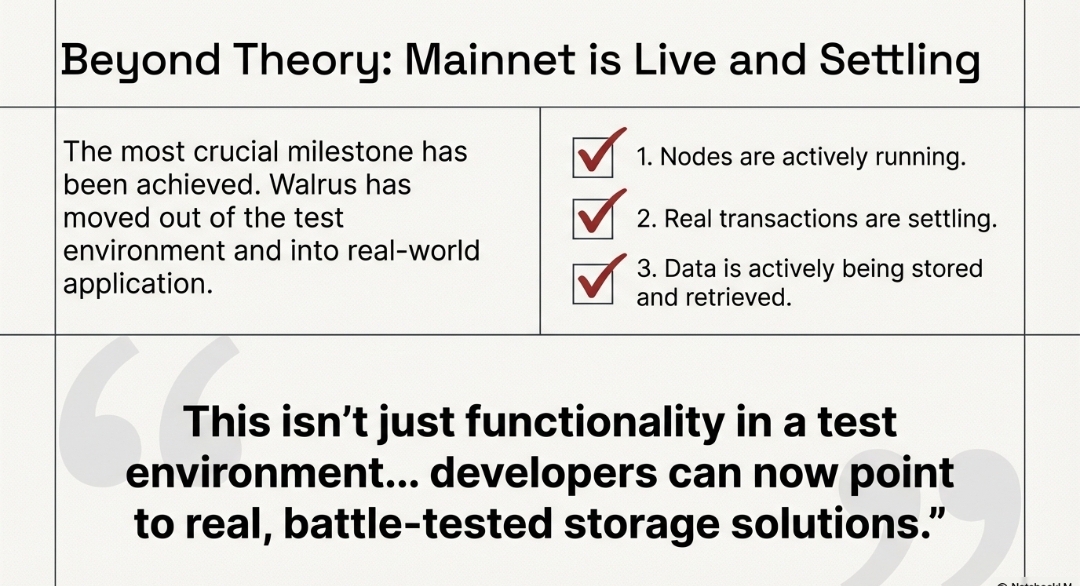
The launch shifted Walrus from a kind of Web Three concept into living infrastructure one that developers and projects can point to when they want real, battle tested storage solutions. That’s foundational to adoption.
Cutting Edge Tech — Red Stuff Encoding
One of the biggest innovations that sets Walrus apart is its encoding and storage protocol often referenced in the community as Red Stuff. Instead of copying data multiple times like old school decentralized storage solutions do which drives up costs and inefficiency Red Stuff slices data into optimized fragments that are distributed across the network.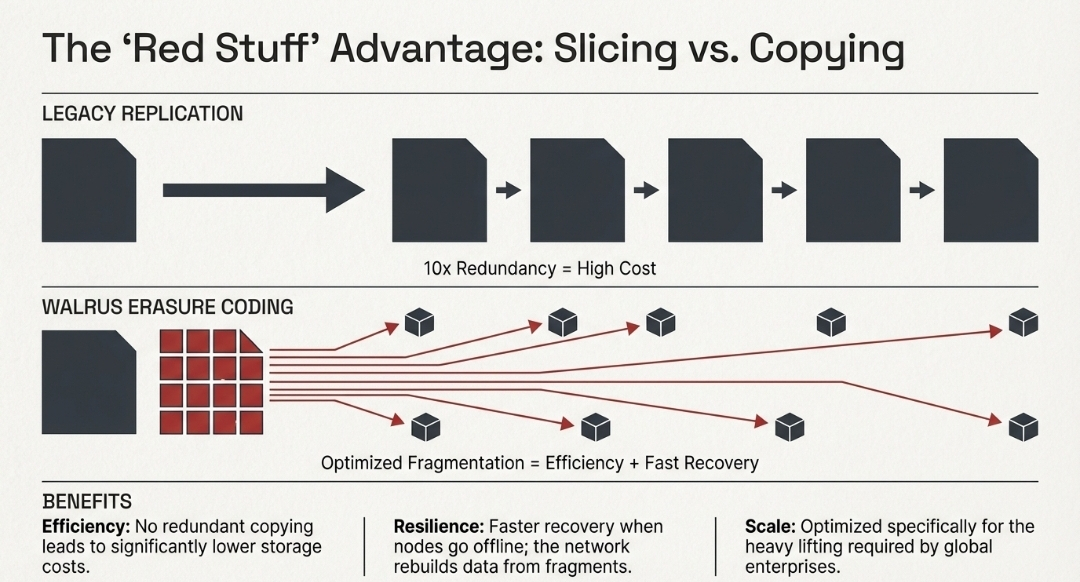
This method is not just smart, it’s efficient, enabling faster recovery, greater reliability when nodes go offline, and much lower actual storage costs when compared to many legacy decentralized storage projects. For builders and enterprises looking to scale applications globally, this technical advantage matters.
WAL Token Utility is Expanding
The WAL token isn’t just a tradable asset or a speculative token. It’s deeply built into the lifecycle of the network:
Payments for storage: Individuals or applications paying to store data interact with the network through WAL tokens.
Staking and delegated participation: You can stake or delegate WAL to storage node operators and earn rewards based on performance and uptime.
Governance: WAL holders get a voice on key decisions around protocol parameters, fees, rules, and future upgrades.
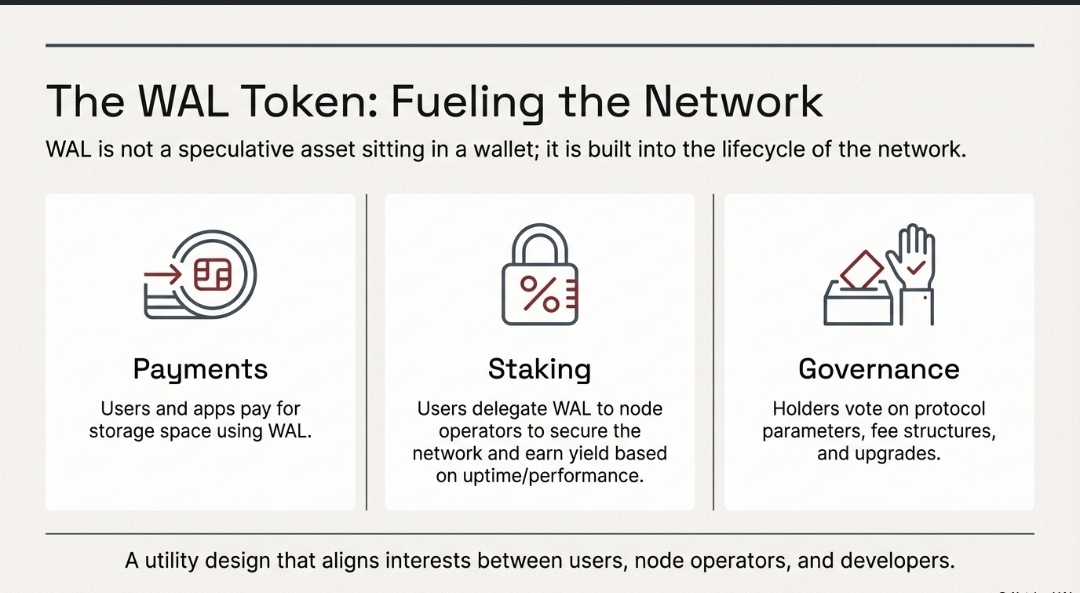
Unlike tokens that just sit in wallets awaiting price pumps, WAL has real usage cases from day one. Every time data is stored or nodes participate in maintaining the network, WAL flows through the ecosystem. That’s a utility design that aligns interests between users, node operators and developers.
Institutions Are Taking Notice
We’ve seen a shift in how major institutions view Web Three infrastructure, and Walrus is catching that attention. You might have noticed trusts and investment vehicles linked to Walrus being introduced by institutional custodians. This isn’t some fringe narrative it’s recognition from within the broader investment ecosystem that decentralized storage and data availability have economic value beyond small developer circles.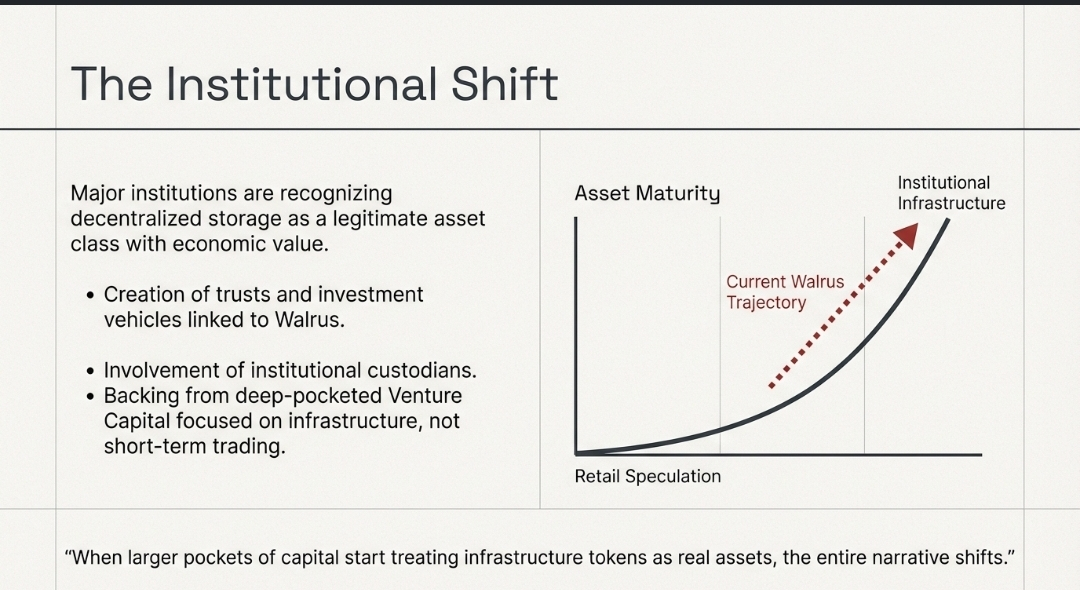
This institutional layer matters, because when larger pockets of capital start treating infrastructure tokens as real assets, the entire narrative shifts. It moves from hypothetical to infrastructure with weight.
Real World Use Cases Are Popping Up Fast
Here’s the part I find most exciting: the way Walrus is being integrated across different verticals.
From what we’re seeing:
AI platforms and data marketplaces are experimenting with Walrus for storage of verified datasets, training models and large binary files.
Blockchain developers are using Walrus to manage availability proofs and store oracle data or zero proof data for Layer Two solutions.
Decentralized web hosted sites and apps are testing Walrus as an alternative to traditional web hosting.
Creators and builders in gaming, media and entertainment are storing rich media assets on Walrus nodes.
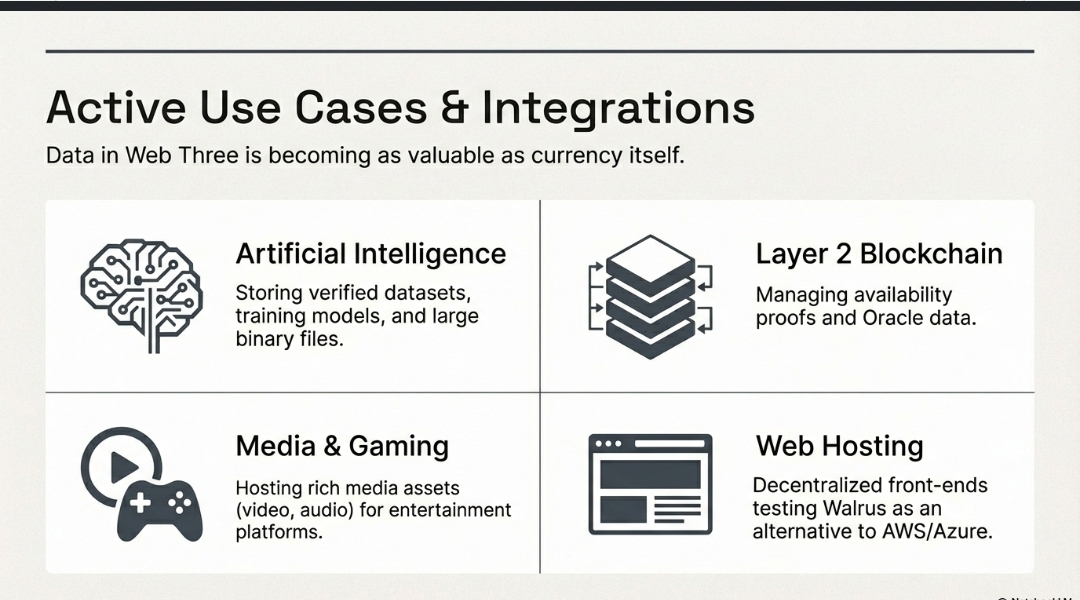
This isn’t theory. These are active tests and integrations. All these use cases point to one trend data in Web Three is becoming as valuable as currency itself, and storing it securely and cheaply is a foundational problem Walrus is solving.
Seal Protocol and Enterprise Grade Features
One of the newer elements in Walrus land is something folks are calling Seal Protocol. This brings customizable access control and encryption to the storage layer which means enterprise grade security is no longer a pipe dream in decentralized networks. When companies look at storing proprietary data or managing sensitive workflows, security becomes the make or break.
Seal Protocol gives builders tools to define who can access what data, under what conditions. This opens doors for Web Three projects that previously hesitated to store critical data on decentralized networks because of security concerns.
Funding and Backing That Matters
Behind the scenes Walrus has attracted serious venture capital support. Backing from major players in the blockchain investment world injects not just capital but credibility. This is not a random meme token with an Instagram page it’s a protocol with deep technical roots, build teams that understand complex distributed systems, and a roadmap that extends far beyond short term speculation.
Navigating Market Realities
Look, I’ve seen folks get hung up on price action. Yes, WAL has seen volatility like most crypto assets, especially around exchange events and incentive programs. But here’s the thing infrastructure tokens almost always have uneven price cycles early on. That doesn’t negate the utility and utility value being used in real applications that outlive short term price swings.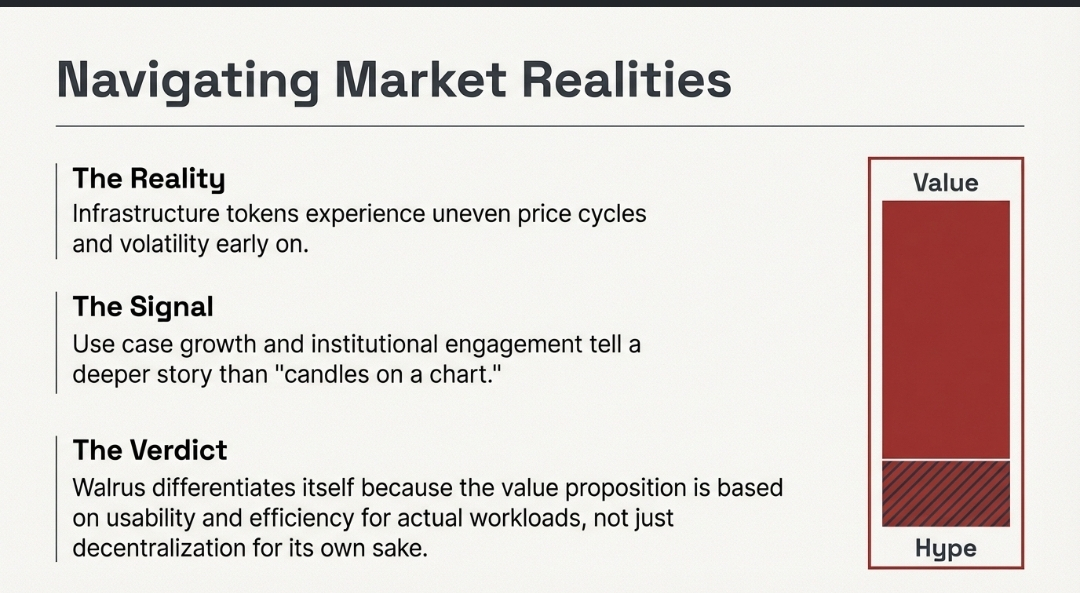
For those of you focused on fundamentals and looking at long term adoption curves rather than charts alone, this is where things get interesting. Because use case growth and even institutional engagement tell a much deeper story than candles on a chart.
What’s Coming Next
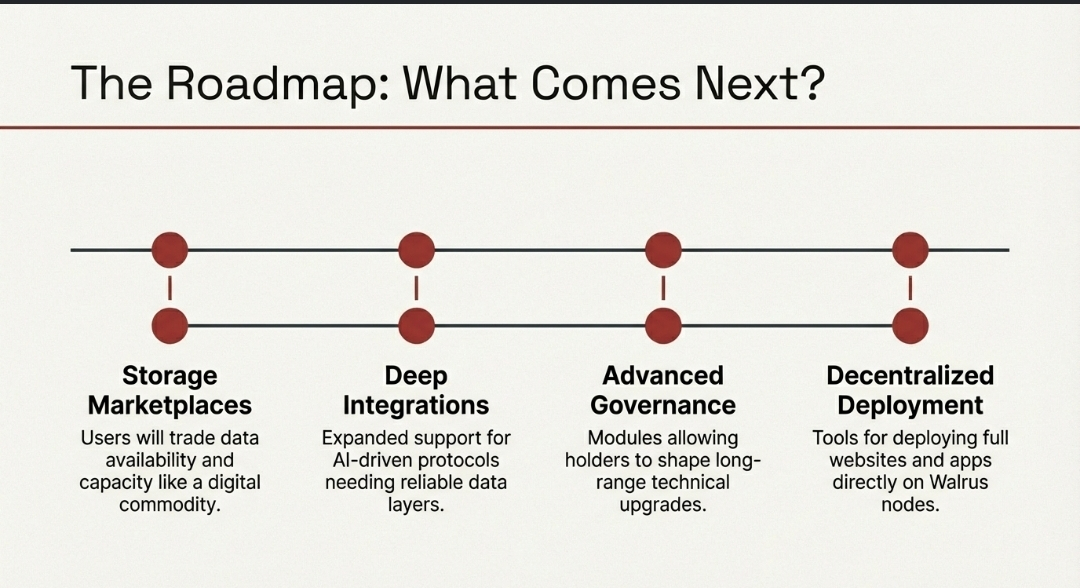
If you’re part of this community, you already know the roadmap doesn’t stop. Here’s what I’m looking forward to and you’ve probably heard whisperings about:
Expanded storage marketplaces where users can trade data availability and storage capacity like a real digital commodity.
More integrations with Layer Two and AI-driven protocols that need reliable, decentralized data availability.
Governance modules that let WAL holders shape everything from fee structures to long range technical upgrades.
Tools for developers to deploy decentralized websites, apps and services that truly live on Walrus storage nodes not on a centralized cloud.
We’re at a point where decentralized storage isn’t just “supposed to be the future” it’s being tested, implemented, and adopted in real projects. That’s the difference between hype and infrastructure.
Closing Thoughts
I’ve been around the block with a lot of protocols where words outpaced reality. Walrus is different because the value proposition isn’t just about being decentralized, it’s about being usable and efficient for the actual workloads Web Three and AI require.
From institutional attention to developer adoption to real technology experiments happening today, this project is creating a narrative that is hard to ignore if you’re thinking about the future of data, blockchain, and decentralized infrastructure.
Stay tuned, stay curious, and as always let’s keep building and supporting real technology that pushes this ecosystem forward.