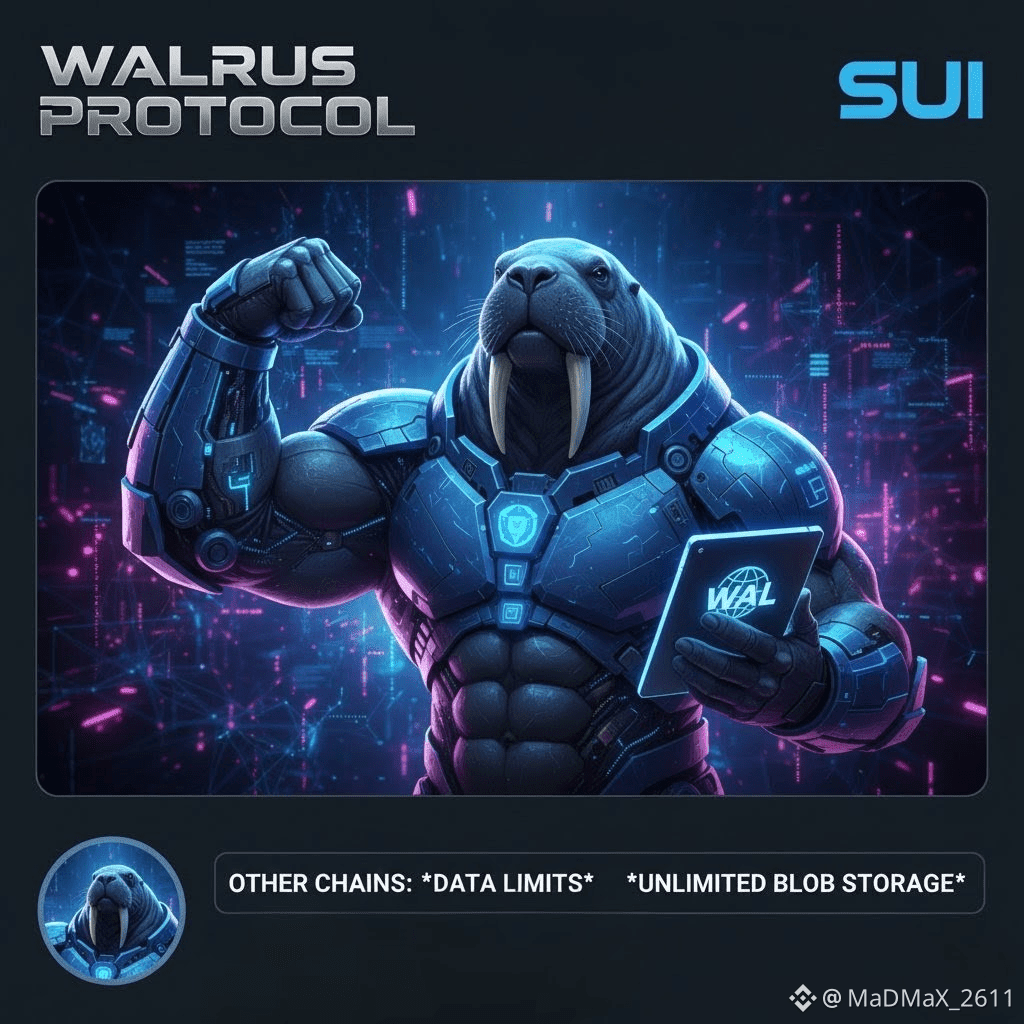
Forget Dogecoins and Pepe frogs; it’s 2026, and the crypto zoo has a new heavyweight champion. If you've ever wondered where your 4K NFT of a bored ape actually "lives" when the hosting company goes bankrupt, the answer is usually "nowhere." Enter Walrus (WAL)—the protocol that’s essentially the "Airbnb for your oversized digital junk."
The "Red Stuff" (No, Not Ketchup)
Most blockchains are like high-maintenance sports cars—they’re fast, but they can’t carry a single grocery bag. Walrus is the industrial-grade pickup truck. It uses a tech called "Red Stuff" (mathematically known as erasure coding).
Instead of making ten copies of your file (boring, expensive), it chops your data into tiny "slivers" and scatters them across the globe. Even if two-thirds of the network’s computers catch fire or decide to go on vacation at the same time, your data survives. It’s like a digital horcrux, but without the dark magic.
Tokenomics: More Than Just a Cute Face
The WAL token isn't just a mascot you HODL while praying for a pump. It’s the literal fuel for the machine:
Storage Fees: Want to store your 50GB "Research" folder? Pay in WAL.
Staking: Node operators have to lock up their WAL tokens. If they lose your data, their tokens get "slapped" (slashed).
The "Burn": Every time someone stores a file, a bit of WAL disappears forever. It’s like the walrus is eating its own supply.
Walrus vs. Filecoin
Filecoin Walrus
Cost Moderate (like a storage unit) Ultra-Low (1/100th the cost)
Logic Static & Permanent Programmable & Dynamic
Storage Copy-Paste Chop-Sliver