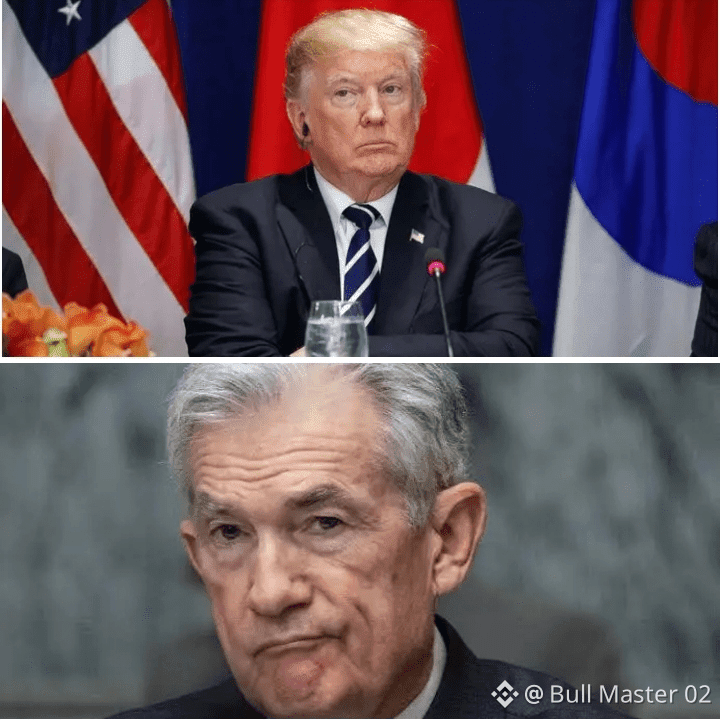
BIG WARNING: Trump vs. Powell Could Reshape the U.S. Economy
A serious institutional conflict is now unfolding in the United States, and its implications reach far beyond politics.$XAU
Reports confirm that the Department of Justice has launched a criminal investigation into Jerome Powell, the Chair of the Federal Reserve. Officially, the probe relates to Powell’s testimony regarding a multi-billion-dollar renovation of the Fed’s headquarters.
However, Powell has made it clear that the issue is not construction costs — it is political pressure. According to his own words, the investigation is a direct consequence of resisting demands to cut interest rates.
This matters because the Federal Reserve is designed to operate independently.
Its mandate is clear: manage monetary policy based on inflation, employment, and financial stability — not political cycles or election calendars.
History shows how this independence works:
In 2020, the Fed cut rates aggressively as the economy collapsed.
In 2022, it raised rates rapidly as inflation surged.
That is how a central bank preserves credibility.
The current situation is different. Donald Trump has repeatedly pushed for lower interest rates and has openly criticized Powell for resisting those demands. Reports indicate that Trump is already interviewing potential replacements for the Fed Chair role — signaling a desire for a more compliant monetary authority, particularly in a politically sensitive period.
Short-Term Market Impact
If political pressure succeeds:
Interest rates could be forced lower.
Liquidity injections could accelerate.
Stocks, Bitcoin, and risk assets would likely rally sharply.
From a market perspective, this would feel bullish — at least initially.
Medium- to Long-Term Consequences
The deeper risks are far more serious.
When monetary policy is dictated by politics rather than data:
Inflation risk rises sharply.
Trust in the currency begins to erode.
Capital shifts away from fiat and into hard or alternative assets.
The United States has seen this movie before. In the 1970s, political influence pushed the Fed toward excessive easing. By the early 1980s, inflation had surged to nearly 14%, forcing rates up toward 20% to restore credibility. The result was severe economic pain and a lost decade for markets.
A repeat of that scenario today would be more damaging:
Debt levels are far higher.
Financial markets are more leveraged.
Global confidence is more fragile.
The dollar’s reserve-currency status rests on one core belief: that the Federal Reserve acts independently and rationally. If that belief breaks, global capital does not wait — it moves.
The Bigger Picture
This is not just a policy disagreement. It is a test of institutional credibility.
If the Fed is seen as politically controlled: → Inflation expectations rise.$TRUMP
→ The dollar weakens structurally
→ Capital flows into gold, commodities, and alternative stores of value
Once credibility is lost, it is extremely difficult to regain.
Markets may celebrate forced easing in the short term, but history shows that politicized monetary policy always ends the same way — with instability, inflation, and long-term economic damage.$RIVER
This is a moment that deserves close attention. What happens next will shape markets — and the global financial system — for years to come.#PowellPower