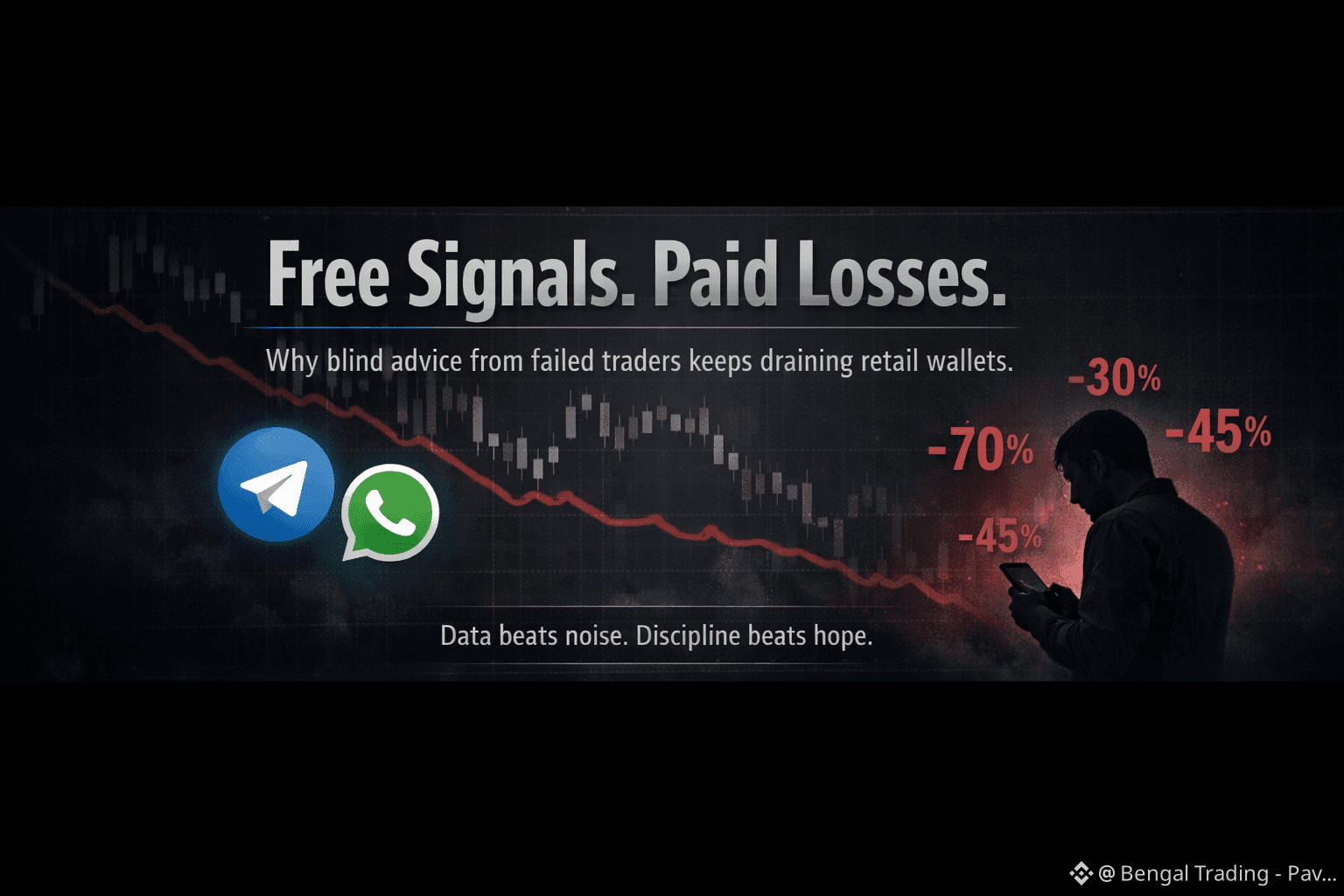
When Losers Become Promoters: How Free Crypto Signals Turn Personal Mistakes into Public Traps
The numbers are sobering. Multiple market surveys show that around 70–80 percent of retail traders lose money in their first year. A separate analysis of public signal channels found that more than 85 percent of “free signals” fail to beat a simple buy-and-hold strategy after fees and slippage. Yet, these failed trades are rarely highlighted. Losses are reframed as “temporary pullbacks,” and charts are cherry-picked to create false hope.
For example, a trader buys a low-liquidity altcoin after a Telegram post promising “10x soon.” The price drops 40 percent. Instead of exiting, the trader starts advising friends to buy the dip, sharing unverified partnerships or fake on-chain data. This behavior turns personal loss into collective risk.
Crypto rewards discipline, not noise. Real analysis is boring by design: risk management, position sizing, and probability. Treat loud advice without data as a warning signal, not an opportunity. In markets, enthusiasm without evidence is often just denial wearing a bullish mask. 📊📈📉🧧
Haftungsausschluss: Die hier bereitgestellten Informationen enthalten Meinungen Dritter und/oder gesponserte Inhalte und stellen keine Finanzberatung dar. Siehe AGB.