

The GENIUS Act aimed to bring clarity to stablecoin regulation, but its ban on interest payments exposed a deeper conflict over who controls the time value of digital dollars.
While banks warn that interest bearing stablecoins could drain deposits and weaken credit creation, crypto firms argue that blocking yield effectively taxes users and reduces the global competitiveness of the U.S. dollar.
As retail stablecoins face strict limits, major financial institutions have moved ahead with tokenized deposits and funds, creating a system where institutions access onchain yield while ordinary users cannot.

A LAW THAT PROMISED CLARITY BUT CREATED A NEW BATTLE
When the United States passed the GENIUS Act in 2025, lawmakers framed it as a breakthrough. For the first time, payment stablecoins received a clear federal framework. The goal was simple. Reduce risk, protect users, and secure the future of the digital dollar.
However, clarity did not bring calm.
Within months, the law triggered a new conflict. This time, the debate was not about reserves or solvency. Instead, it focused on one issue that had stayed hidden for years. Who is allowed to earn interest on digital dollars.
Under the GENIUS Act, stablecoin issuers must hold full reserves in cash or short term U.S. Treasuries. They cannot lend. They cannot create credit. More importantly, they cannot pay interest to users based on holding alone.

At first glance, this rule looks harmless. Lawmakers wanted to prevent stablecoins from replacing bank deposits. Yet the market had already changed. Stablecoins were no longer simple payment tools. They had become the base layer of onchain dollars.
As interest rates rose, the time value of money became visible again. Yield did not disappear. It simply waited for a path to reach users.
HOW A LEGAL GRAY ZONE SHOOK THE BANKING SECTOR
The GENIUS Act restricts issuers. It says far less about distributors. That gap reshaped the market.
Circle, the issuer of USDC, followed the rulebook. It did not pay interest directly to users. However, USDC does not circulate at the issuer level. It circulates on platforms.
Coinbase plays a central role in that flow. Through distribution agreements, Circle pays Coinbase fees tied to the amount of USDC held on the exchange. Coinbase then uses part of that revenue to offer USDC rewards to users.
Formally, these rewards are not interest. They are platform incentives. In practice, they come from Treasury yield.
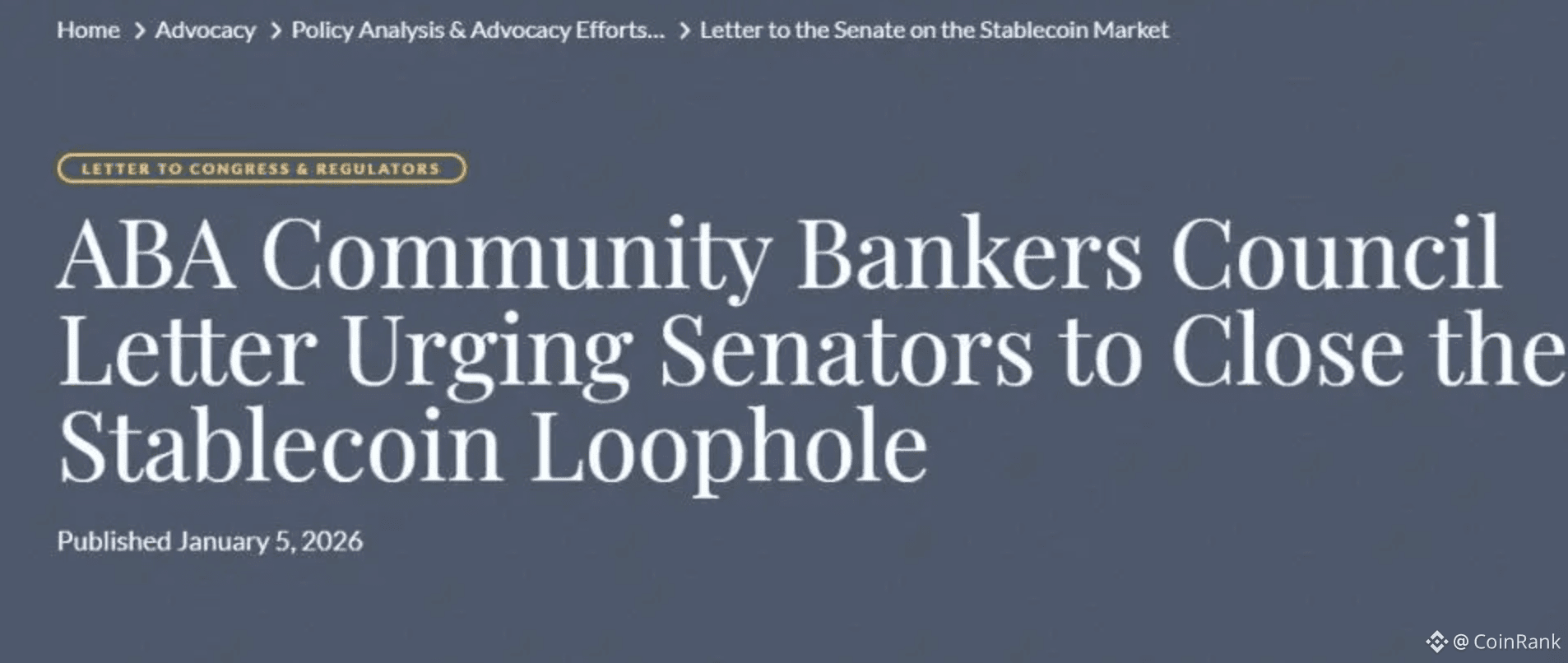
This structure alarmed banks. From their perspective, stablecoins had crossed a line. They were attracting funds without following banking rules.
Banking groups warned that trillions of dollars could leave the deposit system. While the numbers were exaggerated, the concern was real. Banks depend on low cost deposits. For decades, most users accepted near zero returns without protest.

Stablecoins changed that behavior. They offered fast settlement, global access, and visible yield. Even indirect yield was enough to shift expectations.
Banks argued the system was unfair. Stablecoin platforms face no capital requirements. They do not fund local lending. They do not pay deposit insurance. Yet they compete for the same dollars.
What banks avoided answering was simpler. Why should users be blocked from earning the return created by their own funds.
THE CRYPTO ARGUMENT AND THE IDEA OF A HIDDEN TAX
In response, the crypto industry reframed the debate.
One argument gained traction quickly. The idea of a holding tax. Stablecoin reserves earn yield because users supply capital. If the law blocks that yield from reaching users, the system forces them to give it up entirely.
From this view, the interest ban is not about safety. It is about control.
Crypto firms also widened the lens. Stablecoins are not only domestic tools. They extend dollar influence globally. If digital dollars cannot earn yield, they lose appeal in cross border use.
This concern grew as other countries moved faster. China adjusted its digital currency framework to allow interest. That decision sent a clear signal. Digital money does not need to sacrifice yield.
There is also legal uncertainty. On custodial exchanges, platforms often control private keys. Under existing interpretations, this raises questions about who legally holds the asset. If platforms are holders, revenue sharing may already conflict with the law.
As a result, enforcement risk now hangs over the entire stablecoin sector.
WHILE RETAIL DEBATED, WALL STREET MOVED ON
As retail stablecoins faced scrutiny, large financial institutions chose a different path.
Banks launched tokenized deposits. These are bank liabilities, not stablecoins. They settle on blockchains and pay interest by default. They fall outside the GENIUS Act.
For institutional clients, the choice is obvious. Onchain efficiency without losing yield.
Asset managers followed with tokenized money market funds. These products keep a stable value and distribute yield daily onchain. Legally, they are securities. Functionally, they behave like interest bearing stablecoins.
Access, however, is limited. Retail users remain excluded.
This has created a quiet divide. Ordinary users are protected from risk but also from return. Institutions receive both. The interest ban did not remove yield. It redirected who can access it.
Meanwhile, traditional financial infrastructure continues to move onchain. Custodians, banks, and payment networks are adopting blockchain settlement. In this environment, zero yield stablecoins risk becoming secondary tools.
THE FUTURE OF MONEY IS A FIGHT OVER TIME VALUE
The stablecoin interest war is not a technical dispute. It is a fight over who controls time value.
Banks want to preserve intermediation. Crypto argues that technology allows direct sharing. Traditional finance has already adapted by securing yield through existing legal frameworks.
Upcoming hearings may adjust the rules. They will not reverse the trend.
Time value is being repriced. Money is changing shape. If the digital dollar cannot carry yield, capital will search for alternatives.
Law can delay that shift. It cannot stop it.
〈The War Over Stablecoin Interest Inside the U.S. Financial System〉這篇文章最早發佈於《CoinRank》。
