
The evolution of Web3 promises a future built on decentralization, user ownership, and censorship resistance. Yet, for this vision to be fully realized, a critical foundation must be strengthened: decentralized data storage. While blockchains excel at securing transactional data, storing the vast amounts of data associated with dApps, NFTs, and the broader digital ecosystem on-chain is prohibitively expensive and inefficient. Enter Walrus (WAL), a project with a clear and vital mission: to build practical decentralized storage for the next phase of Web3.
At its core, Walrus addresses a fundamental mismatch. The current landscape often forces developers to choose between the ideals of decentralization and the practical needs of their applications. Relying on traditional, centralized cloud storage creates single points of failure and contradicts the ethos of Web3. Existing decentralized solutions, while pioneering, can sometimes face challenges with speed, cost predictability, or developer accessibility. Walrus positions itself as the bridge, offering a storage layer that is both truly decentralized and genuinely practical for mainstream adoption.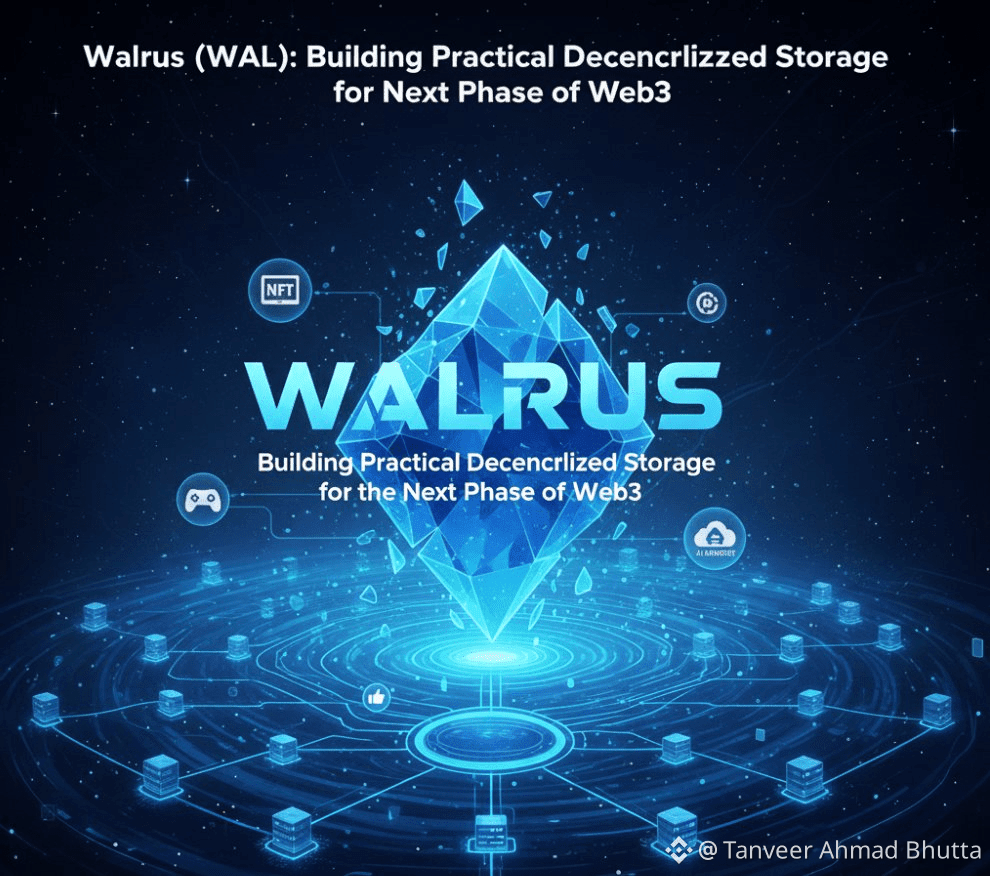
So, what does "practical" mean in this context? For Walrus, it translates to a focus on performance, reliability, and developer experience. The network aims to provide fast data retrieval speeds that rival centralized services, ensuring that user-facing applications remain snappy and responsive. It seeks to offer predictable and competitive pricing models, removing a significant barrier to entry for builders. Furthermore, practicality implies robust and verifiable data permanence, guaranteeing that valuable digital assets—from NFT metadata to entire dApp frontends—remain securely stored and accessible without reliance on any single entity.
The project’s symbolism is apt. Just as the walrus is a formidable creature adapted to a harsh environment, the Walrus network is designed to be resilient and durable in the digital landscape. By creating a robust, scattered network of storage nodes, it ensures data redundancy and security. This architecture not only protects against censorship and data loss but also distributes the operational load, enhancing overall network efficiency and stability.
For the burgeoning NFT space, the implications are particularly significant. An NFT is only as valuable as the data it points to. Walrus provides a permanent home for the images, videos, and metadata that give NFTs their meaning, safeguarding the integrity of digital collectibles over the long term. Beyond NFTs, Walrus’s infrastructure supports the entire Web3 stack, enabling decentralized social media, gaming, enterprise applications, and more to operate with full data sovereignty.
In conclusion, Walrus (WAL) is not merely another storage protocol; it is a targeted solution for a pivotal bottleneck in Web3's growth. By prioritizing practicality alongside its decentralized principles, Walrus is building the essential plumbing needed to support a more scalable, user-friendly, and resilient decentralized internet. As Web3 moves from early adoption to its next phase of mass integration, infrastructure projects like Walrus that solve real-world problems will be indispensable in turning the promise of a decentralized future into a daily reality.

