Organizing a hackathon might look straightforward from the outside: set up a website/page, announce some prizes, and wait for submissions to roll in. In reality, a successful hackathon is the result of dozens of decisions made well before the event begins. You’ll see the differences between well/poorly-prepared hackathons on platforms like DoraHacks (https://dorahacks.io) clearly.
Poor preparation leads to predictable problems. Vague rules create disputes; Unclear target audiences result in failed marketing; Underestimating resource needs leaves you scrambling for sponsors before launch or burning out your team with unsustainable workloads…these issues are far easier to prevent than to fix mid-event.
Good preparation, on the other hand, creates a foundation that makes everything else smoother. Think of this phase as building the blueprint before construction begins. The more solid your blueprint, the sturdier the final structure. And you'll thank yourself when unexpected challenges arise and you have the bandwidth to handle them because you didn't skip the groundwork.

1. Define Your Theme, Goals, and Success Metrics
Before anything else, get clear on what your hackathon is about and what you want to achieve. Start by choosing a theme or focus area, which could be a specific technology like AI or blockchain, a problem domain like privacy or payment, or an open-ended challenge. Your theme attracts the right participants and helps sponsors see the relevance to their products.
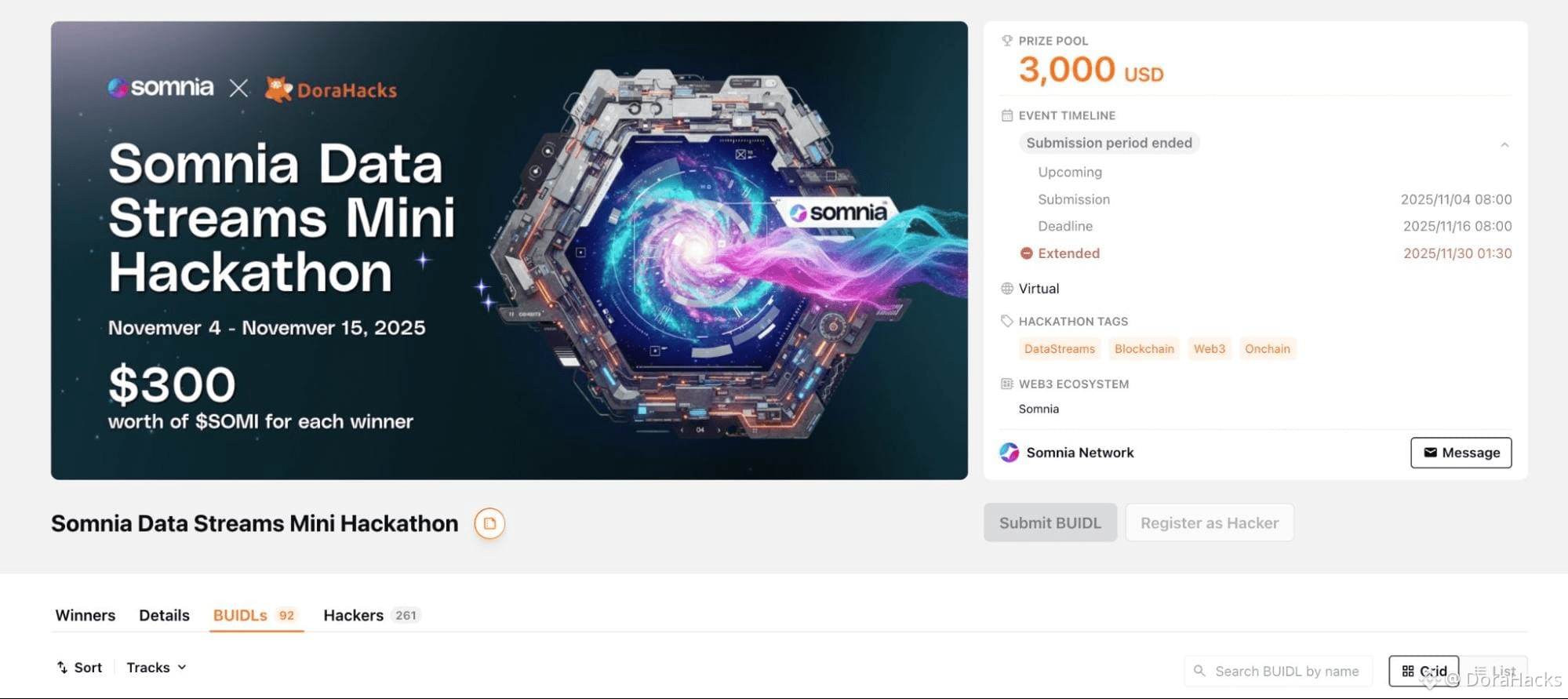
https://dorahacks.io/hackathon/somnia-datastreams/detail
Next, articulate your goals. Are you trying to grow a developer community, generate innovative solutions to a specific problem, give sponsors access to talent, or provide educational opportunities for beginners? Different goals lead to different design choices throughout the process.
Finally, define what success looks like in concrete terms. Set measurable targets such as number of registrations, number of valid submissions, hacker satisfaction, sponsor satisfaction, or media coverage. Having these benchmarks early helps you make tradeoffs when resources get tight and gives you a clear way to evaluate the event afterward.
That said, keep your targets grounded in reality. Consider the size of developer communities you can reach, the user base of any required technology, and how competitive your prize pool is compared to similar events. Ambitious but achievable goals motivate your team without setting everyone up for disappointment.
2. Identify What Resources You Need
Once you know your goals, map out the resources required to achieve them:
The budget needed for prizes, marketing, and tooling.
Connections you have to reach out to potential sponsors, communities, or media outlets.
Tools and platforms you'll need for submissions, communication, and judging.
External contributors you need and how many hours per week they can commit.
Be specific. If you want a $10,000 prize pool, you need ready funding or sponsors willing to contribute that amount. If you want 500 participants, you need marketing reach to attract them. Identifying resource requirements early reveals gaps you need to fill before moving forward.
3. Understand Your Audience: Who and Where
Think carefully about who you want to participate. Are you targeting university students, early-career developers, experienced professionals, or a mix? Are you focused on a specific region, country, or going fully global? What skill levels and backgrounds do you want to include?
Understanding your audience shapes nearly everything: the language and tone of your marketing, the platforms where you promote the event, the complexity of your challenges, the size of your prizes, and even the timing of your hackathon. A hackathon for Southeast Asian university students looks very different from one targeting senior developers in North America.

https://dorahacks.io/hackathon/1766/detail
Once you know who, figure out where they spend time online. This might be X, Discord communities, Reddit, LinkedIn, university mailing lists, or developer forums. Knowing where your audience gathers determines your marketing strategy.
4. Research Existing Hackathons
You don't need to figure everything out from scratch. Study how successful hackathons operate and learn from their approaches. Participate in a few hackathons yourself to experience them from a hacker's perspective. Read their rules, observe their communication style, and note what works and what frustrates you as a participant.
Explore platforms like DoraHacks (https://dorahacks.io) to see how top hackathons structure their challenges, prizes, and timelines. Pay attention to how they write their rules, what submission requirements they set, and how they handle judging. Reach out to organizers of hackathons you admire and ask for advice — most are happy to share their experiences and lessons learned.
Learning from others helps you avoid common mistakes and adopt proven practices.
5. Clarify Team Roles and Responsibilities
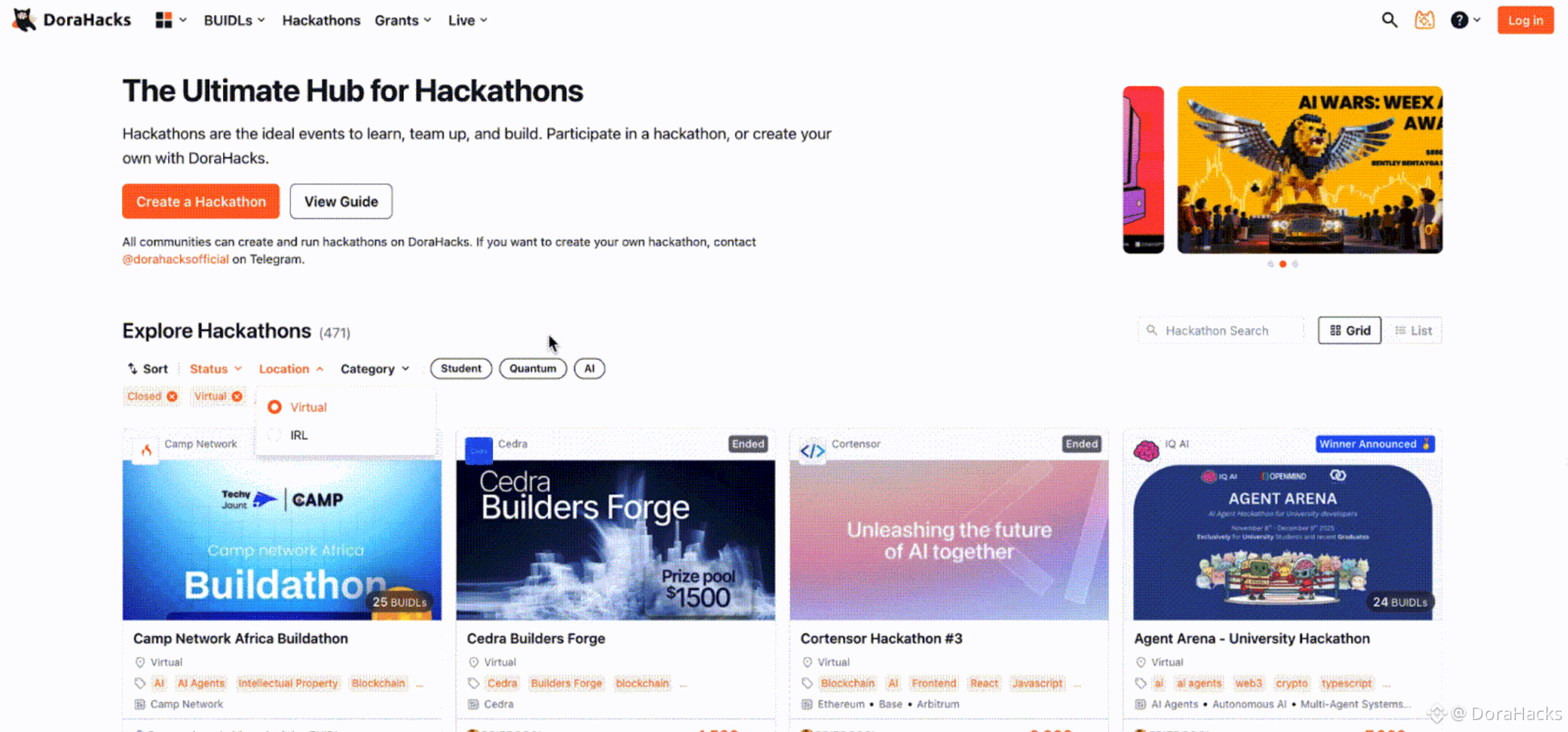
Whether you're building a team from scratch or working within an existing organization, get clear on who does what. Typical roles include partnerships, marketing and community outreach, participant support, platform and technical operations, and judging coordination.
Assign clear ownership for each area and establish how decisions get made. Ambiguity about responsibilities leads to dropped balls and frustration. Even a small team benefits from explicit role definitions, and larger organizations need this even more to avoid duplication of effort or gaps in coverage.
Do set up regular check-ins to track progress and surface blockers early.
6. Choose Your Platform and Learn It Inside Out
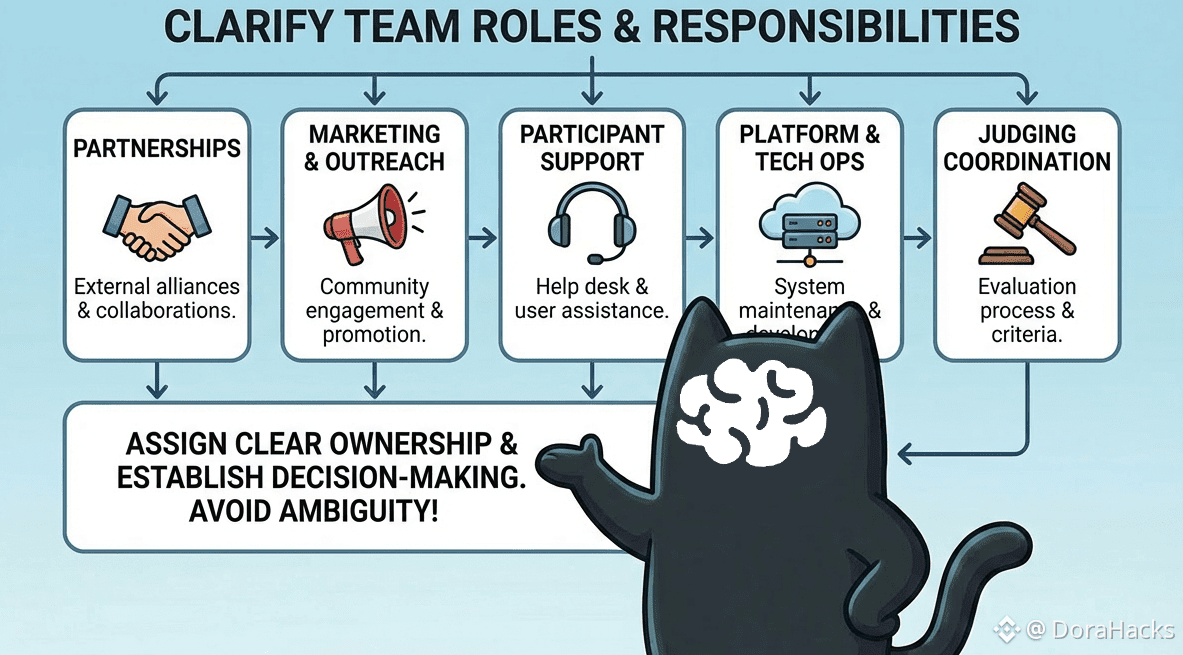
Selecting the right hackathon platform is one of your most consequential decisions. DoraHacks (https://dorahacks.io) is the best platform for you to kickstart without any fees, providing enough flexibility and a powerful organizer dashboard. Sometimes organizers also use private forms or spreadsheets for registration. Evaluate platforms based on submission and judging features, customization options, cost and pricing model, ease of use for both organizers and participants, and community or support available.
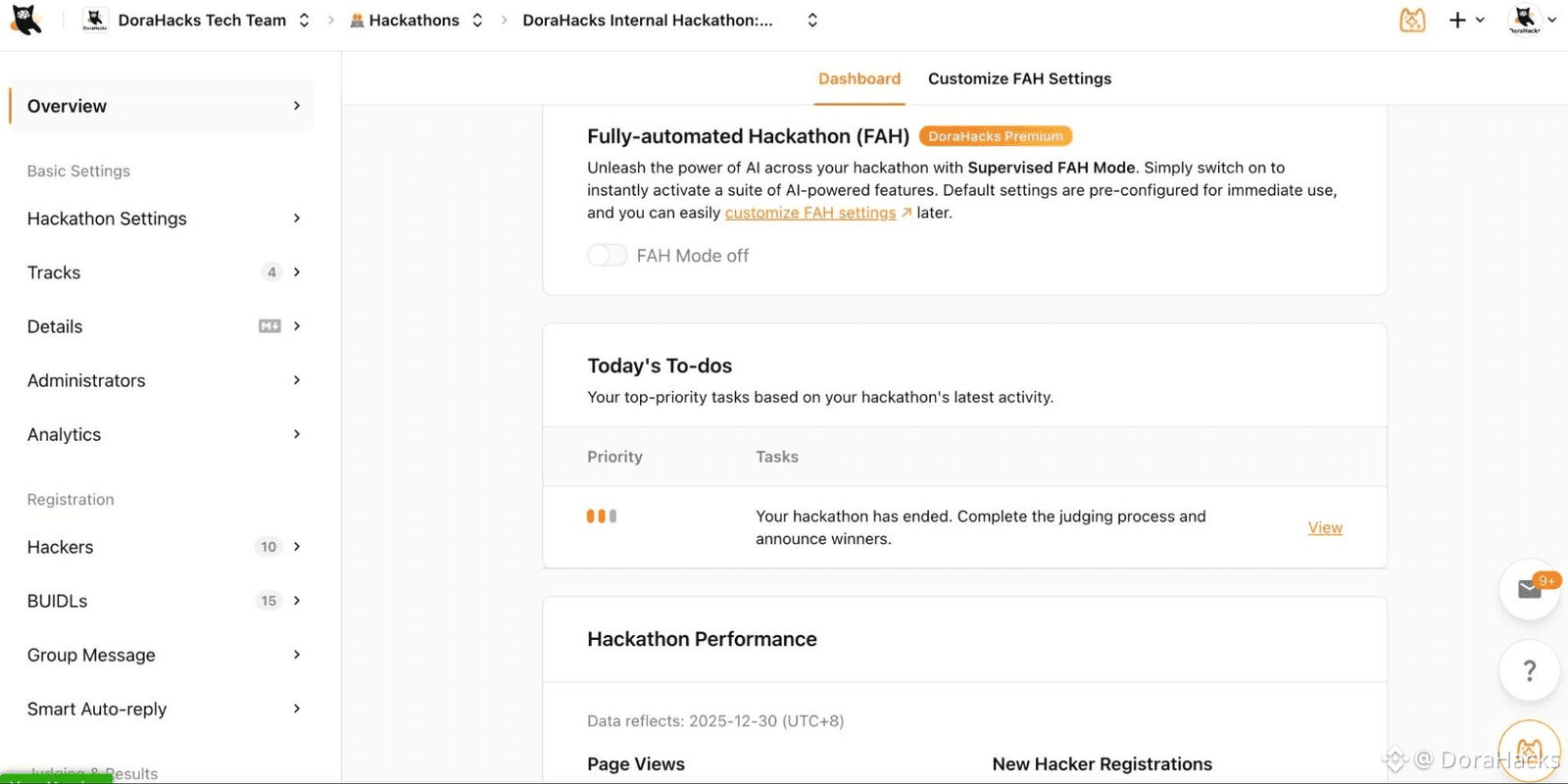
Once you choose a platform, learn it thoroughly from both perspectives, as a hacker and as an organizer. Set up a test hackathon and go through the organizer workflow: creating the event page, setting rules, configuring judging criteria, and managing submissions. Then experience it as a participant: register, submit a mock project, and see what the process feels like. Understanding both sides helps you write clearer instructions, anticipate participant confusion, and troubleshoot issues quickly during the live event.
7. Set a Realistic Timeline
Work backwards from your target hackathon date. Most online hackathons need one to two months of preparation, with more ambitious events requiring longer. Map out key milestones: when sponsorship outreach needs to start, when marketing launches, when registration opens and closes, when the hacking period runs, when judging happens, and when you announce winners.
Build in buffer time. Sponsor conversations take longer than expected, approvals get delayed, and unexpected issues arise. Account for external factors like school exam periods, major holidays, or competing events that might affect participation.
If the timeline feels impossibly tight, consider pushing the date back. A well-executed hackathon a month later beats a rushed one on your original date.
8. Decide If You're Ready
After working through all of the above, take an honest look at whether now is the right time to move forward. Do you have the resources you need or a realistic plan to get them? Is your team aligned and committed? Does the timeline work for everyone involved?
If gaps remain, it's better to address them before launching than to struggle through an under-resourced event. Consider joining another hackathon's organizing team first to gain experience, or scale down your ambitions to something more achievable for a first event.
When everything checks out, you're ready to move from step zero into active organizing.
Feel free to explore DoraHacks (https://dorahacks.io) for more features supporting your hackathon, or talk to an expert today (https://dashboard.dorahacks.io/contact-representatives)!
About DoraHacks
DoraHacks (https://dorahacks.io) is the leading global hackathon community and open source developer incentive platform. DoraHacks provides toolkits for anyone to organize hackathons and fund early-stage ecosystem startups.
DoraHacks creates a global hacker movement in Web3, AI, Quantum Computing and Space Tech. So far, more than 30,000 startup teams from the DoraHacks community have received over $300M in funding, and a large number of open source communities, companies and tech ecosystems are actively using DoraHacks together with its BUIDL AI capabilities for organizing hackathons and funding open source initiatives.
Website: https://dorahacks.io/
Twitter: https://twitter.com/DoraHacks
Discord: https://discord.gg/gKT5DsWwQ5
Telegram: https://t.me/dorahacksofficial
Binance Live: https://www.generallink.top/en/live/u/24985985
Youtube: https://www.youtube.com/c/DoraHacksGlobal