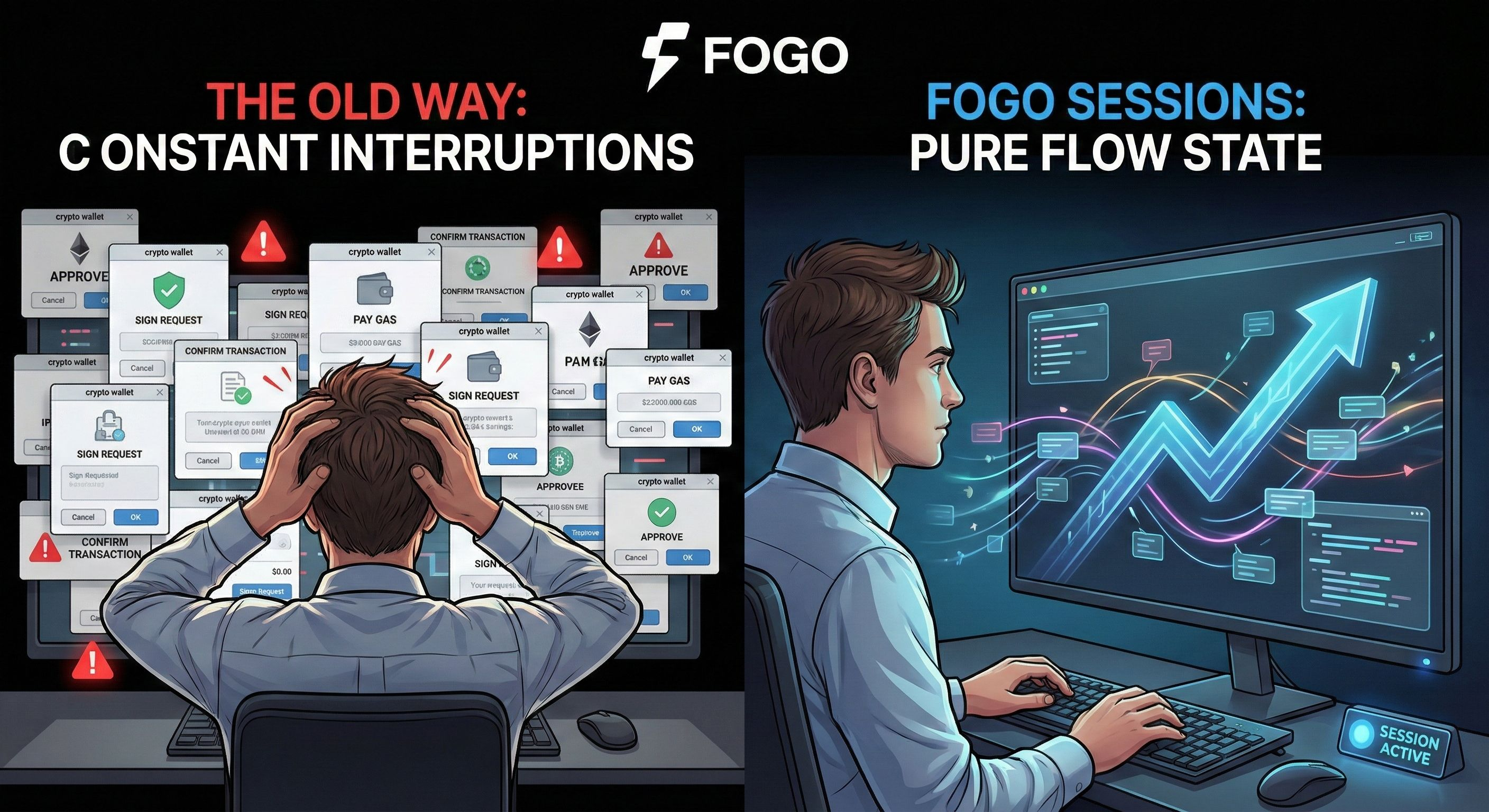
I trade actively, not HODLing, actual position management multiple times per day. For years, this meant choosing between CEXs where I don't control my keys, or DEXs where every adjustment costs time and money.
January 2026, Fogo launched Sessions on mainnet. I tested it immediately because the promise sounded too good: approve once, trade freely without gas fees or constant wallet pop-ups.
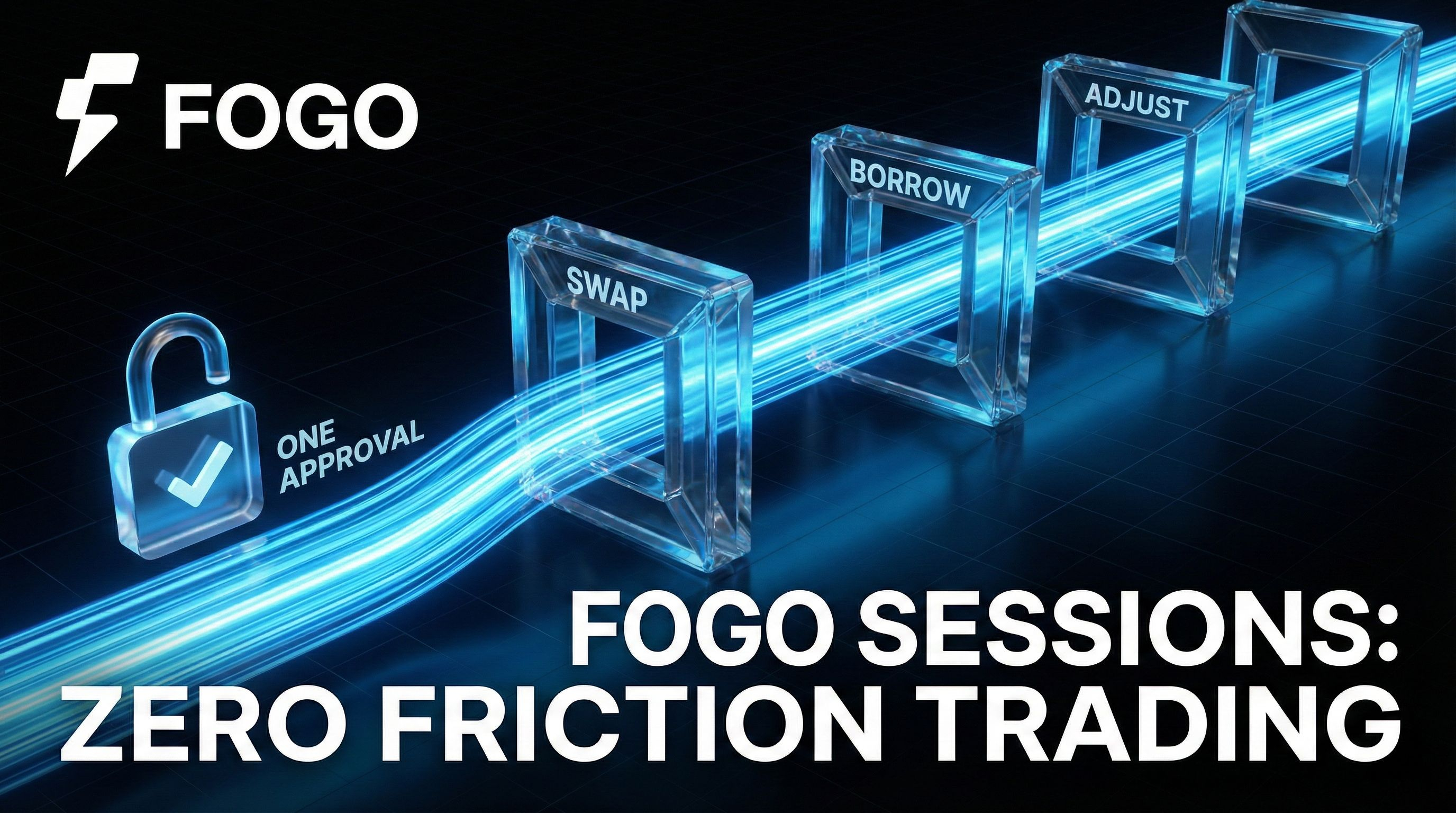
How does Sessions actually work in practice?
You connect your wallet, sign one approval that sets boundaries: time limit, spending cap, which dApps can access. That's it. For the next few hours, you can swap on Valiant, borrow on FogoLend, adjust perpetuals positions, all without touching your wallet again. No pop-ups interrupting flow. No manual gas payments.
Who's paying the gas if I'm not?
The dApps themselves through paymasters, basically built-in transaction sponsorship. Gas on Fogo averages 0.00001 FOGO per transaction anyway, so protocols absorb this cost through their own economics or ecosystem incentives. For users, it's functionally invisible.
Why does this matter for actual trading?
Because transaction friction kills strategies that require frequent adjustments. On Ethereum L2s, I'm still manually approving every action and paying gas. On Solana during congestion, transactions drop or delay. Both chains force you to context-switch from trading to infrastructure management constantly.
With Sessions, I ran a market-making strategy last week that needed position updates every 20-30 minutes. Over six hours, roughly 40 interactions across multiple protocols. Zero wallet interruptions. Zero gas charged to me directly. The 40ms block times meant adjustments executed before market conditions shifted.
Sessions isn't dumbing down crypto for newcomers. It's removing the operational overhead that makes professional-grade onchain strategies impractical. The infrastructure finally matches what active trading actually requires: speed, invisibility, and zero friction between decision and execution.