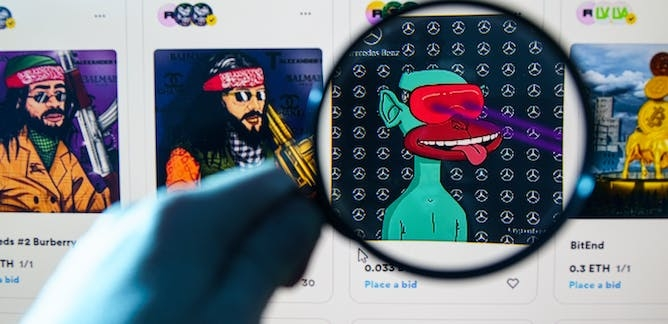
Bored Ape NFTs for more than US$20 million in September 2021. They’re now facing a lawsuit from a disgruntled buyer.
As with Bitcoin and similar speculative tokens, the primary driver for buying NFTs was greed. Seeing the initial price rises, people hoped they too could make huge profits. NFTs are essentially a superficially sophisticated form of gambling. Like Bitcoin, they have no fundamental value.
Generally, one would only profit from buying an NFT by finding a “greater fool” willing to pay even more for it. So there was never a shortage of people – including some quite famous ones – talking them up and hoping to instil a fear of missing out.
Eminem bought a Bored Ape that looked a bit like him. Rapper KSI boasted on Twitter about his Bored Ape rising in price.
For a while there were large increases in the prices of many NFTs. But like all speculative bubbles, it was likely to end in tears. Although it’s almost impossible to predict when a bubble for a speculative asset will burst, we have seen this process play out before.
Centuries ago there were the Dutch tulip, South Sea and Mississippi bubbles. Around 1970, there was a speculative bubble in the shares of nickel miner Poseidon. Then came the Beanie Baby and dotcom booms of the late 1990s – and more recently, meme stocks and Terra-Luna cryptocurrency.
The NFT crash
Punters now seem to be as bored with NFTs as the apes. Google searches for “NFT” – which grew rapidly through 2021 – have fallen away dramatically. Trading volumes have collapsed.But unless some actual use is found for them, NFTs are likely to fade further from public discussion, with their prices increasingly trending down (although the occasional blip up may give die-hard fans some hope).
They will probably join the Dutch tulips and dotcoms in the history of speculative follies.